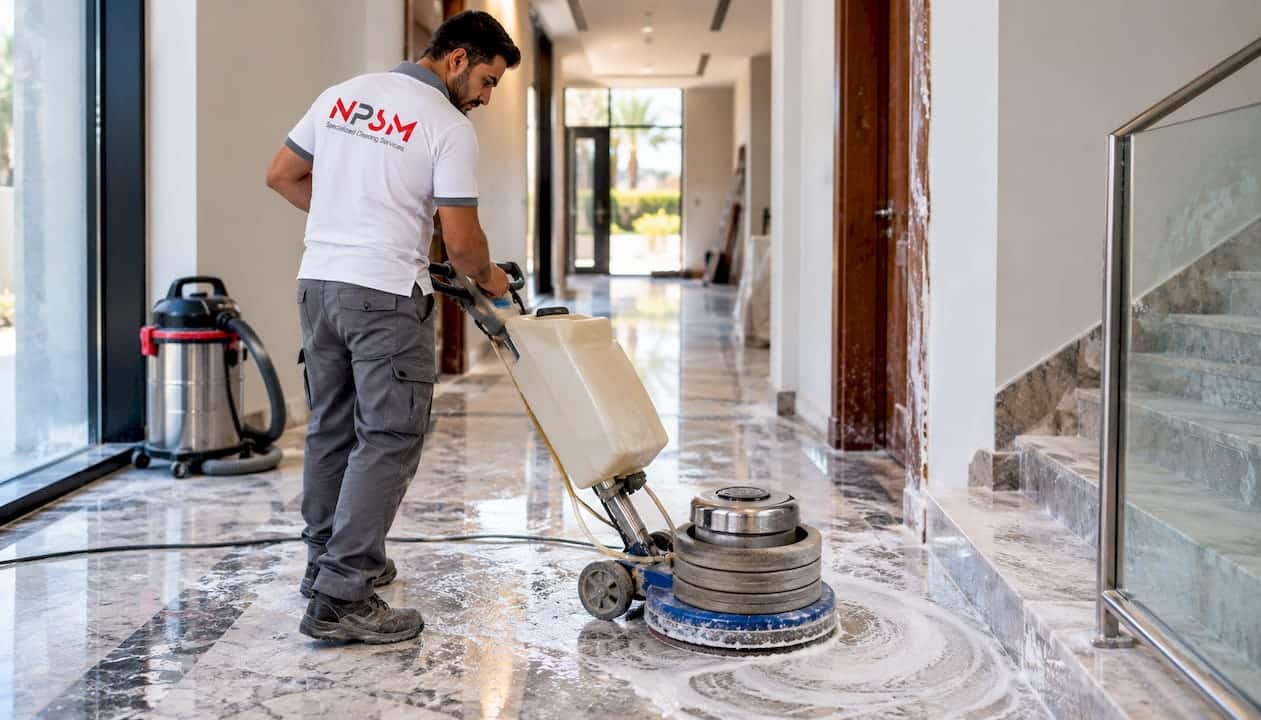
After a villa renovation in Dubai, the visible mess is the easy part. The hard part is the fine dust from cement, gypsum and sanding that settles inside AC ducts, on top of cabinets, inside light fittings and in the gaps around skirting. It comes back into the air every time the AC starts. Removing it takes a set order of work: bulk debris first, then high surfaces, then HVAC, then floors, then a final detail pass. Below is how that works on a villa, what usually gets missed, and what to confirm before you book.
Specializedcleaning
Clear Renovation Dust From Your Villa
Specializedcleaning provides post-construction cleaning in Dubai, with specialists and equipment for complex cleaning challenges.
Why renovation dust is different from everyday dust
Dubai homes already deal with sand and fine desert dust. Renovation adds something heavier: cement powder, gypsum from plasterboard and putty, sanding dust from paint and wood, and, if tiles were cut, fine mineral particles. These are abrasive and very light. They hang in the air for hours, then settle on everything.
That matters for two reasons. First, the dust gets into places a cloth never reaches. Second, it is not just a cosmetic issue. Dubai Municipality’s indoor air quality technical guidelines cover keeping renovation areas isolated from occupied zones to stop particles spreading, and the same guidance notes that construction dust can shorten the life of downstream equipment such as AC components. In a villa, where one air handler may serve several rooms, one dusty duct affects the whole floor.
If your contractor did the work while the family was still living in part of the house, assume dust has traveled further than the work zone.
Where hidden dust collects in a villa
Walk the house with a flashlight, ideally in the evening when the beam shows the dust. These are the places we see most often.
High and horizontal surfaces
Tops of wardrobes, kitchen wall units and door frames
Ceiling fan blades and motor housings
Light fittings, recessed spotlights and their trims
Curtain rails, blind headrails and the tops of picture rails
Inside fixtures and joinery
Inside kitchen and wardrobe drawers, and the shelves behind doors
Behind and under built-in appliances
Door and window tracks, including sliding doors to the garden or balcony
Skirting boards, the gap between skirting and floor, and the corners of stairs
Air system components
Supply and return grilles, and the plenum behind them
Flexible and rigid ductwork in the ceiling void
The air handling unit, coil and filter
Exhaust fans in bathrooms and the kitchen
Soft and porous items
Carpets and rugs, which hold dust deep in the pile
Upholstery, mattresses and curtains that stayed in the house during works
Stored items in cupboards left open
A useful rule: if a surface is above eye level or out of sight, it holds the most dust and is the one most often skipped.
The right order of work
Order decides whether a clean lasts. Cleaning floors first, then dusting shelves, simply puts dust back on clean floors. Here is the sequence a thorough post-renovation clean follows.
Bulk debris removal. Offcuts, packaging, tape, protective sheeting and leftover material go out first, so cleaners can reach every surface.
Dry dust removal from the top down. Ceilings, walls, light fittings, fans and shelves are vacuumed with HEPA-filtered equipment or wiped with damp microfiber. Dry sweeping or blowing only spreads fine particles.
Vents, grilles and ducts. Open grilles are cleaned and the ducts are assessed. If the AC ran during the works, the system almost certainly carries dust. See the HVAC section below.
Fixtures and joinery. Insides of cupboards and drawers, appliances, bathroom fittings, and tracks.
Stain and residue removal. Paint splashes, silicone smears, cement film and grout haze come off with methods suited to the surface. Marble, vinyl and wood each need different handling, and the wrong product can etch or dull them.
Windows and glass. Frames and tracks first, then glass, which can be scratched if gritty dust is dragged across it.
Floors last. Vacuuming, then mopping, and then any polishing or restoration if the floors were affected.
Final detail pass and walkthrough. A second look under good light, with the homeowner or the project manager.
One point often misunderstood: this is a different job from regular villa deep cleaning. Deep cleaning removes built-up household grime. Post-renovation cleaning removes construction residue, which needs different equipment, more time and, usually, more than one visit.
HVAC: the dust you cannot see
This is the part that most separates a surface clean from a proper one. During renovation, dust enters AC return grilles, open duct ends and air handlers. When the system restarts, it pushes that dust through the supply side into bedrooms and living areas.
An independent building-science firm that tests handover air quality notes that a proper assessment looks at how the HVAC system performs rather than just walking through with a handheld meter. The same practitioners advise running the system for at least two hours before testing so readings reflect real operating conditions, not still air. That is a sensible habit for a renovated villa too: if you are unsure, run the AC for a couple of hours after cleaning and see whether you notice dust at the vents or a lingering smell.
Practical steps for a villa:
Seal during works. Ask your contractor to cover return grilles and supply vents while sanding and cutting. This is the cheapest protection you can buy.
Replace filters after the heavy work phase, not before.
Inspect ducts and the air handler before the final clean. Cleaning rooms and then reopening a dusty duct undoes the work.
Rebalance if the layout changed. If walls moved or rooms were added, the airflow to each room may need adjusting. The Dubai Municipality guidance discussed above stresses that air distribution should be checked after major renovation affecting the HVAC layout.
The cheapest dust to remove is the dust that never spreads. Whatever stage your project is at, a few controls help: plastic sheeting over doorways, sticky mats at exits, covering furniture, keeping interior doors closed and using extraction on cutting tools. One renovation dust control guide for homeowners covers these site habits in more detail, and most apply equally to a Dubai villa.
Two Dubai-specific points:
Air conditioning is a dust route. Because villas run AC most of the year, closed windows and a running system are the norm. Sealing vents matters more here than in a house that is ventilated naturally.
Outside dust compounds the problem. Wind-driven sand enters through open doors during deliveries and debris removal. Our note on deep cleaning during Dubai’s dust storms explains how this affects timing.
Choose the right type of clean
Not every villa needs the same service. Use this as a decision guide.
Situation
Best fit
Why
Renovation just finished, builders still on site
Post-construction cleaning, after trades leave
Cleaning before the last trade only means doing it twice
Kitchen or one bathroom refit
Targeted post-renovation clean plus vent and duct check
Dust still travels beyond the room
Full villa fit-out or extension
Full post-construction deep clean, ducts and floors
Dust is in every zone and in the AC
Moving into a villa that was renovated for sale
Move-in deep clean plus duct inspection
You did not control the works, so do not assume it is clean
Months after works, dust keeps returning
HVAC duct cleaning and filter check
The source is probably the system
Choose post-construction cleaning if the works are complete, snag items are signed off and you want the house move-in ready.
Choose a standard deep clean if the renovation was cosmetic and minimal, and you mainly need grime and dust removed.
Choose duct cleaning as well if the AC ran during the works, or you notice dust at the vents or a stale smell when it starts.
What to ask before you book a cleaner
A vague quote usually becomes a vague result. Ask for:
A written scope by room, including inside cabinets, tracks, vents and light fittings.
Equipment details. HEPA-filtered industrial vacuums, microfiber cloths and surface-appropriate chemicals, not a household vacuum.
Staff credentials. Licensed, insured staff who are trained in handling delicate surfaces such as marble and wood.
Number of visits. Heavy dust often needs a rough clean and a final clean after the dust settles.
Surface care plans. How they will handle paint splashes, silicone marks, cement film and grout haze without damaging finishes.
A walkthrough with sign-off at the end, and what happens if you find missed areas.
On price, we do not publish fixed rates, because a villa’s size, floor finishes, level of dust and HVAC scope change the job completely. We quote after a free consultation and site assessment. Be wary of any quote given by phone without anyone seeing the property.
Our perspective: treat dust as a system problem
In our work on Dubai villas and commercial buildings, the pattern is consistent. Clients judge a post-renovation clean by how shiny the floors look on the day. Weeks later, what they notice is dust on surfaces that were just cleaned, and it usually comes from the same place: a duct, a vent or a ceiling void that nobody opened.
That is why we combine cleaning teams and specialized equipment, rather than sending a general crew with mops. We started from complex jobs such as HVAC duct cleaning and data center cleaning, where dust control is a safety and equipment-protection issue, and we bring the same discipline to a villa. Our advice is simple. Plan the clean as the last phase of the renovation. Include the AC in the plan. Do the walkthrough with a flashlight. And do not move the family back in until the dust has settled and been removed.
— Qadir
How we handle post-renovation villa cleaning
NPSM Specialized Cleaning Services LLC has over 15 years of experience in Dubai, with licensed staff, same-day scheduling and free consultations. For a renovated villa, we cover the post-construction deep clean, floors restoration and polishing for marble, vinyl and wood, grout and tile cleaning, carpet shampooing and HVAC duct cleaning, so one team can finish the whole job.
Here is how the last stretch of a renovation can run so cleaning fits without delays.
Final trade finishes. Painters, tilers and joiners complete their work and remove their equipment.
Contractor clears debris. Bulk waste leaves the property.
Book the clean for the day after. Booking after trades leave avoids re-contamination.
HVAC inspection and duct cleaning before or alongside the room clean, so the system is not reopened afterward.
Rough clean, then detail clean. Many villas need a second pass once dust from high surfaces has settled.
Walkthrough with a flashlight. Check tracks, vents, inside cupboards and window frames.
Run the AC for a couple of hours and check vents and air.
Move furniture and belongings back. Do this last, so nothing needs to be cleaned twice.
If your property is a new handover rather than a renovation, the same logic applies. Practitioners advise buyers not to rely only on a developer’s visual cleaning check, and to consider an independent air quality assessment. Their handover air quality guidance explains what such testing should measure.
FAQ
How do I get dust out of a villa after renovation?
Work from the top down. Vacuum ceilings, fittings and shelves with a HEPA-filtered vacuum, wipe with damp microfiber, then clean vents, windows and tracks, and mop floors last. Do not sweep dry or use a blower. Have the AC ducts checked, because dust inside them will return to every room.
How long should post-renovation cleaning take in a villa?
It depends on the villa’s size, number of floors, the level of dust and whether ducts and floors are included. A full renovation usually needs more than one visit, since a second pass is needed after dust settles. We confirm timing after a free consultation and site assessment.
Should I clean the AC ducts after renovation?
Yes, if the AC was on or the vents were uncovered during the works. Dust that enters the ducts is pushed back into the rooms when the system restarts. Dubai Municipality’s indoor air quality guidance also stresses isolating renovation areas and checking air distribution after major work.
When is the best time to book the cleaning?
Book it once all trades have finished and removed their equipment, ideally the day after. Cleaning earlier means the dust is simply produced again. We offer same-day scheduling, so you can book once the last trade leaves.