Tenants must hand the property back clean and in the same condition as received, apart from ordinary wear and tear, while landlords may deduct only for damage or dirt beyond that or what the lease requires. A practical approach is to document the property with dated photos and itemized receipts, and close DEWA and Ejari before the final inspection.
TL;DR:
A lease clause requiring professional cleaning or repainting is enforceable; otherwise, charges depend on condition beyond ordinary wear and tear and documented evidence.
Keep signed check in and check out reports, timestamped room photos, itemized invoices, meter readings, and a countersigned key return form to support claims.
Finish repairs first, paint next, and clean last; then complete a joint room by room inspection with signed records before returning keys.
Standard end of contract Ejari cancellation is free online and processed the same day, but unpaid DEWA bills or missing clearance can delay handover.
Specializedcleaning
specializedcleaning.ae
Leave Your Dubai Home Move-Out Ready
Specializedcleaning provides professional move-out cleaning in Dubai, helping homeowners prepare their property for handover.
What should a room-by-room move-out cleaning checklist include?
Agents and landlords may focus on areas such as kitchens, bathrooms and appliances. Work through the unit in this order to prepare for the inspection. Our own move-out cleaning checklist follows the same room-by-room logic if you want a printable version.
Kitchen
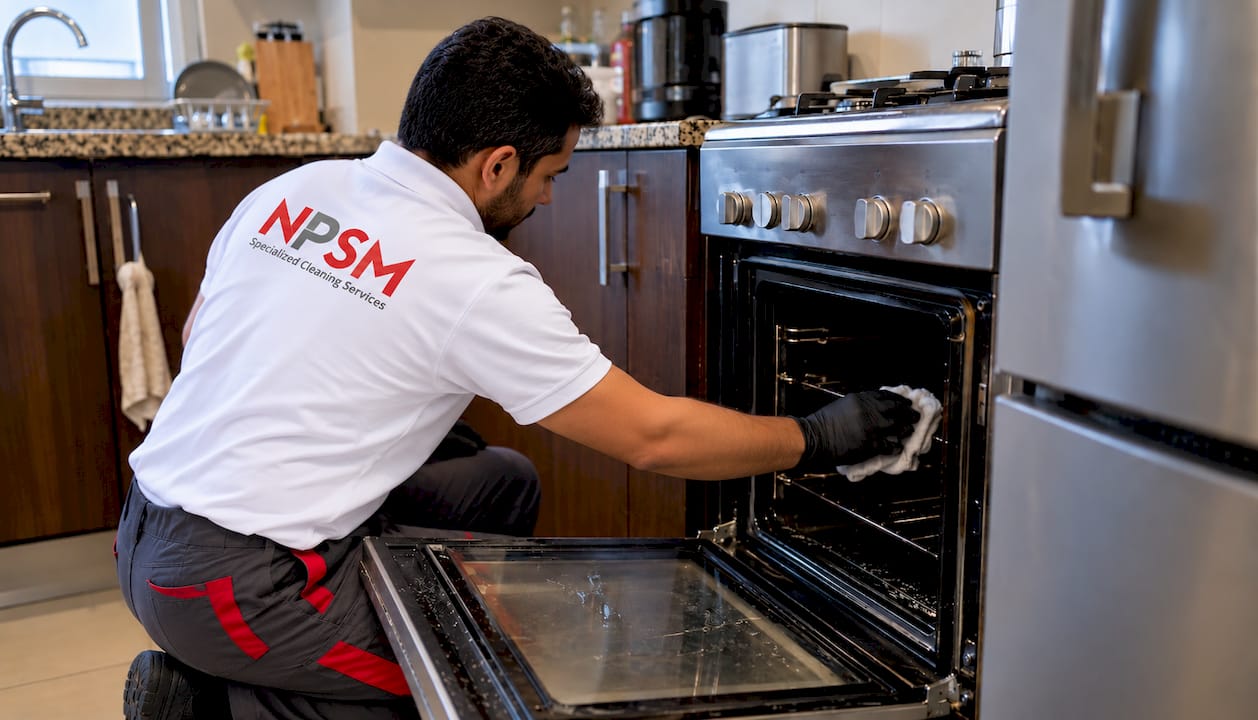
Degrease the oven and hobs, including racks, trays and the inside of the door.
Clean cabinets inside and out, and wipe and disinfect all countertops.
Descale the sink and taps, and clean the extractor and grease traps.
Bathrooms
Descale and disinfect showers, tubs, toilets and taps.
Scrub grout, wipe vents, and remove mold and limescale.
Living areas and bedrooms
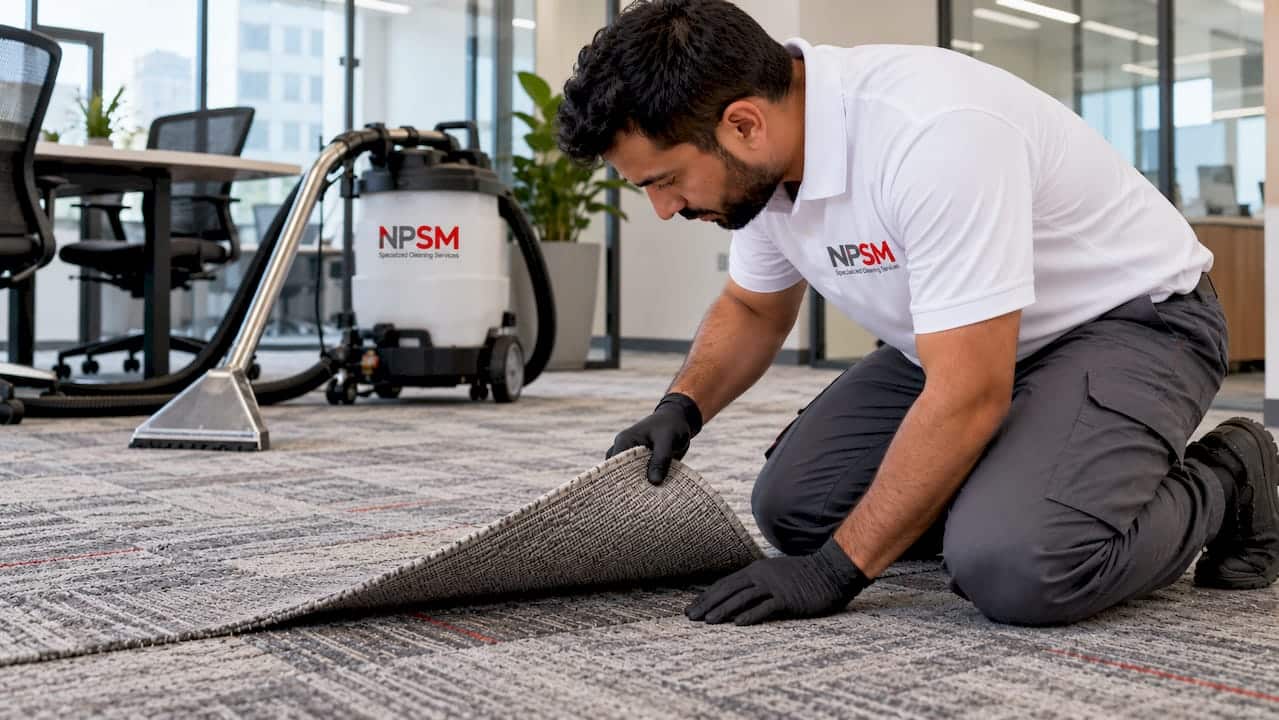
Remove stains from floors and walls, and vacuum or shampoo carpets where needed.
Wipe skirting boards and door frames, and touch up minor scuffs.
Windows and balconies
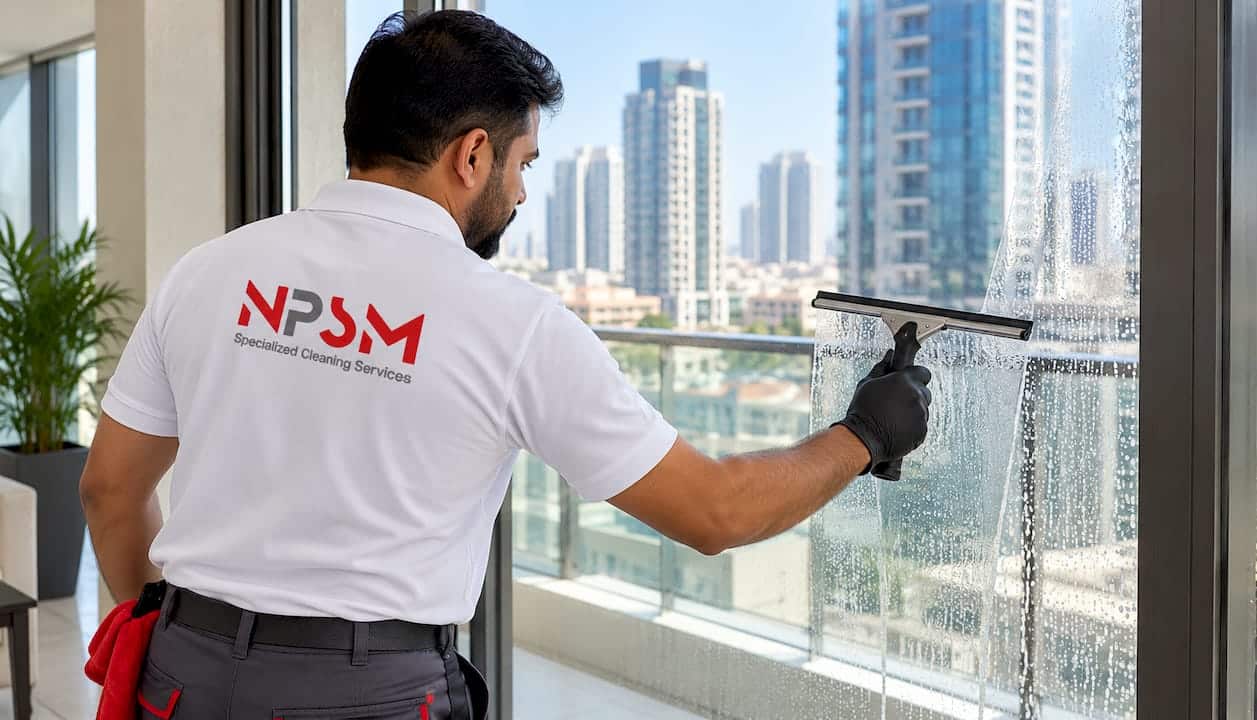
Clean the glass and the tracks, and peel off stickers and adhesive residue.
AC vents and grilles
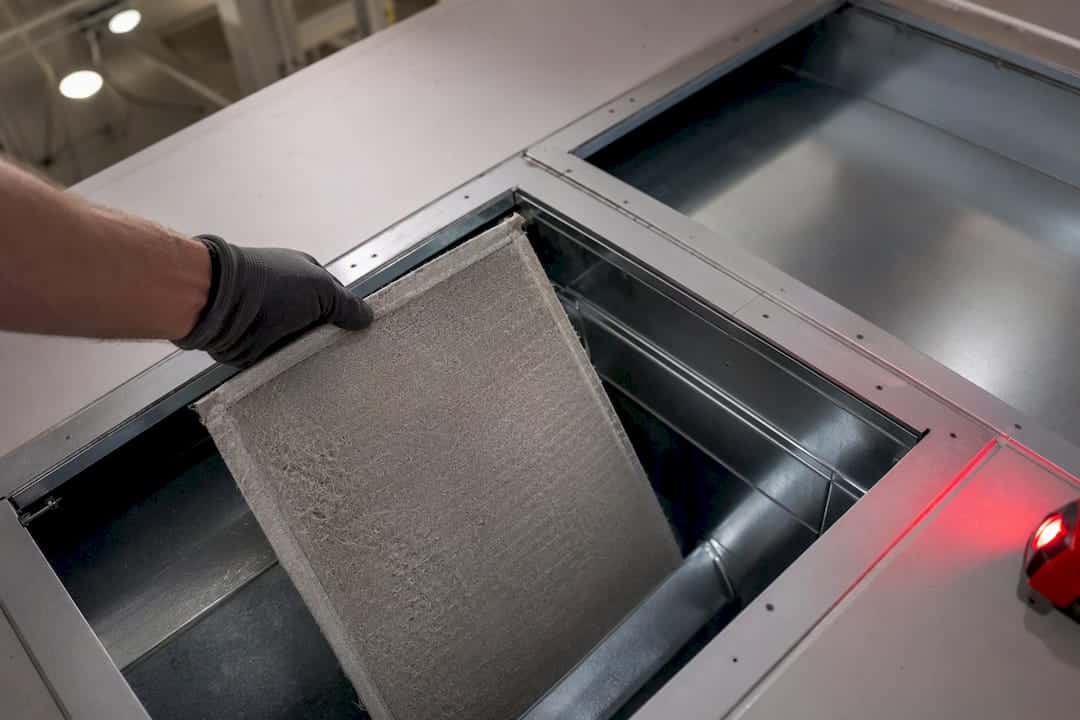
Dust and wipe every accessible grille. Cleaning inside the ductwork is a separate specialist job, so note it on your checklist if the unit needs it.
Appliances and fixtures
Test and clean every supplied appliance, and gather all keys, access fobs and remotes.
Final pass
Empty the unit, remove all rubbish, walk through every room once more and take dated photos.
The most common pitfall is treating move-out cleaning as a general tidy. A tidy removes visible clutter. An inspection-grade clean removes grease from the oven, limescale from the shower screen and dust from the AC grilles, which are exactly the items landlords cite when they hold back money.
Pro Tip:Do your final walkthrough in daylight with the AC off and the blinds open. Streaks, limescale and grease film show up far more clearly than under evening lights, and it is how an inspector will see them.
How do Dubai law and your tenancy contract divide cleaning and repair duties?
The legal benchmark is Law No. 26 of 2007%20of%202007.pdf), which governs the landlord and tenant relationship in Dubai. Under Article 21, the tenant must surrender possession in the same condition as received, except for ordinary wear and tear. The same law makes the landlord responsible for maintenance unless the damage was caused by the tenant, and it refers unresolved disputes to the Rental Disputes Centre (RDC), which can issue binding awards.
In practice, that splits responsibility like this:
Tenant: returns the unit clean, undamaged beyond normal use, and compliant with any cleaning or repainting clause written into the lease.
Landlord: handles structural maintenance and defects the tenant did not cause, and must justify any deduction from the security deposit.
Both: are expected to give each other written notice before expiry. The law sets a 90-day notice period unless the parties agreed otherwise.
Two points decide most disputes. First, a landlord may claim cleaning or repainting charges when the property’s condition exceeds normal wear and tear, or when the contract explicitly requires it on vacating. A faded wall after a tenancy may be ordinary wear and tear. A wall covered in marks, or painted a color the lease did not allow, may be treated differently, depending on the condition and the lease. Second, the landlord must justify the deduction, and the tenant can ask for receipts and photos supporting it.
So read your lease clause by clause before you start cleaning. If it says the property must be professionally cleaned or repainted at exit, that obligation is enforceable. If it is silent, the wear-and-tear standard applies.
The practical tip that settles most arguments: always compare the check-in report with the check-out report. If a mark appears on both, it was there before you. If it appears only on the second, the landlord has a case. Tenants who kept their original move-in report and signed handover documents hold the primary evidence the RDC relies on.
What do move-out cleaning and repainting typically cost, and what drives the price?
We cannot give you a fixed price that holds across every unit, and any provider who promises one before seeing the property is guessing. What we can tell you is what moves the number, so you can budget and negotiate sensibly. Because we publish no fixed rate card for handover cleans, the reliable route is to ask for a written, itemized quote after a quick look at the unit.
The main cost drivers are:
Property size: a small apartment and a large villa can differ substantially in labor hours.
Extent of grime: an unused guest bathroom is a different job from a kitchen with years of baked-on grease.
Stain remediation: wine, coffee, pet marks or cooking stains on carpets and tile.
Carpet shampooing and grout restoration: extra scope on top of a standard deep clean.
Number of rooms and floors: more surfaces, windows and wet areas.
Specialist services: duct cleaning, balcony pressure washing or floor polishing are priced separately.
Repainting follows its own logic. Full repainting is commonly requested when the tenant used an unauthorized color or caused heavy wall damage. Touch-ups usually suffice when the marks are light and the tenancy ran a normal length. If the lease says nothing about repainting, a landlord asking for a full repaint on a clean, lightly worn unit is worth questioning.
When disputes arise, timing matters too. Rental disputes typically resolve within 15–30 days once filed with the RDC, which is why having your invoice ready beforehand is far cheaper than arguing afterward.
Ask every provider, ours included, for an itemized quote that lists rooms, tasks and any extras. An itemized professional invoice does double duty: it fixes your budget, and it becomes evidence that the cleaning was done to a stated scope if the landlord later disputes the condition.
What evidence should you collect at move-in and move-out?
Deductions stand or fall on proof. A tenant who can show the condition on both ends of the tenancy rarely loses a cleaning dispute, and a landlord with dated records can justify a legitimate charge without argument. A formal check-out report with room-by-room photos, meter readings and signed condition entries is among the most useful evidence in RDC cases because it removes ambiguity.
Follow this routine:
Keep the original check-in report. It is the baseline document everything else is measured against. Store a scanned copy somewhere other than your phone.
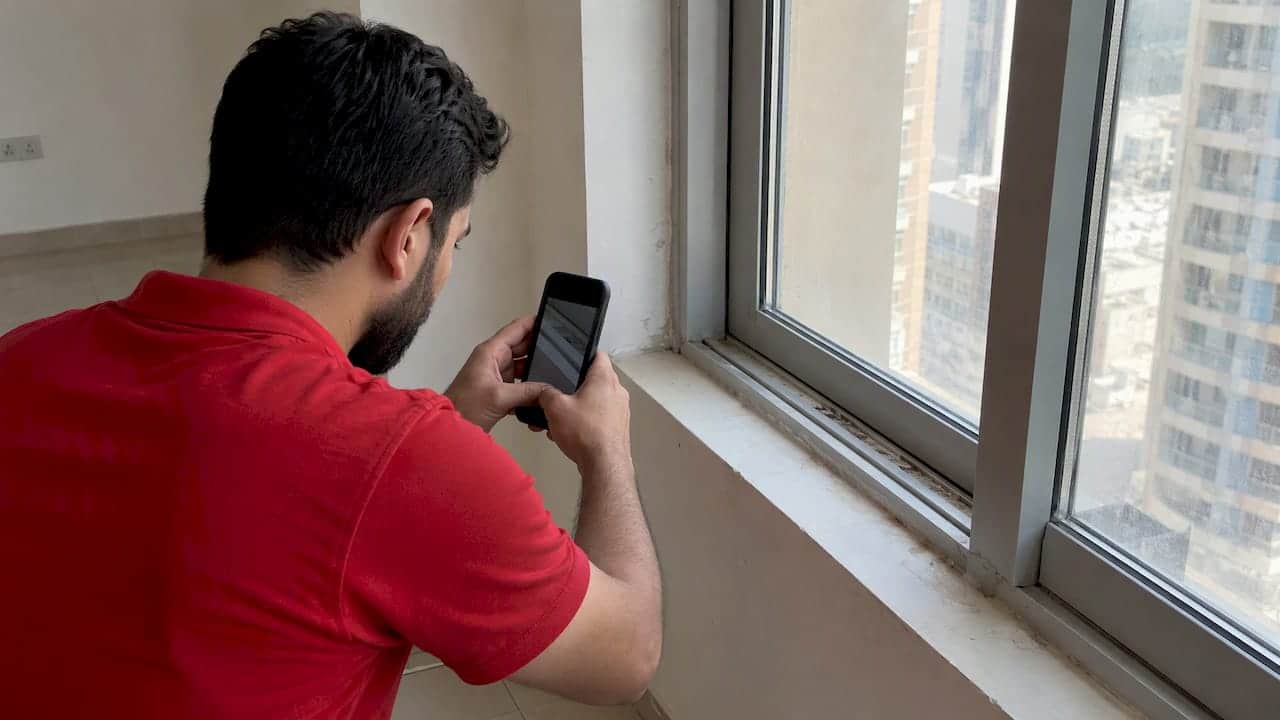
Photograph every room on handover day. Capture floors, walls, ceilings, appliances, vents, windows, balcony tiles and any pre-existing damage. Use time-stamped photos and shoot each room from the doorway and then in close-up.
Collect every receipt and invoice. That includes professional cleaning, painting, repairs and appliance servicing, ideally itemized with dates.
Log the meter readings. Record electricity, water and chiller readings where applicable, with a photo of each meter display.
Return all keys, fobs and remotes against a signed handover form. Ask for a counter-signed copy, not a verbal confirmation.
Pro Tip:Email yourself the photos the same day. The sent timestamp gives you a second, independent record of when they were taken, which helps if a file’s metadata is ever questioned.
Landlords benefit from the same discipline. A deduction supported by a dated photo, a line on the check-out report and an invoice is far harder to contest than one that rests on a verbal complaint.
How do DEWA, Ejari and timelines affect your deposit release?
Administrative loose ends are a quiet reason deposits stall. Handle them in this order and in parallel with the cleaning, not after it.
Close DEWA. Submit your final meter readings, pay the final bill and download the DEWA clearance. Landlords and agents often want to see this clearance before releasing money, and the DEWA deposit refund follows only after the final bill is settled.
Cancel Ejari. Do it through the Dubai REST app. For standard end-of-contract cases, cancellation is free online and processed the same day. If you go through a Real Estate Trustee Centre instead, a service partner fee of AED 40 plus VAT applies. You will need your DEWA clearance, the Ejari certificate or number, and your Emirates ID. Per Ejari cancellation guidance, landlord e-signature is required only for early termination, not for a standard end-of-contract cancellation.
Why the order matters:
An active Ejari or missing DEWA clearance may complicate the handover. Check the cancellation requirements with the relevant service provider.
The most common causes of delay are unpaid final bills, mismatched meter readings, missing documents and a landlord who is slow to confirm the handover.
Plan for the opposite problem too. If the deposit still is not returned after a clean handover, the next step is a Writ of Payment through the Dubai Land Department. Fees start at a minimum of Dh500, or 3.5% of the claimed amount up to Dh15,000, and the RDC registers and reviews the case once you submit supporting documents.
What is the step-by-step inspection and handover workflow?
A good handover is sequenced. The order below prevents rework and gives both parties a clear record at each stage.
Start early. Give written notice within the contract period, 90 days where applicable, and ask the landlord or agent to schedule a pre-check so you know their expectations before you spend money.
Complete repairs first. Fix anything beyond wear and tear that you are responsible for: holes, damaged fittings, broken tiles.
Do any repainting next. Painting creates dust and marks, so it belongs before the final clean.
Clean last. Deep cleaning is the final task so nothing gets re-soiled. This is why professional cleaners prefer to be booked after trades have finished.
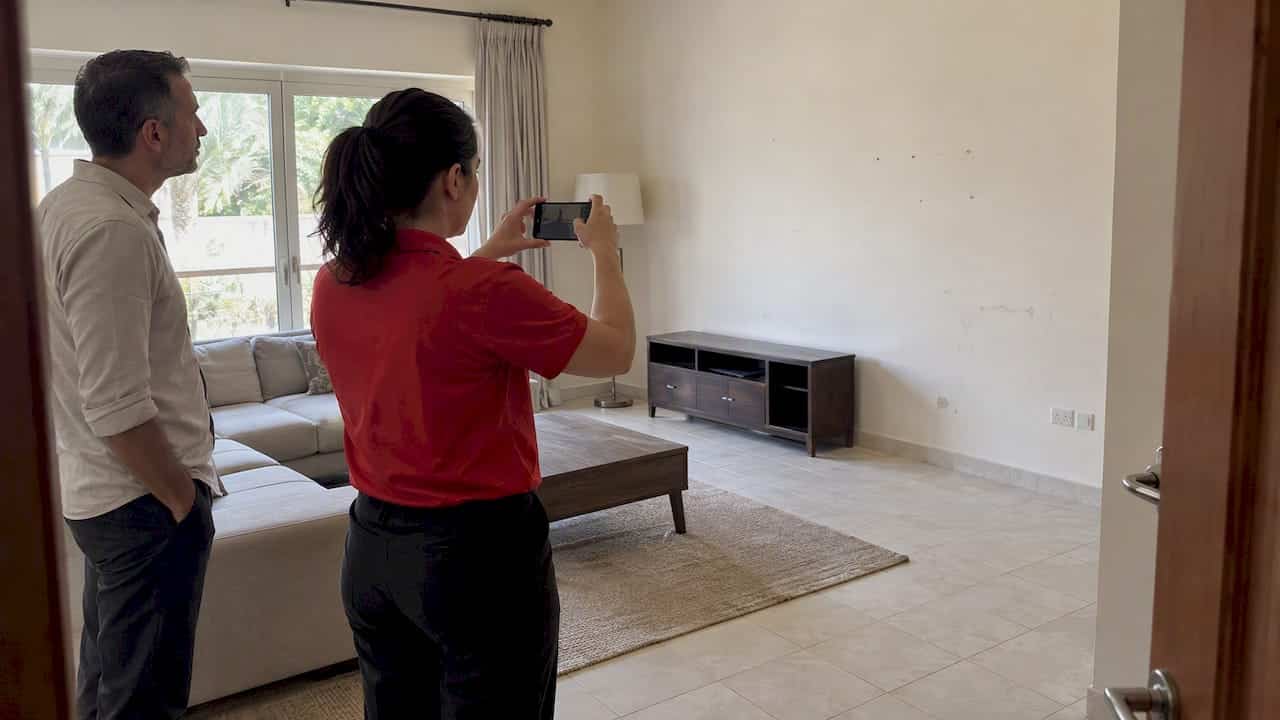
Run the joint inspection. Walk each room with the landlord or agent, complete a room-by-room check-out report together, take timestamped photos and collect signatures from both sides.
Settle the paperwork. DEWA clearance, Ejari cancellation, key return and a signed handover form.
Resolve any disagreement in writing. Ask for itemized deductions, reply by email, and send a formal notice before filing at the Rental Disputes Centre.
Disputes can trace back to one skipped step: no pre-inspection, cleaning done before painting, or a check-out report nobody signed. Following the sequence does not guarantee agreement, but it makes every claim either side raises provable or disprovable.
When should you hire a professional move-out clean?
Hire a professional when the unit is large, the tenancy was long, the kitchen or bathrooms need descaling, or you simply cannot afford a failed inspection. Professional move-out cleaning is distinct from routine cleaning. It is built around the inspection points landlords use to justify deductions:
Descaling of bathrooms, taps and shower screens.
Grease removal from hobs, ovens and extractor surfaces, including the inside of cabinets.
Wiping AC grilles and vents, and detailing window tracks.
Grout cleaning and restoration where staining is visible.
Insist on proof. Ask for an itemized invoice with a written scope and a dated before-and-after photo report. For heavier remediation such as carpet shampooing, grout restoration or HVAC duct cleaning, agree the scope in writing first and ask for photos of each area. Schedule the clean after repairs and painting.
A professional clean backed by documentation removes the most frequent excuse for withholding a deposit, which is that the unit “was not left clean.” It does not override a lease clause or cover damage, but it closes the cleaning question cleanly. If you are weighing a provider, our deep cleaning guide explains what a proper deep clean includes, and our contractor checklist lists what to verify before you sign.
Pro Tip:Ask the cleaner to photograph the oven interior, shower screen, AC grilles and window tracks specifically. These four are the items agents inspect first.
What do we recommend after handling move-out handovers in Dubai?
Our view is that handovers go better when tenants keep clear records. Most deposit disputes are not about whether the unit was cleaned. They are about whether anyone can prove what state it was in, and when.
Two habits make the biggest difference. First, sequence the work: repairs, then painting, then the professional clean last. Tenants who clean first and paint afterward pay twice, because dust and drips undo the first job. Second, make the paperwork a deliverable, not an afterthought. Ask your cleaning provider about documentation, and hand it to the landlord at the inspection rather than emailing it later. A landlord who is holding a photo report in their hand has far less room to argue.
The other thing worth saying plainly: the received wisdom that deposits are a lottery is mostly wrong. They look like a lottery when neither side kept records. With a signed check-in report, a signed check-out report and an invoice, the outcome is usually predictable.
— Qadir
How can we help you finalize the handover?
If you would rather hand the cleaning to a team than spend a weekend on your knees in the shower, our move in/out deep cleaning is built for inspection-day conditions. Contact us to ask about staff, scheduling and consultation options, so you can plan around your handover date.
What it covers for handovers:
Move in/out deep cleaning of kitchens, bathrooms, floors, windows and fixtures.
Carpet shampooing and grout cleaning where the unit needs them.
Cleaning documentation you can hand to the landlord or agent.
Ask us about scheduling and staff details.
On inspection day you walk in with a clean unit, a written scope and photographs of the result. To get started, request a free consultation on our website and tell us your handover date and the size of the unit.
FAQ
Who is responsible for end of tenancy cleaning in Dubai?
The tenant is normally responsible for returning the property clean and in the same condition as received, apart from ordinary wear and tear. A landlord can claim cleaning charges only when the condition goes beyond that or the lease explicitly requires cleaning on exit, as Law No. 26 of 2007 sets out.
Who handles maintenance in Dubai, the landlord or the tenant?
The landlord is responsible for structural maintenance and defects the tenant did not cause. The tenant covers damage resulting from their own use. The lease may add specific duties, so check it before assuming either way.
Do landlords need to professionally clean between tenants?
The guidance says landlords must hand over the property in good condition. Whether a professional clean is needed depends on the property’s condition and the tenancy arrangements. Many landlords arrange a clean anyway so the next move-in report starts from a clear baseline.
How long should a tenant be given notice to vacate?
The law sets at least 90 days’ written notice before lease expiry unless the parties agreed otherwise. Check your contract for any different period and keep proof that the notice was delivered.
How long does a deposit dispute take to resolve?
Rental disputes filed with the RDC typically resolve within 15–30 days. Deposit claims can also be started through a Writ of Payment application via the Dubai Land Department.
Professional construction dust removal before handover means a trained crew clears fine dust from every surface, cavity and air path in a property: ceilings, joinery, window tracks, floors and AC ducts. They use HEPA-filtered vacuums, microfiber and controlled wet methods, not a broom and a mop. In Dubai the work usually happens after the final trades leave and before the snagging inspection and key handover. Done in that order, it shows up the defects you need to report. It also means the first thing you breathe in your new villa, apartment or fit-out is not the building site.
Specializedcleaning
specializedcleaning.ae
Prepare Your Property for Handover
Specializedcleaning provides post-construction cleaning in Dubai for villas, apartments, offices and warehouses, with same-day scheduling and a free consultation.
Why construction dust is a different problem from household dust
Cutting tiles, sanding plaster, chasing walls and mixing cement all release particles far finer than what collects on a shelf in a lived-in home. Those particles drift, settle on top of wardrobes and inside light fittings, and sink into cabinet runners and window tracks. A damp cloth over a visible surface leaves a film behind. A standard vacuum without fine filtration pushes the smallest particles back into the room.
Dubai adds its own conditions. Handover often happens in a sealed, air-conditioned unit, so there is no breeze to carry dust away. Outside, desert dust finds its way in whenever doors are opened during fit-out. Cement, paint overspray, silicone residue, adhesive and grout haze then sit on top of that layer. Each needs a different method, which is why one all-purpose product rarely works.
What is at stake is more than appearance. Dubai Municipality’s technical guidelines on indoor air quality say that inspections by competent persons should take place at all stages of constructing a building and its HVAC system, so that acceptable indoor air quality is secured when the system goes into use. A clean air path at handover is part of that thinking, not an extra.
When to book it: the handover sequence that works
Timing decides whether the clean is worth the money. A sensible order for a new villa, apartment or office looks like this:
Trades finish. Painting, tiling, joinery, electrical and plumbing are signed off.
Rough clean. Large debris, packaging, offcuts and loose material are removed.
Detailed dust removal and final clean. Fine dust, residues and stains are handled top to bottom.
Snagging walkthrough. Clean surfaces make scratches, paint misses, chipped tiles and grout gaps easy to see.
Snag repairs. Minor repairs create small amounts of new dust, so a short touch-up is sensible afterward.
Handover and move-in. Furniture and belongings arrive into a clean space.
Booking the clean after furniture or curtains are installed makes it slower and less complete. Booking it before the trades finish means paying twice. If your developer or contractor handles a basic builder’s clean, treat it as the rough clean at best and plan the detailed stage separately.
The three stages of a professional post-construction clean
Most reputable crews work in stages. The names vary, but the logic is consistent.
Stage 1: Rough clean
This removes the bulk: debris, leftover materials, protective film, tape, cardboard and heavy dust on floors. It also clears access, so the crew can reach ceilings, shafts and balconies safely.
Stage 2: Detailed dust removal
The crew works from the highest point downward so dust falls onto surfaces not yet cleaned. Typical tasks:
Ceilings, cornices, light fixtures and air diffusers
Walls, skirting boards, doors and frames
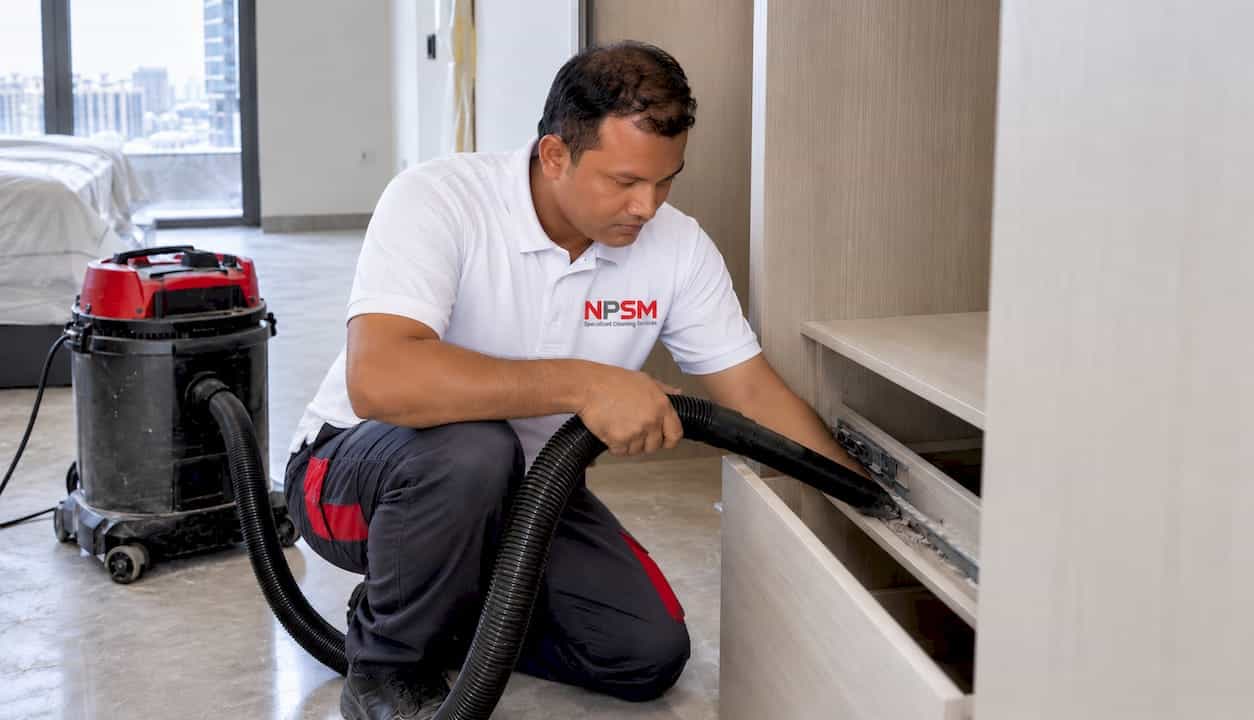
Inside and on top of wardrobes, kitchen cabinets and drawers
Window glass, frames and sliding tracks
Bathroom fittings, mirrors and glass partitions
Balconies, terraces and utility areas
Fine dust is captured with HEPA-filtered vacuums rather than blown away. Surfaces are then wiped with microfiber cloths so particles are lifted, not smeared.
Stage 3: Final clean and residue removal
This is the stage where the property starts to look finished. It covers paint splatter, cement and grout haze on tile, adhesive and sticker marks, silicone smears on glass and sanitaryware, and a final floor clean suited to each material. Stone, vinyl, wood and porcelain each take different products. Using an acid-based remover on marble, for example, can etch it permanently, so the floor type should be discussed during the site visit.
Do not skip the AC ducts
This is the most commonly missed item. The air conditioning often runs during fit-out, or the ducts sit open to the site while ceilings are completed. Dust gets into the ductwork and then reappears on freshly cleaned surfaces the first time you switch the system on at full load.
A complete handover clean should therefore address:
Supply and return grilles, diffusers and visible plenum areas
Fan coil unit filters, and the coils where access allows
Ductwork internals where dust has entered, using brushing and negative-pressure vacuuming
In commercial spaces and data rooms, the stakes are higher still. Dust on equipment affects cooling performance, which is why we treat HVAC duct cleaning and data center cleaning as specialist services rather than extras bolted onto a general clean. If you want the background on why ducts matter in this climate, our guide to HVAC duct cleaning in Dubai goes into more detail.
Water tanks and drains: the hidden part of handover
Dust and debris do not stay out of water systems on a building site. Dubai’s Local Order No. 11 of 2003 makes the owner or contractor responsible during construction for public health pest control, including preventing pest infestation in the building, its water tanks and its sewers. For a villa or small building, that is a reason to ask whether the tanks and drain lines were cleaned and disinfected before occupation. We carry out water tank cleaning and disinfection and drain line jetting for exactly this stage.
Professional crew or in-house clean: how they compare
Factor
DIY or general maid service
Builder’s basic clean
Specialist post-construction crew
Fine dust capture
Standard vacuum, dust re-circulates
Often sweep and mop
HEPA-filtered vacuums, microfiber
Residue removal (cement, paint, silicone)
Limited, risk of surface damage
Visible areas only
Material-specific methods
High and hidden areas
Rarely reached
Partly
Ceilings, tops of units, tracks, vents
AC and duct dust
Not addressed
Usually not included
Can be included or added
Speed on a villa
Many days
One to two days, shallow
Team-based, scheduled around handover
Accountability
Informal
Within the contract
Written scope and re-visit for missed items
The point is not that other options never work. A small studio with light fit-out may need little more than a careful clean. A full villa, an office fit-out or a warehouse is a different job.
What a good written scope contains
Cleaning in Dubai is commonly quoted per property package, per cleaned square meter or by agreed labor, according to Bestimate’s post-renovation cleaning guide. Whichever model you are offered, the number alone tells you little. Ask for the scope in writing and check it covers:
Areas: every room, balconies, roof, parking, maid’s room, store rooms
Equipment: HEPA vacuums, scrubbing machines, ladders and access gear
Access and permits: building management rules, working hours, lift booking and gate passes
Re-visit: how missed items are handled after the snagging walkthrough
We do not publish fixed prices because they depend on size, condition and finish. We offer a free site visit and consultation, and you can read how we approach quoting on our post-construction cleaning price page.
Our perspective
We have spent more than 15 years cleaning homes and commercial properties in Dubai. The pattern we see most is simple: a property is declared “cleaned” by the contractor, the owner moves in, and within a week there is a pale film on every surface because the ducts and high surfaces were never touched.
For that reason we push clients on three things. First, book the detailed clean after trades finish and before snagging, not after move-in. Second, decide on the AC and duct scope at the start, not as an afterthought. Third, get a site visit before a quote, because a flat price given over the phone for an unseen villa is a guess.
We also encourage property managers and developers handling multiple units to standardize the scope across them. Consistent checklists make inspections faster and disputes rarer.
— Qadir
Choose this service if…
Choose professional post-construction dust removal if:
You are receiving a new villa, apartment or office from a developer or contractor.
You have just finished a renovation or fit-out and plan to move in or open.
You manage handovers for several units and need a repeatable standard.
Someone in the household has allergies, asthma or a baby at home. In that case, speak to your doctor about any specific health concern, and let the cleaning team know about it before they start.
Consider a lighter option if:
The work was minimal, such as painting one room. A standard deep cleaning may be enough.
Our team combines trained staff with specialist equipment. Licensed, insured crews carry out the work, and we can usually schedule the same day when a handover date is tight. A typical job runs like this:
Free consultation and site visit: we check the size, finishes, floor types and access rules.
Written scope and quote: areas, stages, equipment and AC or duct options are laid out.
Rough clean and detailed dust removal: top to bottom, with HEPA-filtered vacuuming.
Final clean and residue removal: floors, glass, sanitaryware and fittings.
Walkthrough: you inspect, and we address anything missed.
Cleaning before the last trade leaves. The dust returns, and you pay again.
Assuming the builder’s clean is final. Ask exactly what it included.
Ignoring the AC. Dust in the system recirculates after move-in.
Using harsh chemicals on stone. Acid cleaners can damage marble and some grout.
Moving furniture in first. Cabinets and tracks become harder to reach.
Accepting a price with no scope. Disputes are far easier to settle against a written list.
Frequently asked questions
How long does construction dust removal take for a villa?
It depends on size, number of floors and how much residue there is. A site visit gives a realistic estimate. Most villas need a team working over one or more days, and the AC and duct work may be scheduled separately.
Should I clean before or after the snagging inspection?
Clean before the main walkthrough, so defects are easy to see, then arrange a short touch-up after the snag repairs are done. Repairs such as sanding or re-grouting create new dust, so a final wipe-down avoids moving into a fresh layer.
Why does dust keep coming back after cleaning a new property?
The usual cause is dust inside the AC system, vents and false ceilings, plus fine particles in cavities. When the system runs, it blows that dust back into the room. Including grilles, filters and ducts in the scope addresses the source.
Is a regular cleaning company enough for post-construction work?
For light renovation, perhaps. For full handovers, you need HEPA-filtered equipment, residue-specific methods and crews who can work at height safely. Ask any provider about equipment, insurance and what their scope covers.
How much does it cost in Dubai?
Pricing varies by property size, condition and scope, and quotes are commonly built per property, per square meter or by labor. We do not publish fixed rates, and we offer a free site visit so the quote reflects the actual job.
Book your handover clean
If you have a handover date approaching, contact us for a free consultation. We can inspect the property, agree a written scope and schedule the crew around your snagging and move-in dates, often on the same day.
End of tenancy cleaning in Dubai is the deep clean that returns a unit to rentable condition once a tenant hands back the keys. For landlords and property managers, the real question is not just who scrubs the oven. It is what you can legally charge the tenant for, what you must absorb as the owner’s cost, and how you prove the difference. This guide covers the legal limits, a practical handover workflow, a scope of work you can reuse, and how to brief a cleaning contractor so the unit is ready for the next lease.
Specializedcleaning
Prepare Your Property for the Next Tenant
Specializedcleaning provides professional cleaning for homes and businesses in Dubai, including deep cleaning for landlord handovers.
A landlord can hold a security deposit, but must refund it, or the balance, at lease end if the unit comes back in the condition received, allowing for normal wear and tear.
Signed move-in and move-out condition reports, with photos, are the evidence that settles most disputes. Without them, cleaning claims are hard to defend.
Cleaning to restore tenant-caused dirt is a reasonable deduction. Cleaning or painting to make a unit look new is a presentation cost that usually belongs to the owner.
Split the work into three buckets before the tenant leaves: tenant-chargeable, owner-funded and specialist work such as AC ducts, floors and water tanks.
Book a professional team for the day after the inspection, so vacancy days stay short.
Dubai’s tenancy framework rests on Law No. 26 of 2007, as amended. Under it, a landlord may collect a security deposit to cover maintenance of the property when the lease expires. The same law obliges the landlord to refund the deposit, or what remains of it, when the contract ends, provided the premises are returned in the condition in which they were received, allowing for normal wear and tear.
Two phrases carry the weight: “the condition in which they were received” and “normal wear and tear”. Both are about the starting point. A unit handed over freshly painted and spotless sets a higher baseline than one handed over tired and lightly marked.
What the Rental Disputes Center looks for
The Dubai Land Department explains in its frequently asked questions that the Rental Disputes Center (RDC) expects landlords to deduct only what is needed to restore the property to its original condition, excluding normal wear and tear. Routine maintenance and upgrades are not grounds for withholding a deposit. A deduction needs evidence of specific damage beyond ordinary use, and signed condition reports carry the most weight.
A published example shows the direction of travel: the RDC ordered an owner to refund a AED 6,000 security deposit to a tenant even though the lease had already expired. Delay on your side does not strengthen your position.
Presentation is not maintenance
Real estate expert Mario Volpi, quoted in The National, makes a distinction every property manager should adopt. Owners often want a unit to look new for the next listing. But if the tenant received the property in a different state, they only have to return it in that same state, with reasonable wear allowed. Billing a tenant for a full repaint or a showroom-grade clean to lift the listing photos is a presentation cost, not a damage claim.
The same article notes that a market practice of assigning repairs below AED 500 to the tenant is common but is not a statutory rule. Unless the tenancy contract says so, major repairs and structural maintenance remain with the landlord. Check your contract wording before you invoice anyone.
A note on DIFC properties
Units inside DIFC fall under a separate regime. According to the DIFC Courts tenancy FAQ, residential security deposits there must not exceed 10% of the annual rent. If you manage across both jurisdictions, keep the contract templates separate.
This article is operational guidance, not legal advice. For a contested deduction, speak to a licensed UAE property lawyer or file through the RDC.
Build the evidence before the tenant moves out
The Dubai Land Department advises that both parties be present at handover to record the state of the premises. That single step prevents most deposit fights, because it creates an objective baseline for what counts as normal use.
The move-in record is the benchmark. The DIFC Courts FAQ recommends that landlord and tenant inspect the premises and agree a written schedule of condition before the tenancy starts. If that document is missing, separating normal wear from tenant damage becomes much harder in a dispute. If you are taking over a portfolio with no move-in records, say so to yourself honestly: your claims will be weaker, and your cleaning budget should lean toward owner-funded.
What a useful condition report contains
Room-by-room notes for walls, ceilings, floors, doors, windows and balcony.
Photos and short videos with date stamps, including appliances open and running.
Meter readings, key and access card counts, and any parking or gate fobs.
A line for the AC units: working, filters present, any odour or drip.
Signatures from both sides, with the Ejari contract number on the page.
A handover workflow for property managers
The following sequence works for a single villa or a block of apartments.
Notice stage. When the tenant confirms non-renewal, send the cleaning expectations in writing and attach the move-in report.
Pre-inspection, about two weeks before. Walk the unit with the tenant. Flag anything that can still be fixed by them, such as grease on the hob or marks on grout.
Final inspection on handover day. Both parties present, report signed, photos taken against the same angles as the move-in set.
Decide the buckets. Mark each item as tenant-chargeable, owner-funded or specialist.
Book the clean the next day. Order the professional team while the unit is empty, before furniture or the next tenant’s movers arrive.
Post-clean sign-off. Walk the unit with the contractor, photograph the result and file it with the inspection.
Deposit settlement. Send the tenant an itemized deduction with evidence, and refund the balance promptly.
What counts as tenant-chargeable, owner-funded or specialist
The table below is a practical guide, not a legal ruling. Your contract and the baseline report decide each case.
Item
Usually tenant-chargeable
Usually owner-funded
Notes
Grease on kitchen surfaces and oven
Yes, if the unit was clean at move-in
No
Photograph before and after
Stained or dirty carpets
Yes, for stains beyond normal use
Normal aging
Compare with move-in photos
Scuffs and light marks on walls
No, normal wear
Yes
Small furniture marks are normal use
Repaint to refresh the unit
No, unless damage is beyond wear
Yes
Presentation, not maintenance
Bathroom limescale and mold from neglect
Often yes
If caused by a building fault, owner
Check for leaks first
Dust and debris from tenant move-out
Yes
No
Basic dirt is the tenant’s responsibility
AC duct and coil cleaning
Rarely
Usually
Check contract for servicing clauses
Water tank cleaning
No
Yes, building or owner
Often handled at building level
Floor polishing or crystallization
Only for tenant-caused damage
Yes for restoration
Compare with move-in condition
Scope of work for an end of tenancy clean
A vague brief produces a vague clean. Give the contractor a written scope so the invoice matches the job.
Kitchen
Degrease the hob, extractor hood, oven interior and racks.
Clean inside and outside cabinets, drawers and pantry shelves.
Descale the sink and taps, and wipe the backsplash.
Empty, defrost and clean the fridge and freezer if included in the lease.
Bathrooms
Remove limescale from showers, glass, taps and drains.
Disinfect toilets, vanities and mirrors.
Clean tile grout and extractor fan covers.
Living areas and bedrooms
Dust ceilings corners, fans, light fittings and skirting boards.
Clean interior window glass, tracks and frames, plus the balcony door frames.
Wipe wardrobes inside and out, switches and door handles.
Vacuum and mop floors, shampoo carpets where present.
Outdoors, balconies and villas
Wash balconies, terraces and railings, and clear dust from sliding door tracks.
For villas, add the garden-facing glass, maid’s room, driveway sweep and any roof access.
Grout cleaning and, where tiles have failed, regrouting.
Water tank cleaning and disinfection for villas with their own tanks.
Dubai Municipality publishes technical guidelines for indoor air quality, a useful reference if you manage buildings and want a documented standard for ventilation and air handling between tenancies.
Perspective: what we see after handover
We have cleaned Dubai homes and commercial spaces for over 15 years, and the pattern at end of tenancy is consistent. Disputes rarely start with the cleaning itself. They start when nobody can show what the unit looked like at the beginning.
Our advice to property managers is to treat cleaning as a scheduled operation, not an afterthought. Walk the unit, sort the work into buckets, and brief one team with a written scope. A clean that is done once, documented with photos, and signed off by you is far easier to defend than three rounds of partial touch-ups.
We also see owners pay twice because they cleaned first and then called a specialist for the AC or the floors. Order the specialist work first, because dust and polishing residue come down on surfaces you already finished. Deep clean last.
Finally, be honest with tenants about what is presentation. Tenants who feel the process is fair tend to leave the unit in better shape and cause fewer escalations.
— Qadir
How to order the work so it is done once
Sequence matters. Use this order for a vacated unit:
Remove any leftover furniture, items and rubbish.
Complete repairs and touch-up painting.
Clean AC ducts and vents if scheduled.
Restore or polish floors.
Run the full deep clean, top to bottom.
Final photo walk-through and key handover.
If painting is needed, do it before the clean. Fine paint dust settles on every surface, and a deep clean afterward removes it in one go.
Choosing a cleaning contractor
Whether you hire a local company or a larger facility management provider, ask for these before you sign:
Licensing and insurance. Ask for a valid trade license and proof of insurance for staff entering your property.
A written scope matched to your checklist, with specialist items itemized.
Photo documentation before and after, delivered the same day.
Re-clean terms. If the inspector flags a missed spot, how fast will they return and at what cost?
Scheduling flexibility. Vacancy days cost rent. A contractor who can start the day after inspection protects your yield.
Equipment. Industrial vacuums, steam or hot-water extraction for carpets, and proper chemicals for limescale and grout.
We publish a move-out cleaning checklist for Dubai that tenants and managers can both use as a shared reference, so expectations are aligned before the final walk-through.
Managing many units
For portfolio managers, consistency matters more than any single clean. Standardize the scope, use the same photo angles for every unit, and keep one contact for scheduling. If you also manage the building, our building cleaning services can cover common areas under the same arrangement.
Getting the unit ready for the next tenant
A clean unit is only half the handover. The next tenant forms a first impression in the first ten minutes, and it affects how they treat the place.
Check that every light, AC unit and tap works before they arrive.
Replace worn items such as shower heads, door stops and filters.
Stage the bedroom if you are listing furnished: fresh linen, a tidy layout and a neutral look. This guest room bedding setup guide shows how layers of protector, sheets and throw come together for a hotel-style finish.
Record a fresh move-in report with the new tenant, signed by both parties. This starts the baseline for the next end of tenancy.
Our service for landlords and property managers
NPSM Specialized Cleaning Services LLC offers move in/out and deep cleaning for apartments and villas across Dubai. Our staff are licensed and insured, we offer free consultations and we can schedule same-day where capacity allows. We also handle the specialist work above, from duct cleaning to floor polishing, so one contractor can take the unit from vacated to listing-ready. To discuss a unit or a portfolio, start at specializedcleaning.ae.
FAQ
Can a landlord deduct professional cleaning from the deposit in Dubai?
Yes, if the cleaning is needed to return the unit to the condition it was received in, allowing for normal wear and tear. Under Law No. 26 of 2007 the landlord must refund the deposit or what remains of it. Keep the move-in report and invoice to prove the claim, because deductions without evidence are difficult to defend at the RDC.
Is the tenant always responsible for end of tenancy cleaning?
No. The tenant must return the unit in the condition received, minus normal wear. If the unit was handed over spotless, a reasonable clean is expected. If it was handed over in poor condition, a tenant cannot be asked to make it better than it was.
Should the landlord be present at the final inspection?
The Dubai Land Department advises that both parties are present at handover to document the premises. If you cannot attend, send a property manager with authority to sign the report. A unilateral report is much weaker as evidence.
Does the AED 500 repair rule apply to everything?
No. The AED 500 split is a common market practice, not a statutory rule, as The National reports. Unless your contract states it, major repairs and structural maintenance stay with the landlord. Write the threshold clearly into the tenancy contract if you intend to use it.
Small offices usually do best with daily outsourced cleaning, because the cost stays predictable and nobody has to manage a cleaner. Mid-size sites can go either way, depending on how much supervision you can spare. Large, complex facilities often need on-site staff, ideally supplied and verified by a managed provider. Below we compare operations, costs, procurement criteria and the switch itself.
TL;DR:
In house staffing becomes easier to justify as headcount and floor space grow, especially when facilities need daytime coverage and managers can supervise staff.
Small sites may face outsourced minimum fees; a Dubai mainland cleaning license alone typically costs AED 12,000 to AED 18,000, excluding rent and visas.
Complex sites with marble floors, server rooms, or HVAC systems often need specialist cleaning capability, so verify a provider’s experience before assigning the work.
Require a written service agreement with measurable KPIs, reporting schedules, penalties, attendance checks, escalation steps, and a clear plan for covering staff absences.
Before switching, audit access and high risk areas, run a pilot, activate attendance checks on day one, and briefly overlap with current cleaners.
Specializedcleaning
Keep Your Dubai Office Clean
Specializedcleaning provides professional cleaning for commercial spaces, with experienced staff and specialized equipment for complex cleaning needs.
How do daily outsourced cleaning and in-house janitors differ day to day?
The core difference is who carries the responsibility for consistency. With outsourcing, a provider schedules the crew, supplies the equipment and answers for the result. With an in-house janitor, your own team does all of that.
Daily outsourced cleaning typically covers:
Scheduled daily visits, usually before or after office hours
Surface cleaning, floors, restrooms and pantry areas
Waste removal and high-touch disinfecting of door handles, switches and shared devices
Periodic add-ons such as carpet shampooing or deep cleans, booked as needed
Dedicated janitorial staff typically provide:
A constant on-site presence during working hours
Immediate response to spills, restroom issues and visitor-facing mess
Flexible, multi-task duties, from restocking supplies to moving furniture
A direct liaison with your facilities or admin team
Reliability is enforced differently. A strong outsourced contract rests on a clear service level agreement (SLA). Procurement experts note that consistency is the primary KPI and that providers using workforce management tools, such as GPS clock-ins and digital cleaning checklists, are more likely to win and keep B2B contracts. With in-house staff, reliability comes from your own supervision, attendance records and HR controls.
For background on how the two terms are used in practice, this explainer on janitorial versus cleaning services is a useful read. Which model wins depends on your priorities: outsourcing favors flexibility and continuity when someone is sick or on leave, while in-house staff favor security control and instant, informal responsiveness.
What does each model really cost you?
Budget the full set of line items, not just the salary or the monthly fee.
In-house cost items:
Salaries and statutory benefits
Visas and work permits
Recruitment and HR overhead
Uniforms, training and PPE
Insurance
Cleaning equipment and consumables, unless your contract bundles them
Outsourced cost items:
A monthly or per-visit contract fee
Minimum service fees for small sites
Add-ons such as deep cleaning, carpet shampooing or floor polishing
If you were to set up your own commercial cleaning operation instead of hiring either option, the licensing alone is a real number. The Department of Economy and Tourism says:
A mainland commercial cleaning license underactivity code 8121typically costs AED 12,000–18,000 to set up, before any office lease or visa costs.
That figure matters mainly as a reminder of what a provider carries on its books, and why a reputable one must be properly licensed before you sign.
Scale changes the math. One cleaner in a small office is a full salary, visa and supervision burden for a job that may only need a few hours of actual work. A provider spreads those same overheads across many sites and many staff. As your headcount and floor space grow, in-house costs become easier to justify, particularly when you need staff on-site all day. For most small and mid-size offices, outsourcing gives better unit economics and a number you can forecast.
We publish no fixed prices for our office janitorial contracts, because the right quote depends on floor area, visit frequency and scope. Ask us for a site-specific figure.
How do you choose between them?
Match the model to your business size, facility complexity, security needs and the budget certainty you require. Marble floors, server rooms and HVAC-heavy buildings push you toward specialist capability, which is easier to buy than to hire.
When you assess an outsourcing provider, ask:
Which SLA metrics will you commit to, and how are they measured?
How often will you report, and in what format?
How do you verify that staff were on site (GPS clock-ins, digital checklists)?
What escalation path and penalty clauses apply to missed standards?
Who covers absences, and how fast?
Well-structured contracts, according to industry guidance, define specific KPIs, penalty structures for missed standards and clear reporting procedures.
If you lean toward in-house hiring, check your supervision plan, payroll and compliance setup, recruitment timeline, and the full cost of benefits and visas.
Pro Tip:Compare each provider or option on SLA clarity, verification tools, reporting, escalation and cover for absences. Require the SLA, reporting cadence and penalty clauses in writing before you sign.
A handover goes best when you audit first, pilot second and commit last.
Audit the current setup. List the scope, inventory, access and security rules, and high-risk areas such as server rooms and HVAC zones.
Survey the site. For outsourcing, the provider walks the premises and drafts the SLA with you.
Run a pilot window. A trial period is sensible for a standard office. Complex sites may need longer.
Switch on verification. Turn on GPS clock-ins, digital checklists and your reporting cadence from day one.
Finalize the paperwork. Sign the contract only after the pilot meets the agreed standards.
Overlap, then hand over. Keep your current cleaners or janitor in place for a short overlap so nothing is missed.
Going the other way, hiring in-house takes longer. Allow time for recruitment, induction, training, PPE, payroll setup and visa processing before your first cleaner starts. Our daily janitorial checklist for commercial offices is a handy baseline for what the daily routine should cover during the pilot.
Where we land on the decision
In our view, the tipping point is rarely the monthly price. It is whether you want to manage people or manage outcomes. Once a site needs cover for absences, specialist work such as HVAC duct or data center cleaning, or consistency across more than one location, outsourcing to a managed provider is the pragmatic route. Buying a verified result beats supervising a headcount. Our staff and specialist teams are built for exactly that situation.
— Qadir
Ready to compare a managed daily service with your current setup?
We provide office janitorial cleaning services alongside office boy and girl supply, deep cleaning, floor restoration, HVAC duct cleaning and data center cleaning. Contact us to discuss our staff credentials and scheduling options. Book a free consultation and site survey, and we will map your daily scope, SLA and verification method so you can compare it line by line with an in-house hire.
FAQ
Is janitorial the same as commercial cleaning?
Not exactly. Janitorial usually means ongoing upkeep of a building, often with staff on site, while commercial cleaning is a broader term that also covers one-off and specialized jobs. In practice, providers often combine both under one contract.
Is daily office cleaning effective for hygiene?
Yes, when the scope includes restrooms, shared surfaces and high-touch points, and when the provider verifies attendance and reports on standards. Consistency matters more than the number of hours, so a clear checklist and regular reporting are the real safeguards.
When does hiring dedicated janitorial staff make more sense?
It makes sense when you need a constant on-site presence, immediate response to issues and tight security control, and you have the supervision capacity to manage the person. Large facilities with all-day foot traffic are the usual fit.
What should an office cleaning SLA include?
At minimum, it should define specific KPIs, reporting procedures and penalties for missed standards, as industry guidance describes. Add verification methods such as GPS clock-ins or digital checklists, and a clear escalation path.
Post-construction cleaning most often fails at the same spots: air vents and HVAC filters, the tops of cabinets and crown moulding, window tracks and weep holes, behind and under appliances, light fixtures, and grout lines. The single highest-priority action is checking and replacing HVAC filters and cleaning the registers, since trapped dust there affects air quality long after visible surfaces look spotless. Property managers should run this checklist before handover; cleaning professionals should run it before calling a job complete.
TL;DR:
HVAC filters and ductwork must be thoroughly inspected, replaced, and properly sealed before handover to prevent ongoing dust circulation and microbial growth.
All high and hidden surfaces, including vents, crown moulding, window tracks, behind appliances, and grout lines, require detailed, area-specific cleaning to remove trapped dust and debris.
A professional duct cleaning and inspection are necessary if there is visible contamination, mold, or persistent dust that standard methods cannot address reliably.
Final handovers should include documented inspections, filter replacements, and photos, especially for commercial spaces with sensitive equipment or high cleanliness standards.
Standard cleaning companies typically do not have the equipment for deep HVAC or ductwork cleaning; specialized services are recommended for thorough, long-lasting results.
Specializedcleaning
Specialized Cleaning For Cleaner Handover
Professional cleaning solutions for post construction spaces, HVAC ductwork, residential properties, and commercial environments in Dubai.
1. The itemized checklist cleaning teams keep skipping
Construction dust does not settle evenly. It clings to horizontal ledges, gets trapped behind fixed appliances, and packs into channels never meant to hold debris. A methodical, area-by-area pass catches what a general wipe-down misses.
Air vents, ducts and return grilles: dust and drywall particles collect inside registers during construction. Remove grilles with a screwdriver, vacuum the visible duct opening with a HEPA-filtered wand, wash the grille in warm soapy water, and dry before reinstalling. Budget adequate time per vent to ensure thorough cleaning.
Tops of cabinets, door frames and crown moulding: these horizontal ledges trap fine dust that commonly accumulates on high ledges and door frames and gets missed because it sits above eye level. Use appropriate vacuum tools such as a telescoping wand from a stable step stool, then follow with a damp microfiber cloth.
Window tracks, sills and weep holes: drywall dust and paint chips settle into tracks and block drainage channels. Vacuum loose debris first, then use a stiff brush or a folded card to clear weep holes, finishing with a damp cloth along the sill.
Behind and under appliances and fixed units: installers often leave sawdust, screws and packaging fragments behind refrigerators, ranges and vanities. Pull units out where it is safe to do so, vacuum the floor and the appliance’s rear vents, then wipe down before sliding back into place.
Baseboards, skirting boards and grout lines: dust settles into every seam at floor level, and grout haze from tile work often goes unnoticed until it dries hard. Wipe baseboards with a microfiber cloth, then scrub grout with a stiff nylon brush and a neutral cleaner, spot-treating any silicone residue with a plastic scraper.
Cabinet and closet interiors, drawers and hardware: sawdust and packaging residue collect on shelves, in drawer tracks and on hinges. Empty each cabinet, vacuum corners and tracks, then wipe hardware with a damp cloth.
Light fixtures, ceiling fans and recessed fittings: dust settles on fan blades, fixture housings and diffusers, dulling light output. Turn off power at the breaker before touching any fixture, then dust with a microfiber wand and wipe glass covers separately.
Switch plates, outlet covers and electrical fixtures: fingerprints, paint spatter and dust build up around every switch and outlet. Wipe with a barely damp cloth, never a wet one, and avoid spraying cleaner directly onto the plate.
Walls and corners: cobwebs, dust and stray paint splatter collect in upper corners and along wall edges. Use a soft-bristle extension duster for cobwebs, then a magic eraser or mild solvent for paint spatter, testing on a small area first.
Flooring edges and under thresholds: dust and adhesive residue pack into the gap where flooring meets a threshold or transition strip. Use a thin scraper to lift dried adhesive, then vacuum the gap before a final mop pass.
Construction adhesives and sealant residue: leftover caulk beads, tape residue and adhesive smears on glass or tile need a dedicated pass. A plastic scraper handles most residue; a citrus-based adhesive remover lifts what scraping leaves behind.
Plumbing fixtures and drains: sinks, faucets and drains collect grout dust, metal shavings and sealant during installation. Run water through each drain, inspect for slow flow, and polish fixtures with a non-abrasive cleaner.
A few essentials apply across every item on this list:
Wear a properly fitted dust mask or respirator, safety glasses and gloves when handling settled construction dust.
Use a stable ladder or step stool for anything above shoulder height, and never lean on cabinetry for extra reach.
Turn off power at the breaker before cleaning any light fixture, ceiling fan or outlet cover.
Keep a separate cloth or pad for wet areas versus dry dusting to avoid smearing fine debris.
Pro Tip:Clean high to low, room by room. Dust dislodged from ceiling fixtures and crown moulding settles on lower surfaces, so finishing baseboards and floors last, with a clean tack cloth for the final wipe, prevents redoing work you already finished.
2. HVAC, ducts and filters need standards-based verification
Air handling systems are the part of a post-construction clean that hides the most and shows the least. Dust, drywall particles and fine debris drawn into ducts during construction can circulate through occupied space for months if filters and registers are not addressed before handover. The EPA’s building air quality guidance treats HVAC cleanliness as central to preventing microbial growth and maintaining airflow, and recommends sealing and inspecting ducts before a building returns to normal occupancy.
During construction, ducts and registers should be sealed and protected with temporary covers, and a temporary filter installed to catch drywall dust and debris before it reaches the system. The EPA’s technical bulletin on duct protection recommends sealing duct openings for the duration of construction and replacing filters once work is complete, before the system runs at normal capacity.
Duct cleanliness is treated as both a health and an operational issue. Unprotected ducts can trap enough construction debris to affect airflow and increase microbial risk if moisture is present.
Before signing off on any post-construction job, confirm:
All temporary duct seals and covers have been removed and registers reinstalled correctly.
Filters have been replaced with a clean unit of the correct size and rating, not just inspected.
Visible duct openings and return grilles show no residual drywall dust or debris.
Any signs of contamination or reduced airflow are flagged for a professional duct cleaning rather than a standard wipe-down.
Keep filter model numbers, replacement dates and any duct inspection photos as part of the handover file.
3. When a specialist should take over from the standard clean
Some jobs go past what a general cleaning crew is equipped to finish safely. Visible mold or heavy dust inside ductwork, data center environments with sensitive equipment, thick sanding residue on hard surfaces, or fine dust that keeps reappearing after a standard clean are all signs to bring in a specialist rather than repeat the same steps.
NPSM Specialized Cleaning Services LLC has worked on residential and commercial post-construction sites in Dubai for over 15 years, using licensed staff and specialized equipment for tasks like HVAC duct cleaning and data center cleaning, with same-day scheduling available for urgent handovers.
A useful brief to any contractor covers:
The exact scope: which rooms, systems or fixtures are included and which are excluded.
Inspection checkpoints the contractor walks through with you before sign-off.
Documentation to request: before-and-after photos, filter model numbers, and a signed statement confirming debris removal.
4. Setting priorities across property types
Safety and air quality come first on every job: sealed ducts, replaced filters, cleared weep holes. Visible surfaces come next, since they shape the client’s first impression. Hidden zones, cabinet interiors, behind appliances, come last because they take longer to find and confirm.
Residential handovers can usually proceed once air quality checks pass. Commercial spaces, especially those with sensitive equipment, sometimes warrant a short delay if duct contamination is visible. The habit that prevents most repeat visits: a signed final inspection checklist, room by room, before anyone calls the job done.
— Qadir
5. Matching the checklist to a professional cleaning service
Recognizing a missed spot is one thing. Fixing it properly, especially inside ductwork or behind heavy fixtures, often calls for equipment a standard cleaning kit does not include.
NPSM Specialized Cleaning Services LLC handles the parts of this checklist that need dedicated tools: HVAC duct cleaning for filter and duct verification, and post-construction deep cleaning for heavy dust, grout haze and adhesive residue across a full site. A typical engagement runs through a site inspection, a scoped quote, the cleaning itself, and a handover document listing what was checked and cleaned.
Vents and airflow issues route to the HVAC duct cleaning team.
Heavy residue, grout haze or sanding dust routes to the post-construction deep cleaning service.
Ongoing office maintenance after handover can move to a standard janitorial contract.
If your site is heading toward handover and any item on this checklist looks unresolved, request a free consultation and get a same-day scheduling option for the areas that need a specialist pass.
Sources
Guidance on HVAC maintenance and indoor air quality (IAQ) is drawn from the EPA’s building air quality guide and its duct protection technical bulletin. The identification of commonly overlooked cleaning areas and the recommended order of tasks are informed by Good Housekeeping’s expert list of frequently missed spots and Dyson’s research on hidden dust accumulation. For homeowners evaluating the benefits of duct cleaning, this air duct cleaning primer offers useful insights.
FAQ
What is included in post-construction cleaning?
Post-construction cleaning covers dust and debris removal from every surface, including vents, ledges, window tracks, appliance surrounds and grout lines, along with adhesive and sealant residue removal. It typically finishes with a detailed inspection to confirm nothing was missed before occupancy.
What is the 20/10 rule for cleaning?
The 20/10 rule is a general tidying method involving set periods of cleaning and resting, repeated in cycles. It is a household productivity habit rather than a construction-cleaning standard, so it does not replace an area-by-area post-construction checklist.
What are the 7 stages of cleaning?
Definitions vary by industry, but a common version for post-construction work runs: rough clean, debris removal, dusting, vacuuming, detail cleaning of fixtures and vents, floor cleaning, and a final inspection pass. Each stage targets a different layer of construction residue before the space is considered ready.
What is the purpose of post-construction cleaning?
Post-construction cleaning removes fine dust, debris and residue left behind by building work so the space is safe, breathable and presentable for occupancy. It also protects HVAC systems and finished surfaces from long-term damage caused by trapped construction dust, as outlined in EPA guidance on building air quality.
Deep cleaning means a thorough cleaning process that reaches beyond the surfaces a routine wipe-down covers, targeting buildup, grime, and hidden dirt in spots that get skipped during regular upkeep. It typically includes degreasing kitchens, scrubbing grout, sanitizing high-touch surfaces, and cleaning inside appliances, vents, and behind furniture. The Oxford English Dictionary defines it simply as a thorough cleaning beyond routine maintenance, which is the distinction that matters most.
TL;DR:
Most households benefit from deep cleaning two to four times yearly, while moves, renovations, mold, pests, or persistent odors warrant immediate service.
Request a written checklist for every room and confirm exclusions before booking because inside oven and refrigerator cleaning may cost extra.
When budgets are tight, clean kitchens and bathrooms first, then address vents and floors if funds allow, because these zones most affect hygiene.
Cleaning time depends more on a property’s condition than its size, while neglected grout, blinds, and baseboards add labor, and some first visits carry surcharges.
Specializedcleaning
Get a Thorough Clean in Dubai
Specializedcleaning provides professional deep cleaning for homes and businesses in Dubai, with experienced staff and specialized equipment for complex cleaning needs.
Deep cleaning isn’t a fixed, standardized service. Providers define their own scope, and what one company calls a deep clean, another might call a “detail clean” or “intensive clean.” That said, most professional deep cleans share a common thread: they target the buildup that accumulates over weeks or months and skips the areas a quick tidy never reaches.
A typical deep clean goes after:
Grease and grime buildup on stovetops, range hoods, and backsplashes
Grout lines, tile seams, and baseboards that trap dust and residue
Interior surfaces of ovens, refrigerators, and microwaves
Air vents, ceiling fans, and light fixtures that collect dust over time
High-touch surfaces like door handles, light switches, and cabinet pulls that need disinfecting, not just dusting
People usually schedule a deep clean around a specific trigger rather than on a whim. Moving into or out of a property is the most common reason, followed by post-renovation cleanup, preparing for a big event, or simply resetting a home that hasn’t had a proper scrub in a while. Office spaces often book one ahead of an inspection or after a long stretch without professional attention.
Deep cleaning vs. routine cleaning and housekeeping
Routine cleaning keeps a space looking presentable week to week. Deep cleaning resets it by addressing what regular upkeep leaves behind.
Scope: Routine cleaning covers visible surfaces, floors, and counters; deep cleaning reaches inside appliances, behind furniture, and into grout lines and vents.
Frequency: Routine cleaning happens weekly or biweekly; deep cleaning is typically scheduled a few times a year or around specific triggers.
Tools: Routine cleaning relies on general-purpose sprays and vacuums; deep cleaning often calls for degreasers, grout brushes, and sometimes industrial extractors.
Outcome: Routine cleaning maintains appearance; deep cleaning removes buildup that affects hygiene, air quality, and the condition of surfaces over time.
A home that gets weekly cleaning can still accumulate grease behind the stove, mineral scale in the tank, or dust inside vents for months. That’s the gap deep cleaning closes, and it’s why move-ins, post-construction cleanups, and seasonal resets almost always call for it instead of a standard tidy.
Room-by-room deep cleaning checklist
A useful way to evaluate any quote, or brief a cleaner yourself, is to walk through the job zone by zone. Working room by room instead of task by task helps maintain quality and avoid the fatigue that leads to skipped spots on longer jobs,
Kitchen: Degrease the stovetop, hood, and backsplash, clean inside the oven and refrigerator, scrub grout, and wipe down cabinet fronts and handles.
Bathrooms: Scrub tile and grout, remove soap scum and limescale, disinfect the toilet base and handle, and clean exhaust fans.
Bedrooms and living areas: Dust baseboards, blinds, and ceiling fans, vacuum under furniture, and wipe down light switches and remote controls.
Floors: Vacuum and mop all surfaces, edge-clean along baseboards, and treat carpets or rugs that trap odor and allergens.
Special systems: Address HVAC ducts, water tanks, and carpets separately since these need dedicated equipment rather than a general wipe-down.
When time or budget is tight, prioritize the kitchen and bathrooms first since these zones affect hygiene the most, then move to vents and floors if the budget allows.
Pro Tip:Ask any cleaner, in-house or professional, for a written room-by-room checklist before the job starts. It prevents disagreements later about what was or wasn’t included, especially around inside-appliance work, which some providers treat as an add-on.
Most households benefit from a deep clean two to four times a year, with busy homes or those with pets and kids leaning toward the higher end. Certain triggers call for one immediately regardless of schedule: moving in or out, finishing a renovation, or noticing mold, pest activity, or a persistent odor.
Duration depends more on condition than size. A property that hasn’t been professionally cleaned in a year takes longer than a larger space cleaned regularly, since heavily soiled grout, blinds, and baseboards demand manual scrubbing time that square footage alone doesn’t predict.
Pricing factors to expect:
Property size and layout, including the number of bathrooms and kitchens
Current condition, since neglected surfaces take longer to restore
Add-on services like HVAC duct cleaning, carpet extraction, or water tank disinfection
An “initial clean” surcharge some providers apply to a first-time deep clean, since it typically requires more labor than a maintenance visit thereafter
A practical approach to deep cleaning is to work zone by zone to maintain consistent quality across a long job, a point Martha Stewart’s checklist also emphasizes for homeowners tackling the work themselves.
Why hiring a professional changes the outcome
A professional crew brings equipment that most households don’t own: industrial extractors, HEPA-filtered vacuums, and the tools needed for HVAC duct work that a general cleaning kit can’t replicate. Licensed staff also follow safety and infection-control protocols that matter when disinfectants, degreasers, or duct work are involved.
What separates a professional deep clean from a DIY weekend:
Equipment built for grease, grout, and buildup that household tools can’t fully remove
Trained staff who follow safety protocols around chemicals and confined spaces like ducts or tanks
A documented scope of work that confirms exactly what’s included before the crew arrives
Before booking, request a written checklist and confirm exclusions upfront, the same advice that applies whether you’re hiring a large facility service or a residential crew. Our own HVAC duct cleaning service is a good example of the kind of specialized work that benefits from trained staff and purpose-built equipment rather than general cleaning supplies.
A practical recommendation before you book
The single best step before any deep clean is asking for a written, room-by-room checklist and confirming exclusions upfront, inside-fridge and inside-oven work especially. For busy households, I’d prioritize kitchens, bathrooms, and vents over everything else since these affect daily hygiene the most, even if the full checklist waits for next time.
— Qadir
How we handle deep cleaning for homes and offices in Dubai
Our deep cleaning services address key areas such as degreasing, grout restoration, inside-appliance cleaning, and the specialized work that routine housekeeping often misses. Our scope runs from standard residential deep cleans to move-in/move-out jobs, post-construction cleanup, and full office resets, with HVAC duct cleaning available as an add-on for anyone concerned about air quality or dust buildup in vents.
Many jobs start with a consultation to review a written checklist before scheduling, and some providers offer same-day scheduling for urgent jobs. If you’d rather compare options first, shows how a similar checklist approach looks in a different market. For Dubai homes and offices, request a quote on our deep cleaning page and we’ll confirm scope, timing, and price before a single surface gets touched.
FAQ
What is usually done in a deep cleaning?
A deep clean typically covers degreasing kitchen surfaces, scrubbing grout, disinfecting high-touch points, and cleaning inside appliances, vents, and behind furniture. The exact scope varies by provider, so confirming a written checklist before booking is the most reliable way to know what’s included.
How long does it normally take to deep clean a house?
Duration depends more on a property’s condition than its size, since heavily soiled grout, baseboards, and blinds require manual scrubbing time that square footage alone doesn’t predict. A property that hasn’t had a professional clean in a year will generally take longer than a larger space cleaned on a regular schedule.
What does a full house deep clean include?
A full house deep clean covers every room, including kitchen degreasing, bathroom grout and limescale removal, dusting baseboards and ceiling fans, and vacuuming under furniture. It can also include special systems like HVAC ducts, carpets, or water tanks when those are added to the scope.
The fastest safe fix for most balcony glass stains is a diluted white vinegar or mild window-cleaner rinse, applied with a soft cloth and finished with a squeegee. Avoid anything abrasive, including razor blades or scouring pads, since they risk permanent scratches. If a cloudy haze remains after cleaning, stop. That haze often signals etching, and it calls for a professional assessment rather than more scrubbing.
TL;DR:
Use mild cleaner first, then apply equal parts vinegar and water for 5 to 15 minutes; choose limescale remover only if labeled safe for glass.
After cleaning, inspect the glass in direct light; persistent cloudy patches suggest etching, so stop scrubbing and seek professional assessment before the damage worsens.
Avoid razor blades, metal scrapers, steel wool, and scouring pads; test cleaners on a hidden spot and keep solutions away from seals and frames.
Rinse and squeegee weekly or every other week, dry the glass instead of air drying, and rinse promptly after construction work or sandstorms to limit deposits.
Specializedcleaning
specializedcleaning.ae
Restore Clear Balcony Glass Safely
Specializedcleaning provides professional cleaning in Dubai, including deep cleaning for stubborn stains that resist careful home cleaning.
Safe Cleaning Materials and Tools for Balcony Glass
Mineral deposits respond well to gentle chemistry, not brute force. Manufacturer glass care guidance recommends mild, non-alkaline cleaners paired with grit-free, soft applicators to lift deposits without marking the surface.
Reach for these instead of a hardware-store scraper:
A mild, non-alkaline window cleaner or diluted white vinegar for routine mineral buildup.
A few drops of dish soap mixed into the vinegar solution for tougher spots.
Microfiber cloths, a soft sponge, and a squeegee for wiping and drying.
A spray bottle and bucket for mixing and applying solution evenly.
A commercial limescale remover, only after checking the label for glass safety.
A water-fed pole for balconies with hard-to-reach exterior panels.
Skip steel wool, metal scrapers, razor blades, green scouring pads, and any concentrated acid or strong alkali. These can scratch glass or strip protective coatings in seconds, and the damage is rarely reversible.
Pro Tip:Test any cleaner or tool on a small, hidden corner of the glass first, and keep all solutions away from seals and frames to avoid degrading them.
Step-by-Step Methods: From Mild to Stubborn Stains
Start gentle, then escalate only if the stain persists. Working through these three stages in order protects the glass and saves time.
Mild method first. Rinse the glass with clean water, apply a mild soap or window cleaner, wipe with a microfiber cloth, then squeegee and buff dry.
Vinegar and baking soda for moderate buildup. Mix equal parts white vinegar and water, spray generously, and let it sit for 5 to 15 minutes. For spots that resist the spray, work a baking soda paste into the area, then follow with a vinegar rinse to neutralize and lift the residue.
Commercial limescale remover for stubborn deposits. Choose a product labeled safe for glass, test it on a small area, follow the label’s dwell time, then rinse thoroughly and dry.
Vinegar-based cleaning methods work because acetic acid breaks down the calcium and magnesium bonds that cause hard water spots, without the harsh chemistry that can damage coated glass. Cleaning pros interviewed by Good Housekeeping suggest adding dish soap to the vinegar mix for tougher deposits and using a delicate eraser-type sponge cautiously, always finishing with a full rinse and dry to stop residue from redepositing.
Checking for etching: after a full cleaning pass, look at the glass in direct light. Removable mineral deposits wipe away to a clear, uniform surface. Etched glass keeps a dull, cloudy patch no matter how much you clean it, because the damage sits below the surface rather than on top of it. Professional glazing guidance warns that aggressive scraping on etched glass tends to make the clouding worse, not better.
Rinse and squeegee immediately after every cleaning session. Leftover moisture evaporates and leaves fresh mineral traces behind, undoing the work you just did. For most balconies, regular cleaning every few weeks keeps deposits from building into something harder to shift.
When Balcony Glass Needs a Professional Instead of DIY
A few signs mean it’s time to stop cleaning and call someone with the right training and equipment:
A milky or cloudy haze that stays after a full clean, suggesting etching rather than surface deposit.
Chalky white residue that keeps returning within days of cleaning.
Visible scratches from a previous DIY attempt with a scraper or abrasive pad.
Exterior panels on upper floors that aren’t safely reachable from inside the balcony.
Professionals typically start with de-scaling, then move to cerium-oxide polishing for light etching, and assess whether deep damage calls for restoration or glass replacement. High-rise exterior work usually relies on water-fed poles for mid-level access or rope access methods for taller buildings, which keeps technicians and the glass itself safe during the clean.
Pro Tip:Before hiring anyone, ask about licensing and insurance, experience with glass restoration specifically, their test-patch policy, and whether the quote is written and covers liability. Cost usually depends on how severe the staining is, how hard the glass is to reach, and whether a protective coating needs special handling.
Keeping Balcony Glass Clear Between Deep Cleans
Prevention costs far less effort than restoration. A rinse and squeegee once a week or every other week, depending on exposure, keeps mineral deposits from ever building into a visible stain.
Rinse balcony glass promptly after sandstorms or nearby construction work, since alkaline runoff from concrete and mortar can chemically bond to glass if left to dry.
Dry the glass fully after every rinse rather than letting water evaporate on its own.
Consider a water-repellent coating treatment compatible with your glass type, tested on a small area first.
Schedule a periodic professional facade or balustrade clean if your balcony faces heavy dust, wind, or runoff exposure.
Manufacturer maintenance recommendations point to the same conclusion: regular, quick rinsing is what prevents mineral deposits from chemically bonding into something that eventually needs restoration. Small habits, drying the glass and rinsing after exposure, do more long-term work than any single deep clean.
What Years of Glass Cleaning in Dubai Have Taught Us
Cleaning balcony glass requires trained staff and equipment suited to the job, from soft-tool detailing to facade-level access, always with surface protection in mind.
Early, consistent cleaning helps prevent chemical bonding that turns a quick wipe-down into a costly restoration job later.
— Qadir
How We Help When Stains Won’t Budge
When a balcony stain outlasts vinegar, baking soda, and a commercial cleaner, or when the glass sits somewhere you can’t safely reach, that’s where our deep cleaning services and facade cleaning capability take over. We handle stain removal and polishing on glass and balustrades, with access methods suited to the height and layout of your building.
Typical service includes a site assessment and test patch before committing to a method, scheduling and consultation to scope the work, staff trained in safety-first access and surface-safe techniques, and a written quote detailing scope and cost.
If your balcony glass has gone past what a weekend of scrubbing can fix, request a free consultation and we’ll assess whether it needs a deep clean, a polish, or a closer look for etching.
FAQ
How do you get hard stains out of glass?
Start with a mild, non-alkaline cleaner or a diluted white vinegar solution applied with a soft cloth, then rinse and squeegee dry. For stubborn spots, a baking soda paste followed by a vinegar rinse, or a glass-safe commercial limescale remover, usually clears mineral buildup that mild cleaning alone can’t touch.
What should you never use to clean glass?
Avoid steel wool, razor blades, metal scrapers, and green scouring pads, since these can permanently scratch glass. Strong alkalis and concentrated acids also risk damaging coatings, so stick to mild, non-alkaline products instead.
What’s the best way to clean glass patio doors?
Rinse the glass first to loosen loose dust, then wash with a mild soap or diluted vinegar solution using a microfiber cloth. Finish with a squeegee and dry buff to prevent new water spots from forming as the surface dries.
Does WD-40 clean glass?
WD-40 isn’t part of the manufacturer-recommended or professionally tested methods for balcony glass, and it isn’t formulated for mineral deposit removal. Stick to mild, non-alkaline cleaners or a vinegar-based solution, which dissolve calcium and magnesium deposits without risking coatings.
Why does balcony glass get hard water stains?
Hard water stains form when water containing calcium and magnesium evaporates and leaves mineral deposits behind on the glass surface. In exposed balcony settings, repeated rain, irrigation overspray, or construction runoff speeds up the buildup if the glass isn’t rinsed and dried regularly.
Most carpets in offices and commercial spaces dry in about 6 to 12 hours after professional shampooing under good indoor conditions, with the most effective step being immediate control of air movement and humidity. Thicker pile, wool fibers, or high indoor humidity can extend drying to 12 to 24 hours, while heavily saturated carpets from leaks or floods may require 24 to 72 hours or longer. Running your HVAC system or a dehumidifier and positioning fans for cross airflow right after cleaning is essential to speed up drying in commercial environments.
TL;DR:
Low moisture methods can leave carpet fully dry within 6 to 12 hours, while hot water extraction may take 6 to 24 hours.
The surface may be safe for walking before the backing and pad dry, but keep furniture off until every layer is fully dry.
Use two fans at opposite ends of the room, run air conditioning or a dehumidifier, and keep windows closed when outdoor air is humid.
Federal guidance recommends drying wet materials within 24 to 48 hours to reduce mold risk; persistent dampness or musty odors warrant professional assessment.
Ask cleaners how many dry passes they make and what residual moisture their equipment leaves, because the pile can feel dry while padding remains wet.
Specializedcleaning
Keep Carpet Care Thorough
Specializedcleaning provides professional cleaning for homes and businesses in Dubai, including solutions for complex cleaning challenges.
Typical Drying Times and What “Dry” Actually Means
Drying time depends heavily on the cleaning method and the carpet itself, so a single number rarely tells the whole story. Low-moisture methods leave carpet surface dry within 2 to 6 hours and fully dry within 6 to 12 hours, which is why encapsulation cleaning has become popular for offices and commercial spaces that need fast turnaround. Traditional hot-water extraction, still the most common professional method, typically dries in 6 to 12 hours under normal indoor conditions, though reports on the full range extend to 6 to 24 hours depending on humidity, airflow, and fiber type.
Wool, thick pile, and carpet in humid rooms often need 12 to 24 hours, and heavily wetted carpet from flooding can take 24 to 72 hours or more.
Surface dry means the fibers feel dry to the touch, but backing and padding can still hold moisture.
Fully dry means the pile, the backing, and the pad underneath have all released their moisture.
Carpet is generally safe to walk on once surface dry, but furniture should wait until it is fully dry to avoid trapping dampness or causing indentation marks.
Padding dries slower than the visible pile, so judging dryness by touch alone can be misleading.
What Determines How Fast Your Carpet Dries
Several variables interact to set your actual drying time, and understanding them helps you diagnose why one job dries in 6 hours while another takes a full day.
Cleaning method and extraction quality: hot-water extraction pulls out more moisture than shampooing but leaves more residual water than encapsulation or bonnet cleaning.
Fiber, pile height, and backing: dense wool carpet holds water longer than low-pile synthetic carpet, and thicker padding beneath it extends drying further.
Indoor humidity and temperature: a cooler, humid room slows evaporation, while warm, circulating air speeds it.
HVAC air changes and outdoor air quality: mechanical ventilation that exchanges indoor air faster helps, but pulling in humid outdoor air can work against you.
Technician technique: the number of dry passes made during extraction and the extractor’s suction settings directly affect how much water remains in the carpet.
A carpet cleaning standard from the Carpet and Rug Institute notes that most residential carpets dry within 6 to 12 hours after extraction when ventilation and HVAC circulation are used properly. That benchmark assumes the technician used an effective number of dry passes and the extractor removed most of the water during cleaning, not just on the surface.
Extraction performance is measurable. The industry’s residual moisture testing method documents how much water different extractors leave behind, which is why asking your cleaner about their equipment and dry-pass count matters more than trusting a surface touch test. Carpet can feel dry at the top while the pad underneath stays saturated for hours longer, especially with thicker underlayment.
How to Speed Up Carpet Drying: Step-by-Step
Cutting drying time comes down to moving air, pulling out humidity, and acting fast in the first few hours. Follow these steps in order:
Blot residual moisture immediately. Use clean white towels to press out surface water right after cleaning finishes, and ask your cleaner for one or two extra dry passes if the carpet feels heavily damp.
Set up fans for cross-flow airflow. Place two or more floor fans at opposite ends of the room, angled to push air across the carpet surface rather than straight down.
Run HVAC or a dehumidifier. Commercial cleaning guidance recommends air movers, HVAC systems, and dehumidifiers to meaningfully cut drying time, especially in humid climates where opening windows can backfire.
Keep windows closed if outside air is humid. Bringing in moist outdoor air slows evaporation more than it helps, so air conditioning or a standalone dehumidifier is usually the better call.
Rent equipment for larger jobs. A wet-vac, additional floor fans, or a dehumidifier rented for 24 hours can resolve a slow-drying room without waiting on indoor climate alone.
Protect furniture legs. Place plastic or foil tabs under furniture legs until the carpet is fully dry, which prevents color transfer and moisture trapping.
Monitor progress by touch, smell, and time. Check for a cool, damp feel or musty odor at the 12-hour and 24-hour marks, and verify the backing and pad feel dry before moving furniture back into place.
Pro Tip:Set your thermostat near 70°F and run two fans with your air conditioning rather than opening a window, since cooler, drier indoor air pulls moisture out of carpet fibers faster than humid outdoor air ever will.
Mold Risk: Why the First 24 to 48 Hours Matter
Standing moisture invites bacterial and mold growth fast, which is why timing matters beyond comfort. Federal guidance on water damage states that drying wet materials within 24 to 48 hours significantly reduces the risk of mold growth. That window applies to carpet just as it does to drywall or furniture.
Watch for these warning signs:
A musty odor that develops or lingers past 24 hours.
Visible mold spots on the carpet surface or along baseboards.
Carpet that still feels damp or cool to the touch after 24 hours.
Standing water or saturated padding from a leak or flood rather than routine cleaning.
When these signs appear, remediation typically involves re-extracting the moisture, pulling back the carpet and pad to dry them separately with air movers and dehumidifiers, and discarding padding that cannot dry fully within that window.
When to Call a Professional and What to Ask
A carpet that stays damp past 12 to 24 hours after routine cleaning, or one that has been soaked by a leak, flood, or burst pipe, is past the point where fans and patience alone will fix it. Soaked padding, a musty smell, or any sign of standing water calls for a professional assessment rather than more waiting.
When you call, ask these questions:
What extraction method will you use, and how many dry passes does the job include?
What residual moisture level should I expect right after the job, based on your equipment?
Will you bring air movers or a dehumidifier, or should I arrange those separately?
What is your plan if the padding or backing stays wet after extraction?
Do you provide a written dry-time estimate, and is a follow-up visit included if the carpet lags behind?
A cleaner who references hot-water extraction procedure and gives a specific dry-time estimate, rather than a vague “it’ll dry overnight,” is giving you something to hold them to.
A Local Perspective on Faster, Safer Drying
Experience shows that jobs that pair thorough extraction with immediate HVAC and air mover coordination dry faster and more evenly than jobs left to air dry alone. Licensed technicians and timely scheduling are important because drying starts the moment cleaning ends, not hours later. Ask about dry-pass details when you book, every time.
Our Take: Stop Trusting the Surface Touch Test
The most common mistake we see is treating a dry-feeling carpet surface as proof the job is done. It isn’t. Padding and backing routinely stay damp for hours after the pile feels fine, and that gap is exactly where musty odors and mold risk start to build. Conventional advice leans too heavily on “just wait it out” or “open a window,” and in a climate where outdoor humidity often works against you, that guidance can actively slow drying rather than speed it.
What actually moves the needle is airflow and humidity control applied immediately, not eventually, paired with a cleaner who tells you upfront how many dry passes they performed and what residual moisture to expect. Readers who prioritize one thing from this article should prioritize that conversation before the job even starts, not troubleshooting after the carpet still feels damp the next day.
— Qadir
How We Handle Cleaning and Managed Drying Together
Drying is treated as part of the cleaning job, not an afterthought left to HVAC systems alone. Carpet shampooing services pair thorough extraction with coordinated air movers and dehumidifiers, and timely scheduling helps us respond quickly when a spill or leak turns into a time-sensitive drying problem rather than routine maintenance.
When you book, ask us directly about our extraction method, expected dry-pass count, and a realistic dry-time estimate for your specific carpet and room conditions. You can review our carpet shampooing services and request a free consultation to get a drying plan built around your space before we ever start.
FAQ
How long does it take for carpet to dry?
Most carpets dry within 6 to 12 hours after professional cleaning under normal indoor conditions. Thicker pile, wool fibers, or high humidity can extend that to 12 to 24 hours, and heavily saturated carpet from flooding may take 24 to 72 hours or longer.
How can I speed up carpet drying?
Run your HVAC system or a dehumidifier and position fans for cross-flow airflow across the carpet surface immediately after cleaning. Keep windows closed if outdoor humidity is high, since mechanical ventilation and dehumidification are usually more effective than fresh air in humid climates.
Does carpet dry faster in heat or cold?
Warm, circulating air generally speeds evaporation more than cold air, though extreme heat without airflow offers little benefit on its own. A moderate indoor temperature paired with fans and air conditioning works better than relying on heat alone.
Why is my carpet still damp after 24 hours?
Carpet that stays damp past 24 hours often has moisture trapped in the backing or padding rather than the visible pile, which a surface touch test won’t reveal. Insufficient dry passes during extraction, high indoor humidity, or thick padding are common causes, and federal guidance recommends addressing wet materials within 24 to 48 hours to limit mold risk.
Identify the haze type first, then reach for the gentlest method that works: dry buffing for fresh cement haze, a buffered acid after the grout has fully cured on acid-safe tiles, or an alkaline or epoxy-specific remover for polymer and epoxy residue. Skipping the diagnosis step is how homeowners etch stone or ruin a few days of careful tile work. Respecting the grout’s cure time matters just as much as picking the right product.
TL;DR:
Use a water drop test: quick absorption suggests cement haze or efflorescence, while beading points to polymer, epoxy, or sealer residue.
Buff fresh cement haze with a dry microfiber cloth the same day; after grout fully cures, use buffered acid only on acid safe tile.
For glossy residue that beads water, choose an alkaline cleaner for polymer haze or an epoxy specific remover; repeat treatment rather than strengthening chemicals.
Never use acid on marble, limestone, or travertine; use a pH neutral stone safe cleaner, and stop if fizzing, dulling, or etching appears.
Call a professional after two or three failed treatments, for extensive cured epoxy residue, or whenever natural stone is already etched.
Specializedcleaning
Get Help With Stubborn Grout Haze
Specializedcleaning provides professional cleaning services in Dubai, including solutions for complex cleaning challenges in residential and commercial spaces.
Before opening any bottle, figure out what you are actually looking at. Cement haze usually looks dull and powdery and sits on the tile surface in a thin film. Polymer or ready-mix haze tends to look slicker and almost glossy, and it often beads water rather than absorbing it. Epoxy haze feels harder and more plastic-like, sealer residue looks streaky and uneven, and efflorescence shows up as a white, crystalline bloom that can return after cleaning if the moisture source isn’t addressed.
A simple water-drop test helps confirm which you’re dealing with:
If water absorbs quickly, you’re likely looking at cement-based haze or efflorescence.
If water beads up and sits on the surface, that points to polymer, epoxy, or sealer residue.
If nothing happens at all, the surface may already be sealed or coated.
Before reaching for any chemical, check the grout manufacturer’s Technical Data Sheet. Industry guidance commonly recommends waiting the full cure period, often 7 to 14 days for cement grout, before applying any acidic cleaner.
Step-by-step method for cementitious grout haze
Cement haze responds well to a graduated approach, starting with the least aggressive option.
On the same day the haze appears, buff it with a dry microfiber cloth. Fresh film hasn’t bonded yet, and friction alone often lifts it.
If dry buffing doesn’t finish the job, dampen a white nylon pad with water and scrub in small circles, rinsing the pad often.
For haze that has cured and hardened, wait out the grout’s cure window, then use a buffered acidic grout haze remover on tile that’s confirmed acid-resistant.
Pre-wet the tile, dilute the product exactly per the label, apply for the shortest recommended dwell time, and agitate with the nylon pad.
Wet-vac or sponge up the resulting slurry before it dries, then rinse the area at least twice and neutralize if the product instructions call for it.
Never substitute muriatic acid for a buffered product. It’s harsher, less predictable, and more likely to damage grout joints. Always test in a hidden corner first.
Pro Tip:Keep a damp sponge within reach during acid treatment so you can catch and rinse slurry before it has a chance to dry and redeposit as a new haze layer.
How to remove polymer or ready-mix grout haze
Polymer and latex-modified grout residue behaves differently from cement haze, and acid often fails against it or makes the film worse by hardening it further. The diagnostic workflow from Grout Atlas recommends switching to alkaline or manufacturer-specified cleaners once you recognize this slicker, glossier film.
Confirm the film is polymer-based: it looks glossy and causes water to bead rather than soak in.
Apply an alkaline or manufacturer-recommended cleaner with a white scrub pad rather than an acidic one.
Test a small section first, follow the label’s dwell time exactly, then agitate and rinse.
Repeat the treatment once or twice if residue remains rather than increasing chemical strength.
If two or three attempts leave haze behind, stop and call a professional before the surface gets scratched from excess scrubbing.
Partner guidance on tile and grout cleaning methods echoes this sequence: extraction and mechanical agitation first, stronger chemistry only when needed.
Removing epoxy grout haze: timing and special techniques
Epoxy resists both acid and plain water because it cures into a hard, plastic-like film rather than a mineral one, which is why epoxy-specific removers are the only reliable option. Industrial-grade epoxy can cure in as little as 4 days, while residential epoxy often takes 7 to 14 days to fully set, and haze is far easier to remove before that window closes.
Treat haze as early as the manufacturer allows rather than waiting for full cure.
For heavy residue, apply the remover and cover the area with plastic sheeting to extend dwell time without evaporation.
Expect to repeat treatment on stubborn patches rather than increasing dwell time indefinitely.
Once epoxy fully hardens, mechanical assistance alongside the chemical treatment is often necessary.
What to do on marble, limestone, and other acid-sensitive tiles
Calcite-based stone, including marble, limestone, and travertine, reacts to acid almost immediately. A visible fizzing or bubbling, sometimes called a sizzle reaction, is the clearest warning sign to stop before the surface etches permanently.
Skip acidic haze removers entirely on calcite-based stone, even buffered ones.
Choose pH-neutral, stone-safe cleaners paired with gentle hand or pad agitation instead.
Always test a hidden patch and watch for fizzing before treating the full surface.
If etching has already happened, professional polishing is usually the only fix.
Pro Tip:Keep a small vial of white vinegar nearby during the test patch, a drop that fizzes on stone tells you to stop immediately, before it tells you on the whole floor.
Our guide on removing stains from marble walks through stone-safe cleaning in more depth if you’re working with a sensitive surface.
Checklist of tools and products for safe DIY haze removal
Gathering the right supplies before you start prevents half the common mistakes homeowners make mid-job.
Microfiber cloths and white nylon scrub pads for mechanical cleaning without scratching.
A plastic scraper, wet-vac or squeegee, bucket, and mop for slurry removal and rinsing.
A buffered acidic remover for cement haze on acid-safe tile, an alkaline cleaner for polymer residue, an epoxy-specific remover for epoxy haze, and a pH-neutral cleaner for stone.
Gloves, eye protection, and a quick read of each product’s safety data sheet before mixing or applying anything.
Preventing haze during installation and proper aftercare
Most haze is easier to prevent than to remove later, and the steps that stop it also protect your grout long-term.
Pre-wet tile surfaces before grouting so the grout doesn’t bond as tightly to the tile face.
Buff fresh haze off the same day it appears, before it has a chance to cure.
Avoid grouting in dry, dusty conditions that accelerate surface film formation.
After cleaning, rinse the area at least twice and let grout dry 24 to 72 hours before sealing.
Choose a sealer suited to your grout type and keep up with routine mopping to prevent haze from reappearing.
Signs you should stop and call a professional
Some situations call for professional equipment and chemistry rather than another round of DIY attempts.
Natural stone that’s already shown signs of etching or dulling.
Extensive, fully cured epoxy haze covering large areas.
Large commercial or post-construction floors where manual scrubbing isn’t practical.
Repeated DIY attempts that haven’t resolved the haze after two or three tries.
Professionals bring correct chemistry matched to your tile and grout, low-RPM buffing machines, wet-vac extraction, and safe disposal of spent chemicals. Our licensed team has extensive experience handling tile and grout restoration across Dubai, having encountered nearly every haze scenario a homeowner can run into, from stubborn epoxy film to etched marble that needs re-polishing.
A practical closing note on grout haze
The biggest mistake we see is reaching for the strongest acid in the cabinet before confirming what the tile and grout can actually handle. Test small, work gently upward in strength, and call in help the moment a stone surface starts to react.
— Qadir
Get professional help with persistent tile and grout haze
When DIY methods have run their course or the surface is simply too risky to experiment on, our grout cleaning team steps in with the correct chemistry for your tile type, extraction equipment, and the experience to avoid etching or redepositing residue.
We also handle floor restoration and polishing for stone that’s already etched, and post-construction deep cleaning for new installations covered in haze and debris. Reach out to inquire about consultation and scheduling options to get your tile looking the way it should.
FAQ
How to remove heavy grout haze from tile?
Start with dry buffing and mechanical scrubbing using a white nylon pad, then move to a buffered acidic remover for cement haze on acid-safe tile, or an epoxy-specific remover for epoxy film. Always confirm the grout’s cure period and test a small area before treating the full surface.
Will grout haze eventually go away?
Light cement haze sometimes fades with normal foot traffic and cleaning, but polymer and epoxy haze generally won’t disappear on their own and need the correct remover. Waiting without treating cured epoxy or polymer film usually makes it harder to remove later.
Does vinegar get rid of grout haze?
Diluted vinegar can lift very light cement haze on glazed ceramic and porcelain, but it’s still an acid that can etch stone and weaken grout that hasn’t fully cured. Purpose-made haze removers give more predictable, safer results on most surfaces.
What is the strongest grout haze remover?
There isn’t one universal “strongest” product, since cement, polymer, and epoxy haze each need a different chemistry matched to your tile’s acid sensitivity. A buffered acidic remover works well for cured cement haze on acid-safe tile, while epoxy haze requires an epoxy-specific remover instead.
Sanitization lowers germ counts to a level public health standards consider safe for everyday contact, while disinfection uses chemical agents to kill a broader range of bacteria and viruses on a surface. Disinfection is the stronger process and the one you reach for in higher-risk situations. Either way, the surface needs a real cleaning first, because dirt and grime block both processes from working.
TL;DR:
Sanitation lowers germ levels to safe standards, while disinfection uses chemicals to eliminate a broader range of pathogens on surfaces.
Proper cleaning with soap or detergent is essential before applying any sanitizing or disinfecting product, as dirt blocks chemical effectiveness.
Disinfectants like bleach, alcohol, and quats vary in strength, surface compatibility, and contact time requirements, influencing their appropriate use cases.
Higher-risk situations such as illnesses, bodily spills, or clinical environments require disinfecting rather than sanitizing for effective pathogen removal.
Always follow label instructions precisely, including contact time and safety precautions, to ensure disinfectants work effectively and safely.
Specializedcleaning
Keep Your Space Hygienic
Specializedcleaning provides professional cleaning solutions for residential and commercial spaces, including complex hygiene challenges in Dubai.
Cleaning, Sanitizing, Disinfecting, and Sterilizing: What Sets Them Apart
These four words get used almost interchangeably in everyday conversation, but each one describes a distinct level of germ control.
Cleaning removes dirt, dust, and organic matter with soap or detergent and water. It physically lifts debris away but does not necessarily kill pathogens.
Sanitizing reduces bacteria to a level public health standards consider safe, often through cleaning alone or with a mild chemical sanitizer.
Disinfecting uses chemical agents that are tested and registered to kill a wider range of viruses and bacteria, according to the EPA’s distinctions between product categories.
Sterilizing eliminates all forms of microbial life, including spores, and is typically reserved for medical and lab settings.
A kitchen counter usually needs cleaning and occasional sanitizing. A restaurant dish rack needs sanitizing after every wash cycle. A surgical instrument needs full sterilization before it touches a patient. Matching the right level to the right setting is the whole game, and it starts with knowing which word actually applies to the job in front of you.
When Should You Sanitize Instead of Disinfect?
Choosing between the two comes down to risk level, not personal preference.
Routine, low-risk situations call for cleaning or sanitizing: kitchen counters, children’s toys, general floors, and other everyday surfaces where the goal is keeping germ counts low, not eliminating every pathogen.
Higher-risk situations call for disinfecting: when someone in the space is sick, after a bodily fluid spill, in clinical or healthcare-adjacent settings, or around equipment where contamination carries real consequences.
High-touch surfaces need extra attention: door handles, light switches, shared keyboards, and faucet handles pick up germs faster than most surfaces and benefit from more frequent attention regardless of which process you choose.
A good rule of thumb: sanitize for maintenance, disinfect for incidents. If you are reaching for a product because something specific happened (illness, a spill, a known exposure), that is your signal to disinfect rather than simply sanitize.
A Step-by-Step Routine for Cleaning, Then Sanitizing or Disinfecting
Getting this right is less about which product you buy and more about following the sequence correctly.
Begin by eliminating all visible dirt. Use detergent and water to clean away grease, grime, and debris, following the guidelines provided by the Dubai Municipality on cleaning and disinfection. This crucial first step ensures disinfectants can work effectively, as organic material can prevent chemicals from reaching microorganisms.
Select a disinfectant specifically formulated for the pathogens you need to target. Carefully check the product label to verify that the disinfectant is suitable for the germs or viruses present in your environment.
Prepare the disinfectant solution precisely according to the instructions. For routine disinfection outside healthcare environments, the Dubai Municipality advises using a freshly made 0.1% sodium hypochlorite solution (equivalent to one part 5% bleach to 49 parts water).
Ensure the surface remains visibly wet for the entire recommended contact time. Many users prematurely wipe or allow surfaces to dry, which reduces disinfectant effectiveness; reapplication may be needed if the surface dries too soon.
After use, ventilate the area thoroughly and store all chemicals securely. Keep containers tightly closed, away from heat and sunlight, and maintain good airflow by opening windows or using fans.
Pro Tip:Set a timer for the contact time listed on the label instead of guessing. Most people underestimate how long a surface needs to stay wet.
Bleach, Alcohol, and Quats: Strengths and Tradeoffs
Bleach (sodium hypochlorite) offers broad-spectrum killing power at a low cost but can corrode metal, bleach fabric, and discolor finishes, so it works best on hard, non-porous surfaces that can tolerate it.
Alcohol (around 70%) acts quickly on small, non-porous areas like doorknobs or phone screens, but it evaporates fast, which can cut the contact time short before the product finishes working.
Quaternary ammonium compounds (quats) are more stable and less corrosive than bleach, making them common in offices and upholstered spaces, though they have a narrower range of activity and can be inactivated by residue from certain soaps or hard water.
Even the strongest disinfectant only works within its tested conditions, which is why the EPA’s registered product guidance ties every disinfectant claim to specific label directions rather than general assumptions. Checking the label against your surface and target organism matters more than brand loyalty.
Reading the Label: Safety Rules That Actually Matter
Misusing disinfectants creates real hazards, from chemical burns to toxic fumes, so a few habits make a measurable difference.
Never mix chemicals, especially bleach and ammonia-based cleaners, which produce dangerous gas when combined.
Ventilate the space by opening windows or running exhaust fans while using any chemical disinfectant.
Wear gloves and eye protection when the label recommends it, particularly with concentrated solutions.
Follow the label’s contact time, target organisms, and surface compatibility notes rather than assuming one product works everywhere.
Avoid large-scale spraying or fogging in public spaces, a practice WHO specifically advises against, and never spray disinfectant directly on people.
How Professionals Handle the Harder Jobs
The clean-then-disinfect sequence gets more demanding once the surfaces are complex systems rather than countertops. HVAC ductwork, data center equipment, and water tanks each carry their own material-compatibility and airflow considerations that make guesswork risky. Our teams handle HVAC duct cleaning and data center cleaning with dilution protocols and contact-time controls matched to sensitive equipment, and we apply the same discipline to water tank cleaning and disinfection. With over 15 years in the field and licensed staff, we know when a job has moved past what a bottle of spray and a paper towel can safely handle, and post-construction sites fall into that category too, which is why deep cleaning services exist as a separate category of work.
Our Take on Chasing a Germ-Free Space
Nobody’s home or office is ever truly sterile, and chasing that standard in daily life wastes time and money. The realistic goal is risk reduction: clean consistently, sanitize the everyday surfaces, and reserve disinfection for the moments that actually call for it. Professional help earns its cost once the system gets complex or the stakes get high. Commit to cleaning first and reading the label every time, and you are already ahead of most routines we see.
— Qadir
FAQ
What is the difference between sterilization, disinfection, and sanitization?
Sterilization eliminates all microbial life including spores, disinfection kills a broad range of bacteria and viruses on surfaces, and sanitization lowers germ counts to a level considered safe by public health standards. Sterilization is reserved for medical and lab equipment, while the other two apply to everyday surfaces.
What is the difference between disinfection and sterilization?
Disinfection kills most harmful bacteria and viruses but does not necessarily destroy every microorganism, including resistant spores. Sterilization is a more intense process that eliminates all microbial life, which is why it is required for surgical instruments rather than countertops.
Do you disinfect or sanitize first?
Neither comes first: cleaning always comes before either one, because dirt and organic residue block chemicals from reaching germs effectively. Once a surface is visibly clean, you choose sanitizing for routine upkeep or disinfecting for higher-risk situations, never the chemical step before the clean.
What is the difference between sanitizing and sterilizing?
Sanitizing reduces germ counts to a safe level for everyday settings like kitchens and dish racks, while sterilizing removes all microbial life entirely, including spores. Sterilizing is a far more rigorous process, typically requiring heat or specialized equipment found in medical and lab environments.