A musty smell from your AC almost always means moisture is sitting somewhere it should not, and mold or bacteria are feeding on it. The source is usually the filter, the evaporator coil, the drain pan, the condensate drain line or the ductwork. In Dubai, where systems run for long hours in heat and humidity, professional inspection and, where the ducts are the source, HVAC duct cleaning are the lasting fix. Air fresheners are not.
This guide explains what causes the smell, how to narrow down where it comes from, what a proper duct cleaning involves, and how to keep the odor from returning in homes, villas, offices and shared buildings.
Specializedcleaning
specializedcleaning.ae
Clear Musty AC Odors at the Source
Specializedcleaning provides HVAC duct cleaning in Dubai, helping address contaminated ductwork that can contribute to persistent musty AC smells.
A musty AC smell signals a moisture problem. Dubai Municipality’s 2025 mold guideline treats persistent musty or earthy odors as a sign of possible hidden mold, including inside HVAC systems.
The usual culprits are a dirty or wet filter, a blocked drain line, a wet drain pan, mold on the coil, and leaky ducts that let humid air condense.
Duct cleaning works when the ducts are contaminated, but the moisture source has to be fixed first or the smell returns.
Persistent odor, visible growth, or a smell that returns after a filter change calls for a professional inspection, not another spray.
An air conditioner cools by pulling moisture out of the air. That water collects on the evaporator coil and leaves through a condensate drain. When anything in that path stays wet or collects dust, microbes grow. Daikin Middle East explains that excess humidity, trapped dust and standing water in blocked drains can all promote mold growth, and that humidity above 60% increases condensation.
Daikin also notes that a damp, basement-like smell most commonly comes from microbial growth on the evaporator coil or in the drain pan, because moisture that does not drain away supports it.
Dubai makes this worse in three ways:
Long run times. Systems operate for most of the year, so coils and pans are wet for months.
Humid months. Summer and the humid shoulder season push indoor humidity up, and standard split units are often sized mainly for temperature, not for removing moisture.
Fine dust. Desert dust coats filters and coils, giving mold something to feed on.
The five usual sources of the smell
Most musty AC odors trace back to one of the following. Trane lists the same family of causes: a dirty or wet filter, a cracked or overflowing drain pan, a clogged drain line, and leaky ductwork that lets humid air in and causes condensation.
1. A dirty or damp filter
A filter loaded with dust holds moisture and smells stale when the fan starts. This is the cheapest cause to check and the first one to rule out.
2. Mold or biofilm on the evaporator coil
The coil is cold and wet by design. Once dust builds on it, it becomes a growth surface. The smell is strongest in the first minutes after you switch the unit on.
3. A blocked condensate drain line or full drain pan
When the line clogs with algae, slime or debris, water backs up into the pan and stays there. You may see water near the indoor unit, a stained ceiling around a fan coil, or hear gurgling.
4. Contaminated ductwork
In ducted homes, villas and offices, dust and moisture can settle inside long duct runs. If supply ducts are uninsulated or leaking in hot ceiling voids, cold air meets warm humid air and condensation forms on the surface. The smell then reaches every room served by that run, not just one vent.
5. High indoor humidity
Even a clean system smells if the room stays damp. Bathrooms without working extraction, closed-up vacant apartments and storage rooms are typical triggers. If mold is also appearing on bathroom walls or ceilings, our guide to bathroom mold in Dubai apartments and villas covers the cleaning and prevention side.
How to tell where the smell comes from
A few simple observations point toward the source before anyone opens a duct.
What you notice
Likely source
Next step
Smell only in the first minutes after start-up
Coil or drain pan
Technician coil and pan inspection and cleaning
Smell in every room on a ducted system
Ductwork or air handler
Duct inspection, then cleaning if contaminated
Smell in one room only
That room’s unit, vent or a local damp area
Check the unit, drain and the room’s humidity
Water near the indoor unit or ceiling stains
Blocked drain or overflowing pan
Drain line clearing before anything else
Smell returns days after a filter change
Source deeper than the filter
Full system inspection
Visible black or green spots on grilles or vents
Surface mold
Professional assessment and cleaning
Professionals use more than a nose. Dubai Municipality’s guideline recommends investigating suspected hidden mold through visual inspection, photographs, moisture meters, infrared cameras and endoscopes or borescopes, and it includes HVAC systems in that inspection. A duct camera is the practical version of this: it shows whether the inside of the duct is clean, dusty, wet or visibly colonized, so the decision to clean is based on what is there.
Can you fix it yourself?
Some first steps are sensible and cost nothing: replace or wash the filter, check that the drain outlet is flowing, and run the fan for a while after cooling to help dry the coil. Daikin Middle East recommends regularly cleaning or replacing filters, addressing blocked condensate drains, and checking ductwork when poor ventilation or persistent odors point to moisture and mold.
Homeowners dealing with this problem will find a short checklist on why an air conditioner smells musty covering wet filters, clogged drain lines and leaking ducts.
If the smell is still there after those steps, the source is inside the system, and it is time to call a specialist. Do not spray perfume or chemical deodorizers into vents: they mask the smell while the growth continues, and they leave residue in the airstream.
When the smell needs a professional
Call for an inspection when any of these apply:
The smell persists after a filter change and drain check.
You can see mold on grilles, diffusers or inside the unit.
The smell comes from every vent on a ducted system.
There has been a leak, flooding or a long period of vacancy with the AC off.
Occupants have coughing, congestion, headaches or allergy symptoms that ease when they leave the space.
On that last point, Khaleej Times reported in May 2026 that UAE medical and cleaning-industry sources link dust, mold and moisture in filters, ducts and coils with poorer indoor air quality and symptoms such as coughing, allergies, congestion and headaches. Anyone with breathing difficulties, asthma or a weakened immune system should speak to a doctor about their symptoms, and treat a musty system as something to fix promptly rather than live with.
What duct cleaning does, and what it cannot do alone
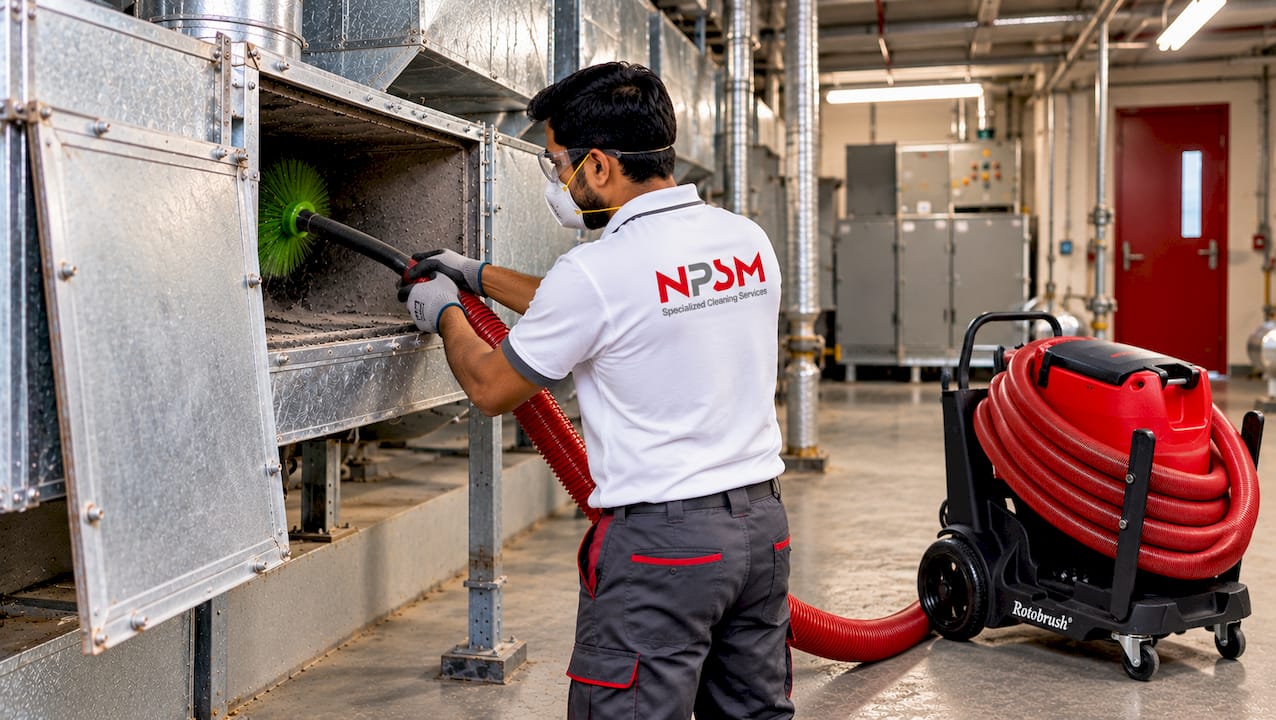
Duct cleaning removes dust, debris and microbial growth from the supply and return ducts, and often from the air-handling unit, coil and drain pan as part of the same visit. The American Industrial Hygiene Association describes the typical methods as washing, brushing or vibrating the surfaces while vacuuming under negative pressure, with HEPA filtration if the vacuum equipment sits inside the building, ideally when the building is unoccupied.
A proper job in Dubai usually includes these stages:
Inspection and documentation. Camera checks of ducts, photos of the coil, pan and drain, and a look for moisture and leaks.
Containment. Sealing off openings and creating negative pressure so loosened dust is captured, not blown into rooms.
Mechanical agitation. Brushes, air whips or compressed air dislodge debris from duct walls.
HEPA vacuum extraction. Dust is pulled into filtered collection equipment.
Coil, pan and drain cleaning. The parts that most often cause the smell are cleaned and the drain line is cleared.
Sanitizing where needed. Applied to cleaned surfaces by trained staff, using products suited to the system.
Reassembly and a final camera check. Grilles are cleaned and refitted, and you see the result.
The important caveat comes from the health agencies. The US EPA does not recommend routine duct cleaning but cleaning as needed, and says underlying causes must be corrected first or the problem may recur. The NIH Office of Research Services adds that professional duct cleaning can be appropriate for offensive odors that come from ductwork or HVAC components, once an evaluation identifies and controls the contaminant source.
In plain terms: clean the ducts when the inspection shows they are the problem, and fix the leak, the drain or the humidity at the same time. Cleaning without the fix gives you a few good weeks.
Choose duct cleaning if… and look elsewhere first if…
Choose professional duct cleaning if:
A camera inspection shows dust buildup, damp deposits or visible growth inside the ducts.
The odor is present at every vent and survives a filter change.
The property has been renovated, flooded, or left vacant, and dust or construction debris has entered the system.
It has been several years since the system was last cleaned.
Start with a repair or moisture fix if:
The drain pan is cracked or the line is blocked: repair or clear it, then clean.
Ducts are leaking or uninsulated in hot ceiling voids: seal and insulate, or condensation will return.
Indoor humidity stays high: address ventilation, dehumidification and the AC settings.
Most real cases are a mix, which is why one inspection that covers the coil, pan, drain and ducts together saves repeat visits.
Preventing the smell from coming back
Prevention is mostly about keeping the system dry, clean and sealed. AIHA recommends minimizing dirt and microbial growth, maintaining filters, keeping insulation clean and dry, and making sure water drains properly at cooling coils.
In practice, for Dubai properties:
Service before the hot season. Have the coil cleaned and the drain lines cleared before summer load begins.
Replace or wash filters on a schedule. Dusty periods may need shorter intervals.
Watch humidity. Dubai Municipality’s indoor air quality guidelines set out temperature and relative humidity ranges for buildings. A cheap digital hygrometer in the bedroom and living room shows when a space is drifting damp.
Look for condensation. Moisture on grilles, diffusers or ceiling edges means cold surfaces are meeting humid air. For a clear explanation of how humid air condenses and how to test for it, see this guide to stopping summer condensation at home.
Ventilate wet rooms. Bathroom and kitchen extractors should vent outside, not into a ceiling void.
Do not leave a vacant unit sealed and damp. Between tenants, run the AC periodically or arrange a check.
Keep a maintenance rhythm. Landlords and managers who plan inspections ahead avoid emergency calls. These proactive maintenance approaches for landlords show how scheduled checks reduce surprises.
How often should ducts be cleaned? There is no single interval. The NIH recommends annual inspection of air-handling units and ductwork for healthcare facilities, which is a useful benchmark for busy commercial spaces. Cleaning itself should follow what the inspection finds, rather than a fixed calendar.
What this means for different property types
Villas and ducted homes
Larger ducted systems have long runs, more ceiling voids and more places for moisture to sit. A musty smell across several rooms points toward the ducts or air handler. An inspection and, if required, a full duct and coil clean typically solves it when drains and insulation are sound.
Apartments with split or fan-coil units
Smell usually comes from the indoor unit, drain pan or fan-coil. Cleaning the coil and clearing the drain often resolves it. Humidity control in closed apartments matters as much as the cleaning.
Offices and shared buildings
Offices carry more occupants, longer run hours and a duty of care to staff. Odors in a workplace affect comfort and productivity quickly. Scheduling duct work outside working hours, as AIHA suggests, keeps the office running. Facility managers can pair it with a regular janitorial programme through our office cleaning services.
Kitchens and restaurants
Grease and food odors are a different problem from musty smells. If the odor is oily or smoky, check the extraction system through kitchen exhaust cleaning as well.
Post-construction and move-in properties
New or renovated properties often have fine construction dust inside ducts. Cleaning before occupancy stops that dust circulating from the first day. Our deep cleaning services can be paired with the HVAC work.
What to ask any duct cleaning company in Dubai
Whoever you hire, ask these questions before agreeing to a visit:
Will you inspect first and show me camera images or photos before and after?
Do you use negative-pressure, HEPA-filtered extraction?
Will you clean the coil, drain pan and drain line, or only the ducts?
Are your technicians licensed and insured, and can you confirm this in writing?
If you find a leak, damaged insulation or a blocked drain, how will you report it?
What is the scope in writing, and what does the quote include?
A company that cannot answer these clearly is quoting a price for a job it has not defined.
Our perspective
Most musty AC calls we see are not a duct problem or a coil problem alone. They are a moisture problem that shows up in the part of the system nobody looks at.
That is why we start with inspection, not with a price per vent. We look at the filter, coil, pan, drain and ductwork together, then recommend only what the findings support. If the ducts are contaminated, we clean them. If a drain or leak is the real cause, we tell you so the smell does not return.
Our approach combines trained, licensed staff with specialized equipment, because duct cleaning done with a household vacuum and a spray bottle moves dust around instead of removing it. For homes, offices and data-sensitive environments alike, the goal is the same: cleaner air, a system that runs as designed, and a smell that stays gone.
Qadir
Book an HVAC inspection with NPSM
If your AC smell has survived a filter change, our team can inspect the system, explain what is causing the odor and clean what needs cleaning. We offer free consultations and same-day scheduling, and our staff are licensed and insured.
Usually because moisture is present and mold or mildew is growing on dust inside the ducts, coil or drain pan. Leaky ducts can also let humid air condense on cold surfaces. Dubai Municipality’s guideline lists persistent musty or earthy odors as an indicator of possible hidden mold, including in HVAC systems.
Will duct cleaning remove the musty smell?
It will if the ducts or coil are the source and the moisture cause is corrected too. If a drain is blocked, ducts leak or humidity is high, the smell can return after cleaning. A full inspection before cleaning shows which applies to your system.
What happens if I never clean my air ducts?
Dust and moisture can accumulate, which may lead to odors, poorer airflow and indoor air quality complaints. Agencies such as the EPA advise cleaning as needed, based on inspection, rather than on a fixed schedule. Dusty Dubai conditions make periodic inspection sensible.
How much does AC duct cleaning cost in Dubai?
Price depends on the number of units, the duct length, access, and whether coils and drains are included. We do not publish a flat rate, because a villa with a long ducted system is a different job from a small apartment. Request a free consultation and we will give you a written quote after assessing the property.