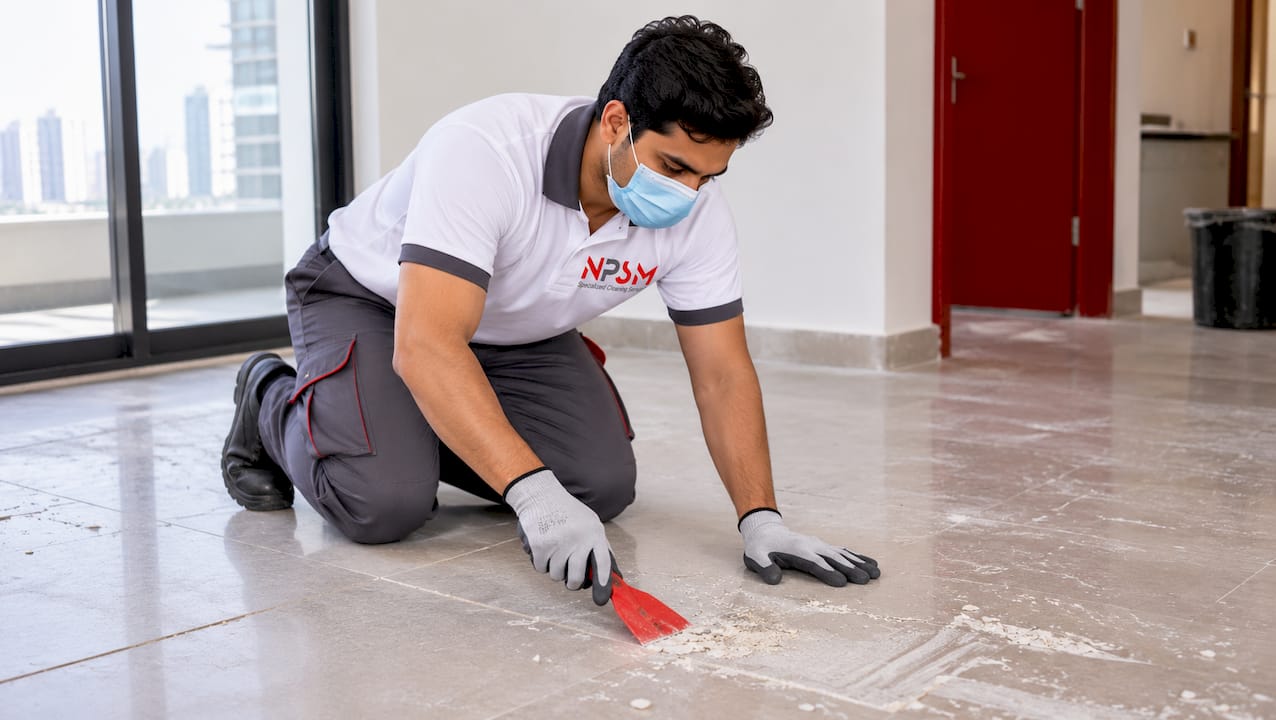
The safest way to remove adhesive residue from tiles is slow and gentle: soften the residue, lift it with a plastic scraper, dissolve what is left with a solvent matched to your tile, then rinse and dry. A fresh smear on glazed porcelain is a small job. Hardened glue across a whole villa or office floor after fit-out is a different one. There the risk is a dulled finish, weakened grout or a patchy surface that costs more to fix than the glue did. This guide gives you the full method, step by step, and shows where each step goes wrong. It also shows when to hand the floor to our team at NPSM Specialized Cleaning, who clean post-construction and move-in tiles in Dubai.
Specializedcleaning
Protect Tiles During Post-Construction Cleaning
For hardened adhesive across a villa or office floor, Specializedcleaning provides post-construction cleaning in Dubai with specialized equipment.
Residue on tile is rarely one thing. A strip of old tile adhesive, a sticker film, tape gum, silicone smears and construction glue each respond to different treatment. Two questions decide your method:
What is the tile? Glazed ceramic and porcelain have a hard, sealed face. Unglazed tile, travertine, slate, marble and other natural stone are porous and absorb whatever you put on them.
How old is the residue? Fresh residue softens with water and mild soap. Hardened adhesive needs a softening step and a solvent.
A makes the same distinction: glazed ceramic and porcelain tolerate more than natural stone, unsealed tile or damaged grout. If you cannot tell which you have, treat the tile as the more delicate type until a hidden corner test says otherwise.
Situation
Typical residue
Starting method
Main risk
Glazed porcelain or ceramic, small smear
Sticker, tape or fresh glue
Warm soapy water, plastic scraper
Scratching from metal tools
Glazed tile, hardened glue
Dried adhesive film
Soften, scrape, alcohol-based remover
Dulling the glaze
Natural stone or unsealed tile
Any adhesive
Gentle methods only, test first
Solvent soaking in, permanent marks
Grout lines
Adhesive or haze in the joints
Minimal liquid, controlled contact time
Weakened or stained grout
Whole floor after renovation
Mixed construction residues
Systematic, area by area
Uneven finish, wasted time
Step 1: Test in a hidden spot
Select an area hidden beneath furniture or behind a skirting board for testing. Apply the cleaner you intend to use, let it sit for the specified duration, then rinse thoroughly. Once dry, examine the tile’s finish and color for any changes. This initial test helps determine the tile’s reaction, allowing you to start with the least aggressive method that works, avoiding the risk of damage from more forceful treatments.
Where it goes wrong: people test while the tile is wet and judge too early. A finish change often shows only when the surface dries. If the sheen or color shifts, stop and change method.
Step 2: Soften with warm water and mild soap
Mix a small amount of mild dish soap into warm, not boiling, water. Dampen a soft cloth, wring it out, then press it on the residue for a few minutes before wiping gently. This method softens fresh spills and light adhesive films safely. Repeat the gentle soak as needed rather than moving immediately to stronger cleaners.
The same advice applies to technique:
Dampen the cloth rather than flooding the floor.
Do not let soapy water sit on the grout for long.
Rinse with a lightly damp cloth and dry.
Where it goes wrong: over-wetting. Water that creeps along grout lines and under tile edges can weaken the bed. On a single tile you can control this. Across a 120 square meter apartment it is hard to do evenly.
Step 3: Lift with a plastic scraper held nearly flat
Use a plastic putty knife, an old card or another non-metal scraper at a shallow angle. A Home to Sight guide recommends gentle scraping with a plastic putty knife, or a fresh razor blade held at a shallow angle, and wiping with a clean damp sponge afterward.
A metal blade is the usual cause of damage. SurfaceFixLab warns that a metal blade can damage decorative or polished porcelain and catch on textured surfaces, and that coarse pads can leave a patch with different reflectivity. Use a razor only on tile you have confirmed is unglazed or heavily glazed, at a very shallow angle.
Where it goes wrong: pressure. The faster you try to work, the harder you push, and the more likely a corner chips or a polished face scuffs. Short, light strokes are slower and safer.
Step 4: Choose a solvent that suits the tile
If soap and scraping leave a film, dissolve it. The right product depends on the surface:
Glazed ceramic and porcelain: isopropyl alcohol or a citrus-based remover, applied to a cloth and wiped on the residue, then rinsed. For glazed wall and floor tile, keep removers off porous grout where possible.
Gummy residue on non-porous tile: a dedicated gel remover. It is applied as a thick layer, left 10 to 30 minutes depending on the adhesive, and is not suitable for porous surfaces such as unsealed natural stone, because it may wash residue deeper into the pores.
Silicone smears: a silicone remover. Apply it undiluted, leave it about 20 minutes, scrape with a spatula and repeat if needed. Test first, as it may dull methacrylate, plastic and coated surfaces.
Natural stone and unglazed tile: avoid harsh chemicals. These tiles absorb solvents, and a poultice, a paste that draws the adhesive out, is the usual approach.
Two rules apply to every product. Read the label, and never mix cleaning products. Bleach and ammonia combined with other cleaners can release dangerous fumes. Ventilate the room, which matters in a closed Dubai apartment with the AC running.
Where it goes wrong: a solvent that suits porcelain can stain travertine or slate for good. The mistake is permanent and cannot be undone with more cleaning.
What about WD-40, oils and kitchen remedies?
People often ask whether WD-40 removes glue. One consumer guide says oil-based products suit porous and painted surfaces, and alcohol-based solvents suit hard, non-porous ones. On glazed tile, an oil leaves a greasy film that you then have to remove with dish soap and warm water. That is an extra step that can spread residue across a larger area. For tile, an alcohol-based or purpose-made remover is the cleaner route. A vinegar and baking soda paste appears in many guides for grout lines, but acid can mark porous tiles if left too long, so keep it away from natural stone.
Step 5: Rinse, neutralize and dry
The final wipe matters as much as the removal. TidyFormula’s guidance is that sticky residue needs two actions, loosening and lifting, and that the clean-water wipe removes both the cleaner and the loosened residue. Leaving either behind creates a film that holds dust and shows up as a dull patch under light.
For a thorough finish on tile and stone, follows solvent use with a pH-neutral cleaner and a rinse. Then:
Wipe with a clean cloth and clear water.
Dry with a soft cloth.
Check the tile from a low angle against a window to catch haze or smears.
The special case of grout lines
Adhesive that has run into a grout joint is the hardest residue to deal with. Solvent left at a grout line can weaken the adjacent sealant, and over-wetting weakens the grout itself. Sealers Plus gives a useful benchmark in its technical sheet: when removing adhesive from ceramic and porcelain, work between 4°C and 32°C and do not let the product dry on the surface. For epoxy grout haze it limits dwell time to 30 minutes with no puddling in the joints.
That temperature range matters in the UAE. Tiles in a sun-exposed room, or a floor near a glass facade in summer, can be hotter than the product allows. Products that dry on the surface leave a worse film than the one you started with.
Grout haze, the cloudy cement film left after grouting, is a related problem with its own timing. Our guide to tile grout haze removal in Dubai explains why the cure period matters before cleaning. Specialist new-surface guidance warns that late removal of grout, silicone and adhesive residues can leave stains that are hard to remove. It also forbids hydrochloric acid and caustic soda on sintered slabs under any circumstances. Check the care sheet of your tile before using any acid.
Heat: use it carefully, if at all
Gentle warmth softens old adhesive, and steam is often suggested for hardened glue on concrete and tile. Too much heat can discolor or warp surfaces, so any heating should be moderate and controlled, and always followed by scraping and a final clean. Never use open flame near adhesive and solvents together. For anyone without a controlled steam setup, the soapy cloth method in step 2 is the safer softening route.
Starting small versus starting a project
A reader fixing a sticker mark on one kitchen tile can follow the steps above and be done in an afternoon. The calculation changes when:
The area is large. Handover cleaning in a villa or apartment means thousands of small decisions about tile, grout and glue.
The tile is valuable or porous. Marble, travertine and imported porcelain are costly to replace, and a wrong solvent is permanent.
The deadline is fixed. Handover, tenant move-in and office opening dates do not wait for a second pass.
Other residues are present. Paint, cement, silicone and adhesive on the same floor need different treatments in the right order.
For these jobs, the method is the same as the one above, repeated carefully over every room, with the test patch done on each tile type. We would rather your floor is checked before treatment than after a mark appears. Our guide on why professional cleaners test paint, cement and adhesive patches explains the reasoning, and our kitchen renovation cleaning guide covers one of the most common places adhesive, grease and dust end up together.
If adhesive is stuck to a surface that is not tile, a guide to safe adhesive cleanup first steps explains why peeling comes before solvents on finished surfaces.
Who needs this in Dubai
The reader who searches for adhesive residue removal usually falls into one of these groups:
Homeowners after renovation: glue, tape and stickers across newly laid tiles before furniture arrives.
Tenants moving in or out: floors that must be left clean for a deposit or handed over to the next occupant.
Property managers: many units, a fixed turnaround and one standard for every floor.
Office and fit-out managers: adhesive from carpet tile, signage and partition work before a business opens.
In each case the tile work is one part of a broader clean-up, which is why it fits best inside a post-construction cleaning job rather than as a stand-alone chore.
How we handle adhesive residue on tile
We are NPSM Specialized Cleaning Services LLC, a Dubai company with over 15 years of experience in residential and commercial cleaning. Adhesive residue on tile comes up inside our post-construction, deep cleaning and move-in/move-out work, and our team is licensed and insured. We offer free consultations and same-day scheduling, so a floor can be assessed before the handover date comes closer.
The services that most often cover this problem are:
Most tile damage we hear about does not come from the adhesive. It comes from the rescue attempt: the metal blade, the wrong solvent, the second and third aggressive pass.
Our approach to adhesive residue is to treat every floor as a set of different surfaces. Glazed porcelain, polished marble, grout lines and skirting edges each get the method that suits them, and the finish is checked as we go, not at the end. That is why we pair experienced people with specialized equipment, and why we prefer to look at a floor before we recommend a plan.
For post-construction and move-in work, the best result comes when residue removal, grout haze treatment and the final deep clean are planned as one job in the right order. That keeps the floor consistent from room to room and keeps the handover on schedule.
Qadir
FAQ
Does WD-40 remove glue residue from tiles?
Oil-based products such as WD-40 can loosen sticky residue, mainly on porous or painted surfaces. On glazed tile they leave an oily film that must be washed off with dish soap and warm water. An alcohol-based remover wiped on with a cloth and rinsed is usually the cleaner choice for hard, non-porous tile.
Will dish soap remove adhesive from a tile floor?
Warm water with a little mild dish soap softens fresh spills and light adhesive films. Press a damp cloth on the residue for a few minutes, wipe gently, rinse and dry. Hardened glue needs scraping with a plastic tool and often a solvent suited to the tile.
How do I get sticky residue off tile without damaging the grout?
Keep liquids on the tile face and limit contact with the joints. Over-wetting weakens grout, and solvent left at a grout line can affect the sealant. Use small amounts, short contact times, then rinse and dry.
Can I use a razor blade on tiles?
A razor held at a shallow angle can work on unglazed or heavily glazed tile, but it can scratch decorative or polished porcelain. Start with a plastic scraper, and use metal only on a tile you have confirmed will tolerate it.
Who should clean adhesive off a whole villa or office floor?
For large areas, natural stone or a fixed handover date, a professional cleaning crew is the practical choice. We assess the floor and agree a plan during a free consultation, as part of post-construction or move-in cleaning in Dubai.