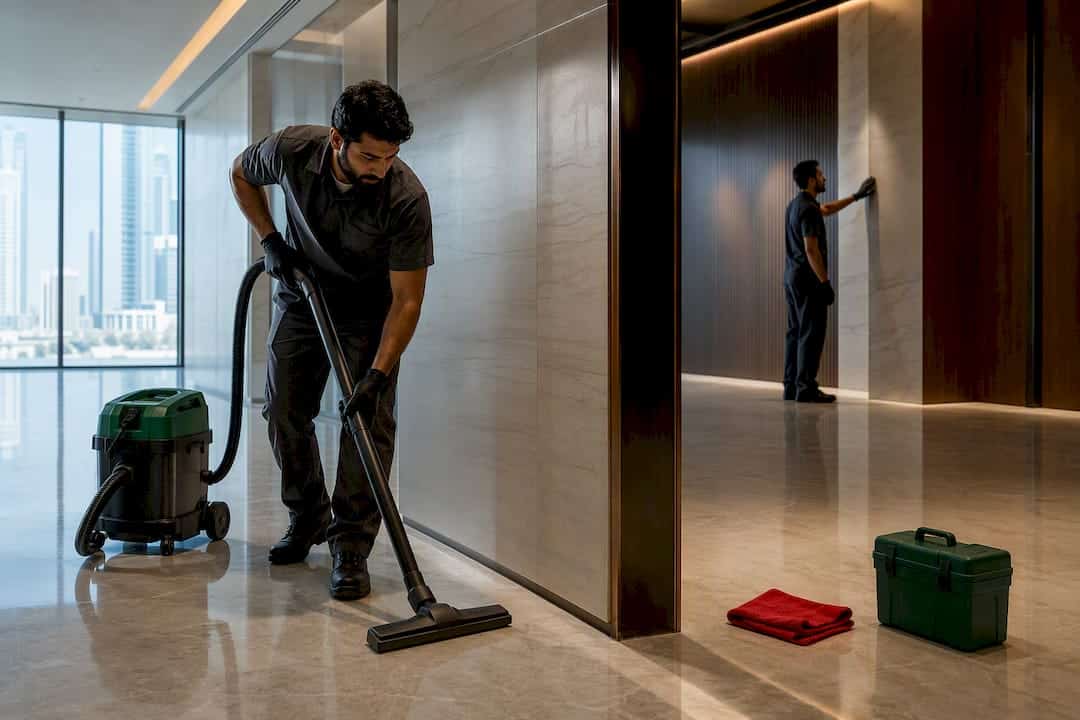
Schedule the final move-in clean once every dust-producing trade has finished, then build in a 24 to 48 hour buffer before your crew arrives. That window allows fine construction dust time to settle rather than being stirred back into the air. Rough debris removal can start earlier, right after demolition or major installs wrap. Lock in your cleaning crew a week or two ahead, then confirm the exact date once trades actually finish.
TL;DR:
The final clean should be scheduled at least 24 to 48 hours after all dust-producing trades complete work to allow settling of airborne dust.
Rough cleans happen during active trade work, while detail and final cleanings are scheduled after finishing trades and snagging are finished.
Book the cleaning crew early, ideally one to two weeks in advance, and reconfirm closer to the actual trade completion date to avoid unnecessary repeat costs.
Construction dust biology means the latest environment conditions, such as ongoing trades, HVAC operation, and humidity, can extend the dust settling window beyond two days.
Proper site preparation, including waste removal, securing fragile items, and confirming access, significantly improves cleaning efficiency and quality.
Specializedcleaning
Plan Your Dubai Post-Construction Clean
Specializedcleaning provides professional post-construction cleaning for residential and commercial spaces across Dubai.
When Should Post-Construction Cleaning Start After Renovation, Phase By Phase?
The three-phase approach is standard across the industry, and skipping a phase is usually what causes property owners to pay for the same clean twice. Each phase has a different job, and each one belongs at a different point on the construction calendar.
Rough clean (also called the builders clean) happens while trades are still active or right after major demolition and installation wrap up. This phase clears bulk debris: leftover drywall scraps, packaging, sawdust piles, and stickers on fixtures. It’s not about polish. It’s about getting the site walkable and safe.
Detail clean starts once the finishing trades (paint, flooring, cabinetry) are done. This is where the three-stage cleaning workflow earns its reputation, because this phase covers the surfaces that actually show:
HEPA vacuuming of vents, sills, and baseboards
Glass, mirror, and fixture cleaning to remove haze and residue
Removing protective film from floors, counters, and appliances
Wiping down cabinet interiors and light fixtures
Final/touch-up clean comes after the punch list closes. This is the move-in ready phase: spot-checking corners, re-wiping surfaces that collected dust during snagging, and handling any last marks left by trade crews finishing small fixes. Skip this step and you risk handing over a space that looks finished from a distance but shows fingerprints and grout haze up close.
Why Do You Wait 24 to 48 Hours Before the Final Clean?
Fine dust from drywall sanding and concrete work doesn’t fall the way visible debris does. It stays airborne, resettles slowly, and can keep landing on freshly wiped surfaces for up to two days after the last trade leaves. That’s the reasoning behind the 24 to 48 hour settling window that most professional cleaning guides recommend before the final pass.
The 24 to 48 Hour Rule: Fine construction dust from drywall and concrete work can stay suspended in the air long enough that a same-day final clean often gets undone within hours, which is why the industry-standard waiting period runs one to two full days after all work stops.
That window isn’t fixed, though. A few conditions stretch it out:
Ongoing trade activity anywhere on-site (even in an adjacent room) keeps dust circulating.
HVAC systems running during the settling period can pull dust back into the air and redistribute it through vents.
High humidity, common in Dubai’s climate for parts of the year, can make dust cling to surfaces longer before it fully settles.
Large or multi-unit projects often need touch-ups scheduled after each floor or zone finishes, not just once at the end.
For booking, reserve your crew one to two weeks ahead of the anticipated finish date, then confirm the exact day once you know trades are actually done. On bigger jobs, leave a 24 to 72 hour buffer rather than the standard minimum, since timing depends on trade sequencing, not the calendar.
How Do You Coordinate the Clean With Contractors and Inspections?
The biggest mistake property owners make isn’t booking too early or too late. It’s booking based on a projected finish date instead of the real one. Here’s a coordination sequence that avoids that trap:
Ask the contractor which trades still produce dust. Painting, sanding, and flooring installs all count. Get their honest completion estimate, not the optimistic one.
Reserve your cleaning crew early, then confirm late. Book the slot a week or two out to guarantee availability, then reconfirm 24 to 48 hours before the crew’s actual arrival.
Sequence around the punch list. Final cleaning should follow snagging and inspections, not precede them, since inspectors and trade crews walking through a cleaned space will undo the work.
Notify building management and security if you’re working in a managed property, and confirm access hours, loading dock use, and elevator bookings in advance.
Confirm utilities are live. Cleaning crews need running water and power for vacuums, steamers, and floor equipment.
Pro Tip:Ask your contractor for a written “substantial completion” date rather than relying on verbal estimates. Renovation timelines slip more often than they hold, and a documented date gives your cleaning crew something firm to schedule against.
Coordinating this way protects the money you’re spending on the clean itself. A staged approach with documented verification also gives you a paper trail if a dispute comes up later about the state the space was left in.
What Should You Prepare Before Cleaners Arrive?
A cleaning crew works faster and more thoroughly when the site is set up properly beforehand. Skipping this prep is one of the most common reasons a “final” clean turns into a partial one.
Remove and segregate large construction waste before the crew arrives; cleaning teams handle fine dust and surface residue, not hauling drywall sheets.
Delay furniture and fixture deliveries until after the final clean is complete, since new furniture arriving early just collects dust that has to be wiped off again, so consider coordinating with Move-In Carpet Cleaning: Book It Before the Boxes Arrive to perfectly time your cleaning schedule.
Secure or remove fragile items like light fixtures, mirrors, and glass panels that haven’t been permanently mounted yet.
Confirm keys, gate codes, and safe entry routes so the crew isn’t waiting outside on cleaning day.
Photograph delicate surfaces (natural stone, polished concrete, specialty finishes) and leave any manufacturer care notes for the crew to reference.
What Safety and Waste Rules Apply to Post-Construction Cleaning?
Construction dust isn’t just cosmetic. Fine silica particles from drywall and concrete sanding can irritate lungs, which is why professional crews use respirators and HEPA-filtered vacuums rather than standard shop vacs that recirculate fine particles back into the air.
Respirators and eye protection are standard for anyone handling bulk drywall or plaster dust.
HEPA-grade vacuums and air scrubbers capture particles that standard equipment pushes right back into the room.
Ductwork that’s collected construction dust usually needs a specialist pass. Regular surface cleaning won’t reach inside HVAC systems, and a dedicated duct cleaning service is the right call once the site is stable.
Hazardous materials (old paint, adhesives, certain insulation types) need to be separated and disposed of through licensed channels, not the regular building waste stream.
Dubai property owners have an added compliance layer to factor in. The emirate’s waste management implementing by law sets requirements for how construction and demolition waste gets handled, including licensed disposal and documentation. Keep manifests and disposal receipts from your contractor, since they’re the easiest way to prove compliance if a building manager or authority asks.
How Does NPSM Sequence a Post-Construction Clean?
NPSM Specialized Cleaning Services follows the rough, detail, then touch-up sequence outlined earlier, adjusting the 24 to 48 hour buffer based on what trades report on the ground. Before any crew starts, the team runs a site assessment, confirms power and water are live, and checks access routes.
Verification matters as much as the clean itself. White-glove dust wipes on shelving, sills, and vents confirm a space is genuinely ready, not just visibly tidy. HEPA vacuums handle the fine particulate that ordinary equipment misses. For same-day or short-notice bookings, Specialized Cleaning can often accommodate a compressed schedule, though larger properties still benefit from reserving a slot one to two weeks out.
A Simple Rule Worth Remembering
If you remember one rule, make it this: book by trade completion, not by the calendar, and always leave 24 to 48 hours before the final pass. Clear, early communication with your contractor about the real finish date saves more time and money than any cleaning technique ever will.
— Qadir
Get Your Post-Construction Clean Right the First Time
NPSM Specialized Cleaning Services is the alternative to guessing at timing and hoping the final clean sticks. The team builds the settling window, HEPA filtration, and licensed waste handling into the schedule from the start, aiming to avoid repeat visits due to dust resettling or missed punch-list items.
A free site visit lets specializedcleaning.ae assess your specific project, whether that’s a single villa handover or a multi-floor commercial fit-out, and lock in a realistic date once your contractor confirms the true finish line. The team’s post-construction deep cleaning service covers rough, detail, and final passes, with same-day scheduling available for tighter timelines. If ductwork appears to have collected dust during the build, this is identified separately during the walkthrough for appropriate attention. Reach out for a free consultation and get your final clean date confirmed before deliveries or inspections lock in around it.
FAQ
What Is the 24 to 48 Hour Rule for Post-Construction Cleaning?
It’s the standard waiting period between when construction work ends and when the final deep clean should start. Fine dust from drywall and concrete work can stay airborne for up to two days, so cleaning too soon just means wiping the same surfaces again once it resettles.
How Long Does It Take for Dust to Settle After Renovation?
Most fine construction dust settles within 24 to 48 hours after the last dust-producing trade finishes work. Humidity, active HVAC systems, and any remaining trade activity nearby can extend that window beyond two days.
What Are the Three Phases of Post-Construction Cleaning?
They’re the rough clean, detail clean, and final touch-up. Rough clean removes bulk debris early, detail clean handles surfaces and fixtures once finishing trades are done, and the final touch-up happens after snagging closes, right before move-in.
Can You Start Cleaning While Trades Are Still Working?
Rough debris removal can start while trades wrap up, but detail and final cleaning should wait until dust-producing work fully stops. Cleaning too early means paying for a second pass once the space settles.
Does Specializedcleaning Offer Post-Construction Cleaning in Dubai?
Yes, Specializedcleaning provides post-construction deep cleaning across residential and commercial properties in Dubai, including HEPA-based dust removal and coordination around trade completion dates. Pricing is available on request through a free site visit on the post-construction cleaning service page.