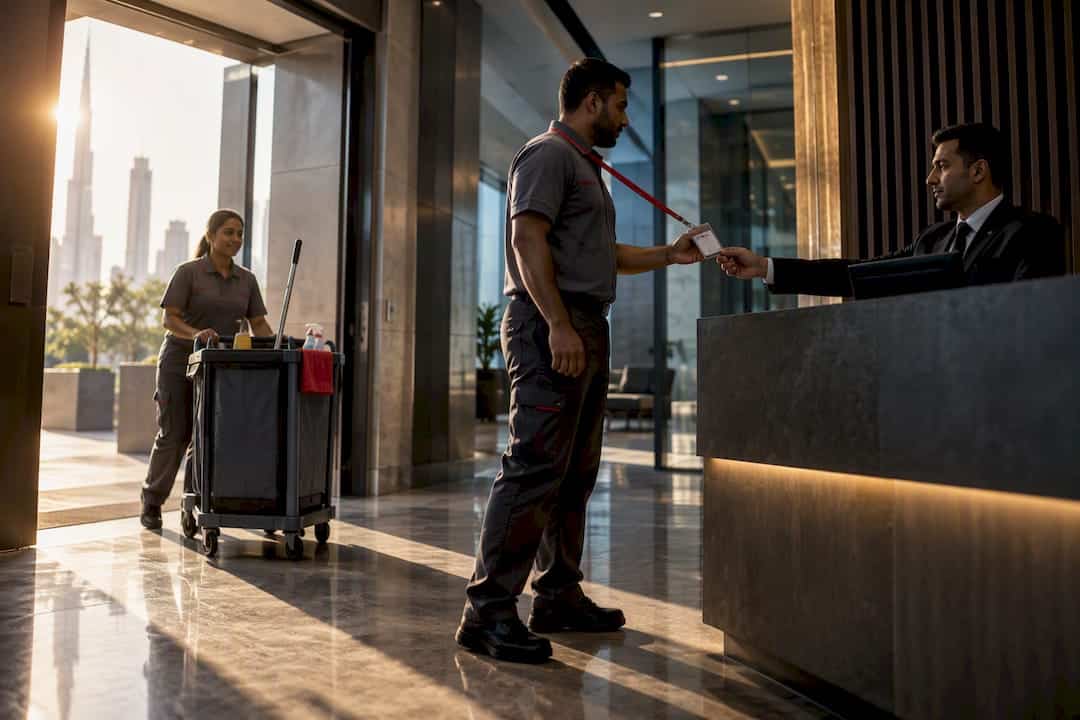
Preparing an office for handover after fit-out work means locking down scope with your contractor before cleaners arrive, running a final clean high to low in a reserved access window, clarifying HVAC and technical-space responsibility in writing, and closing with a room-by-room photographic sign-off plus a priced touch-up pass. Skip any one of those steps and you risk a failed client walk-through or a dispute over who caused the defect. Dubai fit-out schedules are tight, so this sequence has to run in order, not in parallel.
TL;DR:
Lock down scope with the contractor before cleaning to prevent confusion over zones, utilities, and HVAC, especially in tight Dubai schedules.
Use detailed, room-specific checklists for final cleaning to ensure high-touch areas, glass, floors, and restrooms meet inspection standards.
Document HVAC scope and obtain sign-off from specialists, particularly for ductwork and critical spaces like data centers, to avoid contamination or damage.
Conduct inspections with photographic evidence, clear ownership, and signed records to prevent disputes during handover.
Schedule the final clean only after dust-producing trades finish and utilities are available, leaving time for touch-up cleaning prior to client walkthroughs.
Specializedcleaning
Prepare Your Dubai Fit Out for Handover
Specializedcleaning provides professional post construction cleaning for Dubai offices, supported by experienced staff and specialized equipment.
How to Prepare an Office for Handover After Fit-Out Work: Locking Down Scope Before the Crew Arrives
Scope confusion is the single biggest cause of a failed handover inspection. Before any cleaning crew mobilizes, run a pre-mobilization site walk with the project manager, the cleaning supervisor, and the relevant trades to confirm which zones are actually released for cleaning versus which still have active work.
That walk needs to answer practical logistics questions too: which utilities are live (power, water, service elevator access), and where waste, equipment, and materials will stage during the clean. Skipping this step routinely means cleaners show up to find a zone still being painted, or no water supply for mop buckets.
HVAC scope deserves its own written line item, not a verbal assumption. Spell out whether cleaning covers accessible grilles and diffusers only, or extends into internal ductwork and air handling units, since the latter requires HVAC specialists rather than general cleaning staff. ASHRAE Standard 180-2018 calls for a documented, system-specific maintenance plan that names the responsible party and records completion, and that standard is a useful reference point for writing that scope clause.
Before mobilizing, also confirm site rules:
Collect finish schedules and manufacturer cleaning instructions for every new surface, and require a small test area before using any aggressive residue-removal method
Agree on PPE requirements, site induction, and site access controls permitted working hours in advance
Set access controls (passes, escorts) for the cleaning crew, consistent with the site’s fit-out safety rules
The JAFZA fit-out manual requires contractors to maintain site safety, PPE compliance, fire precautions, and organized housekeeping throughout fit-out. Cleaning crews working on a site governed by those rules should receive the same controlled access and zone release before starting work.
What Belongs on a Room-by-Room Final Clean Checklist?
A final clean succeeds or fails on detail, not effort. Generic instructions like “clean all surfaces” miss the spots that actually get noticed during a walk-through, which tend to sit above eye level or tucked into corners nobody checks by habit.
Work through each area type with a specific standard in mind:
Entrances and lobbies. Thresholds, door frames, handles, signage, baseboards, and the floor finish all need to look finished, not just swept. This is the first thing a client sees, so treat it as the benchmark for the rest of the space.
Offices and workspaces. Window ledges, casework, air vents, switch plates, and cabinet or drawer interiors (where in scope) collect fine dust that a quick wipe-down misses.
Glass and glazing. Adhesive residue and protective film need careful removal that doesn’t scratch coated glass, followed by a streak-free finish.
Restrooms. Fixtures should be clean and completely dry, drains clear, and dispensers checked and restocked if that’s part of the agreed scope.
Floors. Remove grit and loose debris first, then apply the correct method for the surface: carpet extraction, stone polishing, or vinyl cleaning. Check edges, transitions, and stair nosings separately, since those areas trap debris that a standard pass leaves behind.
Service and loading areas. Clear all debris and confirm fire exits and access paths stay unobstructed.
A dependable post-construction cleaning checklist ties each of these tasks to a construction milestone and assigns inspection responsibility by name, which is what keeps a punch list from turning into a blame exercise later.
Pro Tip:Check tops of ceiling tiles, light fixture lenses, and diffuser interiors specifically. Fine construction dust settles above sightlines first, and it’s the detail most walk-through inspectors check deliberately because they know crews miss it.
Who Handles HVAC and Technical Spaces Before Handover?
HVAC scope is where handovers go wrong most often, usually because “we’ll clean the ducts” gets said without anyone defining what that actually covers. Put it in writing: does the cleaning contract include only accessible grilles and diffusers, or does it extend to internal ductwork and the air handling unit itself? The second category needs licensed HVAC specialists, not general cleaning staff, and mixing the two up either leaves contamination behind or damages equipment nobody was qualified to touch.
ASHRAE Standard 180-2018 recommends a documented, system-specific inspection and maintenance plan that identifies the task, the frequency, the responsible party, and a record of completion. That documentation matters even more for filter replacement, since a fit-out that ran for months can leave filters saturated before the office is even occupied.
Critical spaces need a different standard entirely. For data centers, ordinary office cleaning methods are not sufficient. Effective post-fit-out preparation for these spaces requires controlled access, HEPA-filtered vacuums, electrostatic discharge safe procedures, and a written protocol with post-cleaning verification built in, since a single dust event in a server room carries far more consequence than in an open office.
Require sign-off from a facilities or HVAC engineer before treating any mechanical space as handover-ready
Ask whether systems were dormant or significantly altered during fit-out, since that can trigger a recommissioning check
Never let general cleaning staff open an AHU access panel without HVAC supervision
Our HVAC duct cleaning guide breaks down exactly where general cleaning scope ends and specialist duct work begins.
How Do You Run Inspection, Punch List, and Sign-Off?
Inspection only means something if it happens under the conditions the client will actually see. Walk the space in the same lighting the handover walk-through will use, and check from more than one sightline, since a defect invisible from the doorway can be obvious from a desk.
Work room by room against a written checklist, and photograph every defect as you find it. Each photographed item gets assigned to a named owner with a deadline, not a vague “will fix” note that nobody tracks. Photographic documentation paired with named ownership is what actually prevents disputes between the cleaning crew and the trades at turnover, because it removes the “who’s responsible” argument entirely.
Separate cleaning defects from unfinished trade work explicitly. A streak on a wall is a cleaning issue; a gap in the same wall’s paint is not, and conflating the two on one punch list muddies accountability for both.
Sign-off element
What it confirms
Room-by-room checklist
Every zone inspected against the same standard
Photographed defects
Visual record with date stamp
Named owner per item
Accountability for correction
Signed log (digital or paper)
Formal acceptance record
Priced touch-up pass
Coverage if trades re-enter after cleaning
Require a signed sign-off, whether that’s a digital log or a paper form, and if further trade activity is expected after the clean, schedule and price a touch-up pass rather than assuming the space will stay pristine.
When Should You Schedule the Final Clean, and What Safety Rules Apply?
Timing decides whether the clean holds. Schedule the final pass only after dust-producing trades have finished and the utilities the crew needs are actually available, and always budget a touch-up pass for the days right before the walk-through.
Dust control isn’t optional at this stage. Use HEPA-filter vacuums and wet cleaning methods to manage respirable dust, and avoid compressed-air cleaning unless it’s paired with an engineered capture system, since blowing dust around just relocates it to another surface.
Confirm PPE requirements and site induction before the crew steps on site
Keep fire escape routes clear at every stage of the clean, not just at the end
Handle and dispose of any hazardous materials according to site protocol
Price and document any work required outside normal hours
Pro Tip:If the fit-out included finish work like painting or sealants, don’t rely on the clean alone to clear the air. TheEPA recommendsventilating the space during and for at least 72 hours after finishes go in, which cuts down on lingering odor and pollutant concentration before the client walk-through.
What’s the Last Checklist Before the Client Walk-Through?
The final two to four hours before a client walk-through call for a tighter, more visible pass, not a repeat of the full clean. This is about catching what a client will notice in the first thirty seconds.
Wipe down every touchpoint and horizontal surface, vacuum the primary access routes, mop high-visibility floors, and clean glazing and mirrors to a streak-free finish.
Check lighting and replace any bulbs that failed since the last inspection, remove protective film and signage only where you’re authorized to, and confirm restrooms are dry and stocked if that’s in scope.
Clear out tools, cords, and leftover signage, then photograph representative rooms and attach those photos to the sign-off record.
A room-by-room final clean for a typical commercial office usually needs more than one pass, and for a 5,000 square foot space, plan on roughly two to four days depending on debris volume and finish types, with this last checklist as the closing move right before the client arrives.
How Do You Verify Lighting, Outlets, and Plumbing Work Before Handover?
Cleaning teams aren’t electricians or plumbers, but a thorough handover prep still means checking that installed systems actually function before the client sees them. A spotless office with a dead light fixture or a leaking faucet still fails the walk-through.
Walk every room and test each switch, confirming fixtures illuminate and don’t flicker. Check outlets for physical damage and confirm cover plates sit flush, since a loose plate reads as unfinished even when the wiring behind it is fine. In restrooms and pantries, run taps to confirm steady water flow, check for leaks under sinks, and flush to confirm drains clear properly.
This verification should happen before the final clean, not after, so cleaning staff aren’t wiping down a fixture that then gets pulled out for repair. Coordinate with the electrical and plumbing subcontractors to get written confirmation that fixtures passed their own testing, and keep that confirmation with the rest of the handover file.
Any item that fails this check becomes a punch-list entry with a named owner, following the same photographic sign-off process used for cleaning defects. Don’t let a functional issue slip through because it technically falls outside the cleaning scope. Flag it, photograph it, and route it to whoever owns that trade.
How Should You Document Manuals, Warranties, and Maintenance Records?
A finished-looking office still isn’t handover-ready without the paperwork behind it. Building management or the client needs equipment manuals, warranty documents, and maintenance schedules for everything installed during fit-out, from HVAC components to lighting systems to plumbing fixtures.
Compile this documentation into a single handover file rather than scattering it across email threads. Include manufacturer manuals for major equipment, warranty terms and registration confirmations, and any maintenance plan the HVAC contractor prepared, particularly one aligned with the documented, system-specific approach ASHRAE Standard 180-2018 recommends.
This file should also capture which cleaning products or methods were used on new finishes, since that informs how facilities staff maintain those surfaces going forward. If a stone floor was polished with a specific method, the ongoing maintenance team needs to know that so they don’t strip the finish with the wrong product six months later.
Hand this file over at the same time as the signed cleaning sign-off, ideally as part of one consolidated handover package rather than two separate deliveries. A client juggling a stack of loose warranty cards is far more likely to lose one than a client handed a single organized folder. Where the fit-out included specialty flooring, our floor restoration guide covers the kind of maintenance notes worth including for stone, vinyl, or wood surfaces.
What Touch-Up Work Should Happen Before the Final Clean?
Cleaning can’t fix a scuffed wall or a gap in trim, and running the final clean before those repairs are done just means redoing the clean afterward. Sequence touch-up painting and minor repairs before the cleaning crew’s final pass, not after.
Walk the space with the contractor specifically looking for paint touch-ups, minor drywall repairs, loose trim, and any hardware that still needs adjustment. These are small items individually, but they’re exactly what a client’s eye catches first during a walk-through, since a scuff mark against an otherwise spotless wall stands out more than it would in a lived-in office.
Confirm every touch-up is fully dry and cured before cleaning starts near it. Fresh paint that gets wiped down too soon can smear or dull, undoing the repair and creating a cleaning-caused defect that then needs its own touch-up. This is also the point to confirm any new finishes come with the manufacturer’s cleaning instructions, since aggressive cleaning chemicals can damage a repair that hasn’t fully cured.
Build a short buffer into the schedule between the last repair and the first cleaning pass. A day’s cure time for paint, for instance, prevents a rushed touch-up from becoming the reason the whole handover slips. This sequencing point is worth confirming explicitly at the pre-mobilization site walk, so nobody schedules the final clean around a repair that isn’t actually finished yet.
How Do You Coordinate Communication on Handover Day?
Handover day fails more often from poor communication than from poor cleaning. Multiple parties, the contractor, the cleaning crew, facilities management, and the client, all need to know their role and timing well before anyone walks through the door.
Set a single point of contact for handover day, usually the project manager or facilities lead, who fields questions from every other party rather than letting the client field them directly from three different vendors. Circulate a timed schedule in advance: when the final clean wraps, when the touch-up pass happens if needed, when the client walk-through starts, and who’s present for each phase.
Confirm access logistics the day before, not the morning of. That means service elevator bookings, security clearance for the cleaning crew, and parking or loading arrangements if equipment needs to come in or out. A crew stuck at a security desk while the client waits inside is an avoidable, entirely preventable failure.
Share the sign-off documentation, including photos and the punch list, with the client’s representative before or during the walk-through rather than after. That transparency turns the walk-through into a confirmation of work already documented, rather than a fresh inspection that surfaces disputes on the spot.
What Building Codes and Safety Standards Need Confirming at Handover?
Handover readiness includes compliance, not just appearance. Before the client walk-through, confirm fire exits are unobstructed and exit signage is visible and functional, since a blocked fire route is both a safety failure and an inspection failure that overrides any amount of cosmetic polish.
Check that fire extinguishers and any fire suppression equipment installed during fit-out are in place, charged, and tagged with current inspection dates. Confirm emergency lighting activates correctly, and verify that any required occupancy signage, capacity limits, or accessibility markings match what local building codes require for the space’s use.
Coordinate this check with whoever managed the fit-out’s compliance sign-offs, since a general cleaning crew shouldn’t be the ones certifying code compliance. Their role is to flag anything visibly out of place, like a fire extinguisher moved or blocked during cleaning, and route it back to the responsible trade or safety officer.
Document this compliance check alongside the cleaning sign-off, even if it’s a short confirmation rather than a full audit. That record shows the client, or building management, that safety items were reviewed as part of the handover process, not assumed complete because the space looked finished.
How Should Construction Waste Be Cleared Before Handover?
Leftover construction debris undermines an otherwise finished handover faster than almost anything else, because it signals the job isn’t actually done. Clear all waste, packaging, and offcuts before the final clean begins, not during it, since cleaning crews shouldn’t be doubling as demolition debris haulers.
Confirm with the contractor where waste has been staged throughout the fit-out and set a firm date for full removal ahead of the cleaning crew’s mobilization. This includes less obvious debris: adhesive backing, protective film trimmings, packaging from fixtures and furniture, and dust bags from any equipment used on-site.
Separate waste streams where the site requires it, since Dubai construction sites increasingly expect segregated disposal for recyclable materials versus general waste. Confirm this with the site’s waste management plan rather than assuming a single skip covers everything.
Once debris is cleared, the space still needs a rough clean to remove the fine residue that heavy waste removal leaves behind before the final clean can even start effectively. Treat this as a distinct phase, not a footnote to the final clean, since skipping it just means the final pass has to work through debris that should already be gone. Our post-construction cleaning page outlines how this rough-to-final sequence typically runs on a Dubai fit-out timeline.
Provider Perspective: Three Handover Pitfalls Worth Avoiding
The final clean happening too early is the mistake we see most often. Trades re-enter after cleaning wraps, and the space needs redoing, so always reserve and price a return pass rather than treating the first clean as final. Ambiguous HVAC scope is the second: write it to the component level, or expect missed ductwork or damaged equipment. The third is skipping photographic sign-off, which is what turns an honest mistake into a dispute nobody can resolve. After 15 years handling post-construction cleaning across Dubai commercial sites, NPSM Specialized Cleaning Services LLC treats these three as the actual difference between a smooth handover and a repeat visit.
— Qadir
Get Your Fit-Out Office Handover-Ready with NPSM Specialized Cleaning Services LLC
A direct alternative to juggling separate contractors for each part of a fit-out handover in Dubai is available. Instead of coordinating multiple contractors on different schedules, services such as post-construction deep cleaning, HVAC duct coordination, data center cleaning, carpet extraction, and floor polishing can be managed together under one point of contact, with a touch-up pass included in the plan.
Licensed staff, prompt scheduling, and free consultations can reduce waiting time for a site walk before getting a quote. Whether you’re closing out a small office fit-out or a full floor handover, that single-provider coordination is what keeps a handover date from slipping because one vendor’s schedule didn’t match another’s.
If your fit-out is heading toward a client walk-through, book a post-construction deep cleaning consultation now and get a scope and timeline confirmed before your trades finish up.
When Should the Final Clean Happen in a Fit-Out Timeline?
The final clean should happen only after dust-producing trades finish and required utilities are available, followed by a reserved touch-up pass closer to handover day. For a typical 5,000 square foot commercial space, plan roughly two to four days depending on debris and finish types.
Does Office Cleaning Cover Internal HVAC Ductwork?
General office cleaning typically covers only accessible grilles, diffusers, and surfaces, not internal ductwork or air handling units. Internal HVAC work needs licensed specialists working from a documented plan like the one ASHRAE Standard 180-2018 recommends, and Specializedcleaning coordinates this scope through its HVAC duct cleaning service.
How Do You Handle Defects Found During the Final Inspection?
Photograph every defect, assign it to a named owner with a deadline, and separate cleaning issues from unfinished trade work on the punch list. A signed sign-off record with dated photos is what protects everyone if a dispute comes up later.
What Does Data Center Cleaning Require That Office Cleaning Doesn’t?
Data centers need controlled access, HEPA-filtered equipment, and electrostatic discharge safe procedures, since ordinary office cleaning methods risk contamination in critical spaces. NPSM Specialized Cleaning Services LLC data center cleaning service is built around those written protocols.
Does NPSM Specialized Cleaning Services Offer Free Consultations for Post-Fit-Out Cleaning?
Yes, specializedcleaning.ae offers free consultations along with same-day scheduling for post-construction and post-fit-out cleaning across Dubai. Current pricing for office cleaning services is available directly on the site.