Every commercial office needs one daily objective: a clean, sanitary, and inspection-ready workplace by closing time. That means completing six priority tasks daily: emptying waste bins and replacing liners, disinfecting high-touch points, cleaning restrooms, handling floor care, sanitizing pantry areas, and securing reception. Each task needs a dated entry in a daily cleaning log, alongside ready access to safety data sheets for every product used.
TL;DR:
Daily cleaning logs must include specific tasks completed, time, and staff initials, with signed documentation to withstand inspection and resolve disputes quickly.
Restrooms and pantry areas require the highest frequency of disinfection and replenishment, with immediate reporting of issues like leaks or clogs.
Using designated, color-coded equipment and verifying chemical safety data sheets helps maintain compliance and safety standards.
Stain-resistant floor types like marble should never be cleaned with acidic cleaners, and stains on carpets should be treated immediately to prevent setting.
Outsourcing to specialized cleaning providers can improve documentation consistency, cover complex tasks, and ensure compliance with local waste and chemical regulations.
Specializedcleaning
Keep Your Dubai Office Audit Ready
Specializedcleaning provides professional commercial cleaning in Dubai, combining experienced staff and specialized equipment for complex cleaning needs.
A zone-based routine keeps janitorial staff moving through the office without missing high-traffic areas. Most facility teams split the day into opening, midday, and closing passes, with high-touch disinfection repeated at each interval.
Reception and entry:
Clean glass doors and partitions, removing fingerprints and smudges.
Shake out or vacuum entrance mats to reduce dust carried indoors.
Wipe and disinfect the reception desk, visitor seating, and door handles.
Empty visitor-area trash and reline bins.
Workstations need lighter daily contact than shared spaces, but shared surfaces still carry risk. Staff should remove desk-side waste, disinfect shared surfaces such as printer stations and meeting pods, and avoid spraying liquid cleaner directly onto keyboards or monitors. A microfiber cloth lightly dampened with an approved screen-safe solution is the standard method. Cables get tidied, not rewired, and shared printer trays get decluttered so paper jams do not build up overnight.
Meeting rooms turn over multiple times a day, so tables need disinfecting between major bookings, not just once at close. Chairs get pushed back into position, remotes and AV equipment get a wipe-down, and markers or remote batteries get restocked so the next meeting does not stall.
Pantry and breakroom areas carry the highest contamination risk in an office because of food waste. Daily tasks include:
Clear and bag food waste separately from general trash.
Sanitize sinks, countertops, and shared appliance handles.
Wipe microwave interiors and refrigerator exteriors.
Restock hand soap, paper towels, and dish supplies.
Restrooms need the most frequent attention of any zone. Fixtures get disinfected, mirrors get streak-cleaned, and consumables such as soap, tissue, and hand towels get replenished before they run out, not after. Staff should also flag leaks or blockages immediately rather than waiting for a scheduled maintenance visit, since a delayed report on a restroom fixture often turns into a larger plumbing job.
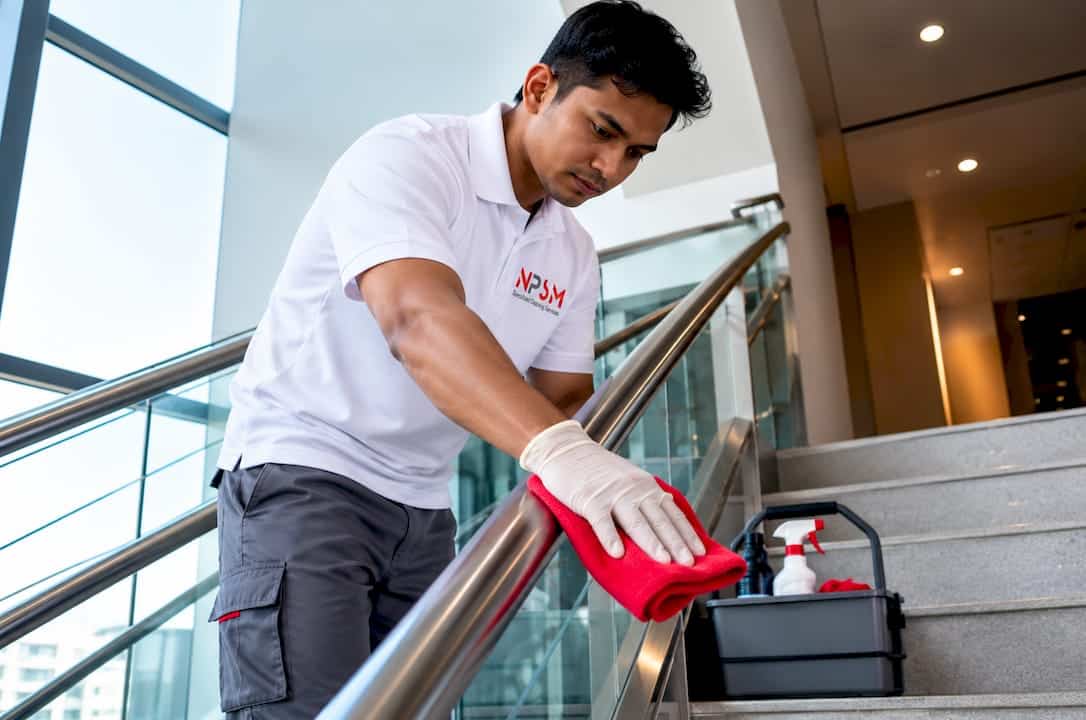
Circulation areas (lifts, stairwells, corridors) get spot-cleaned throughout the day. Lift buttons and handrails are touched constantly and belong on the same disinfection frequency as door handles. Stair nosing and corridor floors get a midday check for spills, with a full clean at opening and closing.
Floors and carpets: daily care and escalation rules
Hard floors follow a simple order: dry sweep or vacuum first to lift grit, then damp mop with a diluted cleaner appropriate to the floor type. Stone and marble surfaces should never meet acidic cleaners, since even a mild acid can etch the surface and dull the finish over weeks of repeated contact.
Carpeted areas need daily vacuuming concentrated on traffic lanes near entrances and workstations. Spills get treated immediately: blot rather than rub, and use a spot-cleaner rated for the stain type before it sets. A carpet cleaning guide covers when to schedule deeper extraction or shampooing, generally on a periodic basis rather than daily.
Call a floor specialist when stains resist spot-cleaning, when marble shows dullness or etching, or when carpet extraction is overdue by more than a quarter.
A well-chosen entrance mat system captures grit before it reaches interior flooring, cutting the dust load on daily cleaning crews.
Supplies, PPE and equipment checklist for daily shifts
A shift start check prevents mid-round supply shortages. Consumables to verify include disinfectants referenced to their safety data sheet, glass cleaner, floor cleaner, trash liners, hand soap, sanitizer, and paper towels.
PPE: gloves rated for the chemicals in use, eye protection when handling concentrates, and aprons for kitchen or restroom disinfection tasks.
Equipment: a vacuum with HEPA filtration for dusty zones, microfiber mop systems, color-coded cloths by area, a spill kit, and a clipboard or tablet for logging.
Storage: chemicals stored upright, segregated by hazard type, away from direct sunlight or extreme heat.
Pro Tip:Keep a laminated inventory-minimum card taped inside the supply closet door so any staff member can spot a shortage at a glance, without digging through a stockroom log.
Chemical safety and compliance: SDS, labels and training
Commercial cleaning chemicals used in offices must be registered and supported by documentation. Dubai Municipality’s Technical Guidelines for Detergents require detergents for commercial use to carry bilingual labeling in Arabic and English, backed by a safety data sheet, ingredient data sheet, and laboratory test report.
Never mix incompatible chemicals, especially bleach-based and ammonia-based products.
Store chemicals segregated by hazard class, away from temperature extremes.
Confirm any product in use carries the required municipal approvals before authorizing daily use.
Keep training records tied to each chemical category staff handle.
Missing or unreadable Arabic labeling is one of the most commonly citedinspection failuresfor facilities using cleaning chemicals, which makes bilingual SDS verification a procurement condition rather than an afterthought.
Waste handling, segregation and daily disposal steps
Dubai’s waste management bylaw%20of%202026%20Regulating%20Waste%20Management.pdf) requires waste producers to maintain a register covering type, daily quantity, and segregation processes, along with approved carriers for transport when required.
Separate general waste, recyclables, and hazardous waste at the point of collection, using labeled liners for each stream.
Log daily waste type and quantity in the register, noting the approved carrier or disposal site when hazardous material is involved.
Store waste in a designated room until collection, and contact a licensed carrier for anything beyond routine general waste.
Handle contaminated or hazardous waste with gloves and, where the material warrants it, eye protection.
Documentation, verification and handover: logs and audit readiness
A daily log should record the date and time, the area cleaned, the staff member’s name, the products used with their SDS reference, and any issues found along with the corrective action taken.
Shift handover includes a signed log entry, with photo evidence for problem areas such as leaks or stains.
Escalate unresolved issues to a supervisor before the next shift begins.
Keep at least 90 days of logs and training records accessible for inspection.
Supervisors should run periodic spot checks against the same zone checklist staff use daily.
Buildings managing larger portfolios often fold this into a broader building cleaning services program, where documentation spans multiple floors or tenants under one schedule.
Printable quick checklist and templates
A one-page printable checklist works best when it mirrors the same zones staff walk daily, with timing prompts built in.
Time
Focus areas
Key tasks
Opening
Reception, restrooms
Stock check, PPE check, SDS binder present, equipment start check
Opening template: confirm inventory levels, PPE availability, SDS binder access, and equipment function before the first round starts.
Closing template: complete waste handover, restock consumables, clean equipment, sign off the daily log, and ticket any unresolved issues.
Laminated checklists survive daily handling better than paper, though a digital check-in on a shared tablet makes the 90-day log easier to search later. Smaller offices can trim the zone list; larger floors may need a checklist per wing.
Publisher perspective and operational tips from a Dubai cleaning provider
With extensive experience cleaning commercial spaces, including specialist work in HVAC duct cleaning and data center cleaning, the company has observed daily janitorial routines succeed or fail based on one habit: consistent documentation. A local tip worth adopting: during high-dust months, prioritize AC vents and return grilles in the daily wipe-down, since dust settles there faster than most managers expect. Daily rounds cover the basics well, but tasks like duct cleaning or data center cleaning belong to a specialist visit, not the daily checklist.
What actually makes a checklist work
Most daily checklists fail not from missing tasks but from missing proof. A facility manager can run every task on this list perfectly and still struggle during an inspection if the log is incomplete or the SDS binder is out of date. The conventional advice focuses heavily on task lists, when the harder discipline is consistent, dated documentation that survives a spot check months later.
Prioritize the documentation habit first, then build task consistency around it. A checklist without a signed daily log is just a suggestion. Facility managers who treat the log as seriously as the cleaning itself tend to clear inspections faster and resolve disputes over missed areas in minutes rather than days.
— Qadir
How Specialized Cleaning can help with your daily routine
Running a daily checklist internally works for many offices, but staffing, training, and documentation add up over time. Specialized Cleaning’s office janitorial services cover daily rounds, dated cleaning logs, and specialist add-ons like HVAC duct cleaning and data center cleaning when a facility needs more than daily scope.
Experienced staff handle daily rounds and documentation.
Scheduling options aim to cover gaps when internal staff call out.
Consultations help match a cleaning contract to your office size and zones.
Get a quote through our office janitorial cleaning services page and let a documented daily routine run itself.
Regulatory and industry resources for compliance
The waste management bylaw confirms disposal and register rules, while the Technical Guidelines for Detergents sets SDS and labeling standards for chemical products.
What should be included in a daily workplace cleaning checklist?
A daily workplace checklist should cover waste removal, high-touch surface disinfection, restroom cleaning, floor care, and pantry sanitation, with each task logged by date and staff name. It should also confirm that safety data sheets are accessible for every product used that day.
What are some good daily cleaning checklists?
The most effective checklists are zone-based, covering reception, workstations, meeting rooms, pantry areas, restrooms, and circulation spaces separately. Pairing each zone with a timing prompt for opening, midday, and closing passes keeps the routine consistent across shifts.
What is the daily 6 cleaning list?
This refers to the six highest-priority daily tasks: emptying waste and replacing liners, disinfecting high-touch points, cleaning restrooms, handling floor care, sanitizing pantry areas, and securing reception. These tasks form the core of most commercial office routines, with everything else built around them.
What should I include on my daily store cleaning checklist?
A commercial cleaning checklist should include entrance and floor care, high-touch surface disinfection, restroom servicing, waste segregation, and a signed daily log noting any issues found. Chemical use should reference an available safety data sheet for each product applied that day.