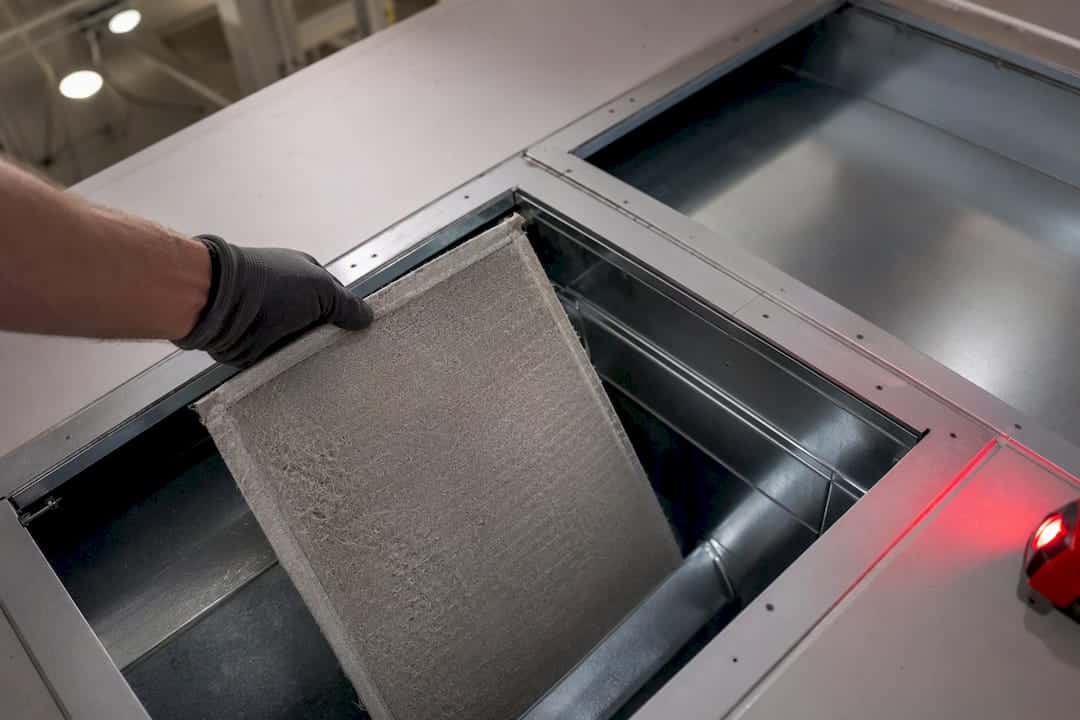
Post-construction cleaning most often fails at the same spots: air vents and HVAC filters, the tops of cabinets and crown moulding, window tracks and weep holes, behind and under appliances, light fixtures, and grout lines. The single highest-priority action is checking and replacing HVAC filters and cleaning the registers, since trapped dust there affects air quality long after visible surfaces look spotless. Property managers should run this checklist before handover; cleaning professionals should run it before calling a job complete.
TL;DR:
HVAC filters and ductwork must be thoroughly inspected, replaced, and properly sealed before handover to prevent ongoing dust circulation and microbial growth.
All high and hidden surfaces, including vents, crown moulding, window tracks, behind appliances, and grout lines, require detailed, area-specific cleaning to remove trapped dust and debris.
A professional duct cleaning and inspection are necessary if there is visible contamination, mold, or persistent dust that standard methods cannot address reliably.
Final handovers should include documented inspections, filter replacements, and photos, especially for commercial spaces with sensitive equipment or high cleanliness standards.
Standard cleaning companies typically do not have the equipment for deep HVAC or ductwork cleaning; specialized services are recommended for thorough, long-lasting results.
Specializedcleaning
Specialized Cleaning For Cleaner Handover
Professional cleaning solutions for post construction spaces, HVAC ductwork, residential properties, and commercial environments in Dubai.
1. The itemized checklist cleaning teams keep skipping
Construction dust does not settle evenly. It clings to horizontal ledges, gets trapped behind fixed appliances, and packs into channels never meant to hold debris. A methodical, area-by-area pass catches what a general wipe-down misses.
Air vents, ducts and return grilles: dust and drywall particles collect inside registers during construction. Remove grilles with a screwdriver, vacuum the visible duct opening with a HEPA-filtered wand, wash the grille in warm soapy water, and dry before reinstalling. Budget adequate time per vent to ensure thorough cleaning.
Tops of cabinets, door frames and crown moulding: these horizontal ledges trap fine dust that commonly accumulates on high ledges and door frames and gets missed because it sits above eye level. Use appropriate vacuum tools such as a telescoping wand from a stable step stool, then follow with a damp microfiber cloth.
Window tracks, sills and weep holes: drywall dust and paint chips settle into tracks and block drainage channels. Vacuum loose debris first, then use a stiff brush or a folded card to clear weep holes, finishing with a damp cloth along the sill.
Behind and under appliances and fixed units: installers often leave sawdust, screws and packaging fragments behind refrigerators, ranges and vanities. Pull units out where it is safe to do so, vacuum the floor and the appliance’s rear vents, then wipe down before sliding back into place.
Baseboards, skirting boards and grout lines: dust settles into every seam at floor level, and grout haze from tile work often goes unnoticed until it dries hard. Wipe baseboards with a microfiber cloth, then scrub grout with a stiff nylon brush and a neutral cleaner, spot-treating any silicone residue with a plastic scraper.
Cabinet and closet interiors, drawers and hardware: sawdust and packaging residue collect on shelves, in drawer tracks and on hinges. Empty each cabinet, vacuum corners and tracks, then wipe hardware with a damp cloth.
Light fixtures, ceiling fans and recessed fittings: dust settles on fan blades, fixture housings and diffusers, dulling light output. Turn off power at the breaker before touching any fixture, then dust with a microfiber wand and wipe glass covers separately.
Switch plates, outlet covers and electrical fixtures: fingerprints, paint spatter and dust build up around every switch and outlet. Wipe with a barely damp cloth, never a wet one, and avoid spraying cleaner directly onto the plate.
Walls and corners: cobwebs, dust and stray paint splatter collect in upper corners and along wall edges. Use a soft-bristle extension duster for cobwebs, then a magic eraser or mild solvent for paint spatter, testing on a small area first.
Flooring edges and under thresholds: dust and adhesive residue pack into the gap where flooring meets a threshold or transition strip. Use a thin scraper to lift dried adhesive, then vacuum the gap before a final mop pass.
Construction adhesives and sealant residue: leftover caulk beads, tape residue and adhesive smears on glass or tile need a dedicated pass. A plastic scraper handles most residue; a citrus-based adhesive remover lifts what scraping leaves behind.
Plumbing fixtures and drains: sinks, faucets and drains collect grout dust, metal shavings and sealant during installation. Run water through each drain, inspect for slow flow, and polish fixtures with a non-abrasive cleaner.
A few essentials apply across every item on this list:
Wear a properly fitted dust mask or respirator, safety glasses and gloves when handling settled construction dust.
Use a stable ladder or step stool for anything above shoulder height, and never lean on cabinetry for extra reach.
Turn off power at the breaker before cleaning any light fixture, ceiling fan or outlet cover.
Keep a separate cloth or pad for wet areas versus dry dusting to avoid smearing fine debris.
Pro Tip:Clean high to low, room by room. Dust dislodged from ceiling fixtures and crown moulding settles on lower surfaces, so finishing baseboards and floors last, with a clean tack cloth for the final wipe, prevents redoing work you already finished.
2. HVAC, ducts and filters need standards-based verification
Air handling systems are the part of a post-construction clean that hides the most and shows the least. Dust, drywall particles and fine debris drawn into ducts during construction can circulate through occupied space for months if filters and registers are not addressed before handover. The EPA’s building air quality guidance treats HVAC cleanliness as central to preventing microbial growth and maintaining airflow, and recommends sealing and inspecting ducts before a building returns to normal occupancy.
During construction, ducts and registers should be sealed and protected with temporary covers, and a temporary filter installed to catch drywall dust and debris before it reaches the system. The EPA’s technical bulletin on duct protection recommends sealing duct openings for the duration of construction and replacing filters once work is complete, before the system runs at normal capacity.
Duct cleanliness is treated as both a health and an operational issue. Unprotected ducts can trap enough construction debris to affect airflow and increase microbial risk if moisture is present.
Before signing off on any post-construction job, confirm:
All temporary duct seals and covers have been removed and registers reinstalled correctly.
Filters have been replaced with a clean unit of the correct size and rating, not just inspected.
Visible duct openings and return grilles show no residual drywall dust or debris.
Any signs of contamination or reduced airflow are flagged for a professional duct cleaning rather than a standard wipe-down.
Keep filter model numbers, replacement dates and any duct inspection photos as part of the handover file.
3. When a specialist should take over from the standard clean
Some jobs go past what a general cleaning crew is equipped to finish safely. Visible mold or heavy dust inside ductwork, data center environments with sensitive equipment, thick sanding residue on hard surfaces, or fine dust that keeps reappearing after a standard clean are all signs to bring in a specialist rather than repeat the same steps.
NPSM Specialized Cleaning Services LLC has worked on residential and commercial post-construction sites in Dubai for over 15 years, using licensed staff and specialized equipment for tasks like HVAC duct cleaning and data center cleaning, with same-day scheduling available for urgent handovers.
A useful brief to any contractor covers:
The exact scope: which rooms, systems or fixtures are included and which are excluded.
Inspection checkpoints the contractor walks through with you before sign-off.
Documentation to request: before-and-after photos, filter model numbers, and a signed statement confirming debris removal.
4. Setting priorities across property types
Safety and air quality come first on every job: sealed ducts, replaced filters, cleared weep holes. Visible surfaces come next, since they shape the client’s first impression. Hidden zones, cabinet interiors, behind appliances, come last because they take longer to find and confirm.
Residential handovers can usually proceed once air quality checks pass. Commercial spaces, especially those with sensitive equipment, sometimes warrant a short delay if duct contamination is visible. The habit that prevents most repeat visits: a signed final inspection checklist, room by room, before anyone calls the job done.
— Qadir
5. Matching the checklist to a professional cleaning service
Recognizing a missed spot is one thing. Fixing it properly, especially inside ductwork or behind heavy fixtures, often calls for equipment a standard cleaning kit does not include.
NPSM Specialized Cleaning Services LLC handles the parts of this checklist that need dedicated tools: HVAC duct cleaning for filter and duct verification, and post-construction deep cleaning for heavy dust, grout haze and adhesive residue across a full site. A typical engagement runs through a site inspection, a scoped quote, the cleaning itself, and a handover document listing what was checked and cleaned.
Vents and airflow issues route to the HVAC duct cleaning team.
Heavy residue, grout haze or sanding dust routes to the post-construction deep cleaning service.
Ongoing office maintenance after handover can move to a standard janitorial contract.
If your site is heading toward handover and any item on this checklist looks unresolved, request a free consultation and get a same-day scheduling option for the areas that need a specialist pass.
Sources
Guidance on HVAC maintenance and indoor air quality (IAQ) is drawn from the EPA’s building air quality guide and its duct protection technical bulletin. The identification of commonly overlooked cleaning areas and the recommended order of tasks are informed by Good Housekeeping’s expert list of frequently missed spots and Dyson’s research on hidden dust accumulation. For homeowners evaluating the benefits of duct cleaning, this air duct cleaning primer offers useful insights.
FAQ
What is included in post-construction cleaning?
Post-construction cleaning covers dust and debris removal from every surface, including vents, ledges, window tracks, appliance surrounds and grout lines, along with adhesive and sealant residue removal. It typically finishes with a detailed inspection to confirm nothing was missed before occupancy.
What is the 20/10 rule for cleaning?
The 20/10 rule is a general tidying method involving set periods of cleaning and resting, repeated in cycles. It is a household productivity habit rather than a construction-cleaning standard, so it does not replace an area-by-area post-construction checklist.
What are the 7 stages of cleaning?
Definitions vary by industry, but a common version for post-construction work runs: rough clean, debris removal, dusting, vacuuming, detail cleaning of fixtures and vents, floor cleaning, and a final inspection pass. Each stage targets a different layer of construction residue before the space is considered ready.
What is the purpose of post-construction cleaning?
Post-construction cleaning removes fine dust, debris and residue left behind by building work so the space is safe, breathable and presentable for occupancy. It also protects HVAC systems and finished surfaces from long-term damage caused by trapped construction dust, as outlined in EPA guidance on building air quality.