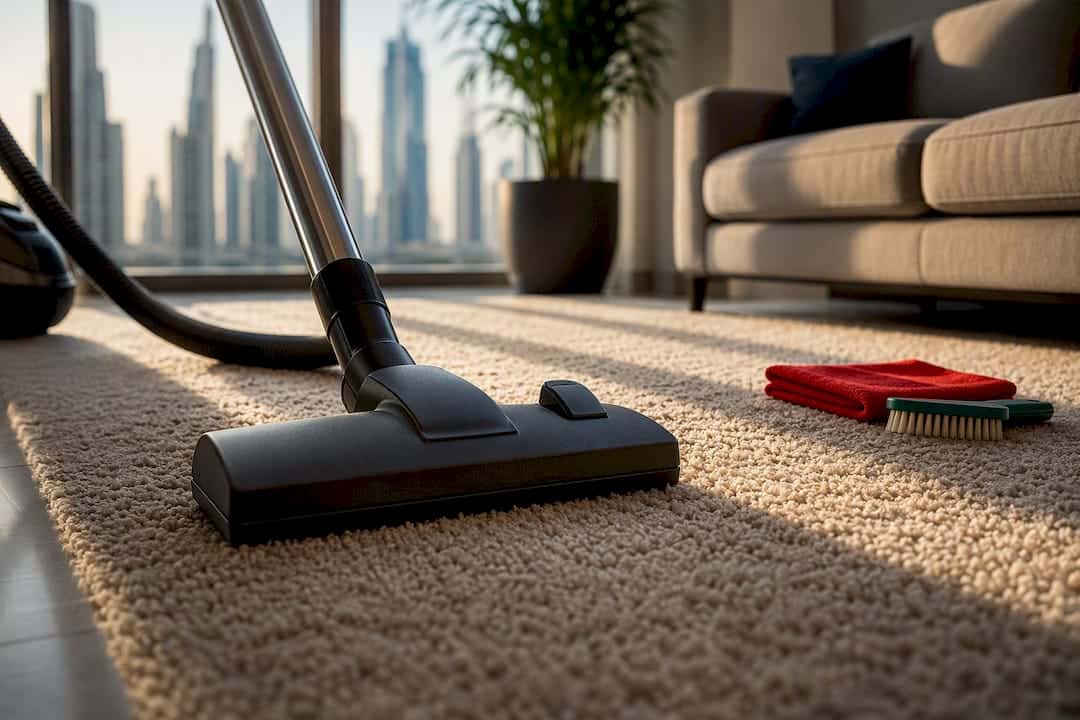
Vacuuming removes dry, surface soil sitting on top of and between carpet fibers; carpet shampooing and hot-water extraction remove embedded grime, oils, stains, and odors that suction alone can never reach. The two aren’t competitors. Vacuum on a regular schedule to protect the fibers and slow down soiling, then shampoo or extract periodically, or whenever stains and odors show up, to reset the carpet from the inside out. If soils are heavy, fibers are delicate (wool, for instance), or a stain won’t budge, call a professional before you make it worse.
TL;DR:
Regular vacuuming should be done multiple times a week in high-traffic areas to prevent grit from damaging fibers and dulling appearance.
Deep cleaning with shampooing or hot-water extraction is recommended every 6 to 12 months, with more frequent sessions in homes with pets or heavy foot traffic.
Proper technique, including thorough pre-vacuuming and fiber testing, is essential to avoid detergent residue, fiber damage, and prolonged drying times during wet cleaning.
HEPA filtration in vacuums enhances air quality by trapping fine dust and allergens, especially important in allergy-sensitive environments.
Deep cleaning methods are only effective if soil and stains are pre-treated, the extraction is sufficiently strong, and the carpet is fully dried before foot traffic resumes.
Specializedcleaning
specializedcleaning.ae
Bring Back a Cleaner Carpet
Specializedcleaning provides professional cleaning solutions in Dubai for homes and businesses facing demanding cleaning challenges.
Carpet Shampooing vs. Regular Vacuuming: A Quick Comparison
Before deciding which method a carpet needs today, it helps to see the two side by side. They solve different problems, on different timelines, with different equipment.
Factor
Vacuuming
Shampooing / Extraction
Process
Dry suction plus brush agitation
Wet solution, mechanical agitation, then extraction
What it removes
Dust, crumbs, pet hair, dry grit
Embedded oils, ground-in stains, trapped odors
Time required
A few minutes per room
An hour or more, plus several hours of drying
Frequency
Multiple times per week
Every 6 to 12 months, or when triggered by a spill or odor
Best for
Daily upkeep and fiber protection
Restoring appearance after heavy soiling
Air quality role
HEPA filtration traps fine dust
Removes allergens trapped deep in the pile
The Carpet and Rug Institute treats these as two stages of one maintenance system rather than rival methods. Vacuuming is the daily defense that keeps grit from grinding into fibers. Shampooing or extraction is the periodic reset that pulls out what vacuuming was never designed to touch. Skip either one long enough, and the carpet shows it, whether that’s matted traffic lanes from missed vacuuming or a dull, gray cast from oils that never got flushed out.
How Does Vacuuming Actually Clean a Carpet?
A vacuum works through suction paired with brush agitation. The motor pulls air (and whatever is riding on it) through the carpet pile and into a filter or bag, while a rotating brush roll loosens soil trapped near the base of the fibers so the airflow can lift it out. That combination matters. Suction alone glides over compacted dirt; agitation without suction just redistributes it.
Filtration quality determines how much of that lifted dirt actually leaves the room instead of recirculating. A machine with a true HEPA filter captures fine dust, pollen, and pet dander that a basic filter lets straight back into the air, which is why HEPA models get singled out in indoor air quality guidance for homes with allergy sufferers or asthma.
Getting real value from a vacuum comes down to technique, not just horsepower:
Slow down. A fast single pass barely disturbs embedded grit. Multiple slow, overlapping passes in different directions lift far more soil.
Work the edges first. Baseboards and corners collect the densest soil buildup because foot traffic pushes debris toward the walls over time.
Use crevice and upholstery attachments along stair edges and under furniture legs where the main head can’t reach.
Empty bags or bins before they’re full. A vacuum operating at 80% capacity loses a meaningful share of its suction power.
Even with perfect technique, a vacuum has a hard ceiling. It cannot dissolve grease, break down sticky spills, or pull out soil that’s bonded to the fiber with body oils or tracked-in grime. That’s a job for water and chemistry, not airflow.
Pro Tip:Vacuum in a grid pattern, north to south then east to west, over high-traffic zones. It roughly doubles the soil pickup compared to one direction alone, especially on cut-pile carpet where fibers lean and hide dirt from a single-direction pass.
What Happens During Carpet Shampooing and Extraction?
“Carpet shampooing” and “hot-water extraction” get used interchangeably by homeowners, but technicians mean two different things. Shampooing applies a foaming detergent, works it into the pile with a rotary brush, then extracts the residue and moisture. Hot-water extraction, often called steam cleaning, injects heated water and a cleaning solution under pressure, then immediately pulls it back out with a powerful vacuum stroke, all in one pass.
The chemistry behind both methods depends on surfactants, ingredients that break the bond between oily soil and carpet fiber so water can carry it away, and pH balance matters as much as the surfactant itself. Synthetic fibers like nylon and polyester tolerate a wider pH range, but wool and other natural fibers can felt and suffer permanent damage from alkaline shampoos, which is why professionals test fiber type before choosing a product.
Extraction power is where results diverge sharply between a rented machine and professional equipment. A comparison of steam, shampoo, and dry cleaning methods notes that shampooing can tackle heavily matted traffic lanes effectively, but if the rinse pass doesn’t fully extract the detergent, leftover residue acts like a magnet for new dirt. Hot-water extraction, done with strong suction recovery, tends to leave less behind.
An EPA-controlled study on contaminated carpet found wet cleaning cut contamination by about 60%, while dry vacuuming alone showed no meaningful reduction under the same test conditions. That gap illustrates why deep soils genuinely need a wet method, not just a stronger vacuum.
Drying is the tradeoff. Expect:
4 to 8 hours with air movers and good ventilation running
12 to 24 hours in humid conditions with no supplemental airflow
Faster results when a technician uses commercial-grade extraction with high water recovery, which pulls out more moisture at the source
Where Vacuuming Earns Its Keep (and Where It Falls Short)
Regular vacuuming is the single most protective habit a carpet owner can build, and it costs nothing but a few minutes a day. Dry grit acts like sandpaper under foot traffic, wearing down fiber tips and dulling the pile’s appearance long before any stain shows up. Removing that grit before it grinds in is the entire game.
CRI’s maintenance guidance ties vacuum frequency directly to foot traffic:
Daily in high-traffic areas: entryways, hallways, main office corridors
2 to 3 times weekly in medium-traffic zones: living rooms, open-plan workstations
Weekly in light-traffic rooms: guest bedrooms, formal dining areas
Following that schedule prevents the traffic-lane matting that makes a carpet look years older than it is, according to the research on extending carpet life through ongoing maintenance. A vacuum with genuine HEPA filtration adds a health benefit on top of that: it traps fine particulates like dust mite debris and pollen instead of blowing them back into the room, which matters in a home with allergies or a small business with a lot of foot traffic tracking outdoor pollutants inside.
What vacuuming cannot do is just as important to understand. It has no effect on body oils absorbed into the fiber, no ability to lift a set-in coffee or wine stain, and no way to neutralize an odor that’s worked its way into the padding underneath. Those problems live below the surface a vacuum can reach, which is exactly the gap wet cleaning is built to close.
Where Shampooing Delivers, and Where It Can Backfire
Shampooing and extraction earn their place by reaching what vacuuming can’t: oils, ground-in stains, and odors sitting deep in the pile and the padding underneath. Done correctly, the results go beyond looking clean.
Deep contaminant removal. Extraction physically flushes out soil, allergens, and residue trapped below the surface.
Stain and odor elimination. Heat and the right chemistry break down organic compounds that basic surface cleaning leaves behind.
Pile restoration. Agitation lifts crushed, matted fibers back toward their original texture, which is often what makes a carpet look “new” again after a wet clean.
The risks show up when the process gets rushed or the chemistry is wrong for the fiber. Leftover detergent residue is the most common complaint, and it’s largely avoidable: inadequate suction recovery during extraction leaves soap behind, and that residue attracts dirt faster than the carpet was soiling before the clean. Overwetting is the second major risk. Pump too much moisture into the pad without pulling it back out fast enough, and you’re looking at extended drying times, or worse, mildew developing underneath the carpet where nobody sees it until the smell shows up.
Wool and other natural fibers carry the highest risk of permanent damage, since alkaline products above roughly pH 8 can felt wool and cause irreversible texture change. That’s exactly why professionals pre-test a hidden section of carpet before committing to a full-room clean.
Pro Tip:Ask any technician quoting a shampoo or extraction job what their machine’s suction recovery rating is. Strong recovery is what separates a clean that lasts from one that looks good for two days and re-soils fast.
How Often Should You Vacuum vs. Deep-Clean a Carpet?
Matching the method to the moment is the whole trick. Here’s a workable schedule for most homes and small offices in Dubai.
Vacuum daily in entryways, hallways, and any high-traffic commercial floor.
Vacuum 2 to 3 times weekly in medium-traffic living areas and open workstations.
Vacuum weekly in low-traffic rooms like guest bedrooms or formal spaces.
Schedule a full shampoo or extraction every 6 to 12 months for a typical household, a cadence local professional practice confirms as standard for routine upkeep.
Shorten that window to every 3 to 4 months in homes with pets, young children, or heavy foot traffic, since oils and accidents accumulate faster than the standard cycle accounts for.
Deep-clean immediately, regardless of schedule, when you see visible stains that vacuuming won’t lift, a persistent odor, matted traffic lanes that don’t bounce back after vacuuming, or right after construction work or a large event tracked in extra soil.
Small businesses running janitorial contracts should build this same logic into a pet friendly rental furnishings maintenance program rather than reacting to complaints. CRI’s commercial maintenance guidance frames it as a three-tier system: preventive vacuuming daily, interim spot maintenance as needed, and scheduled deep cleaning on a fixed calendar. Waiting until a carpet “looks dirty” to book extraction usually means the soil has already been grinding into the fiber for months.
Getting Ready for a Deep Clean, and What to Do After
A shampoo or extraction session goes faster and lasts longer when the carpet is prepped properly beforehand. Skipping prep is one of the most common reasons a “deep clean” underperforms.
Before the technician arrives:
Vacuum thoroughly. Wet-cleaning wet soil turns it to mud and drags dirt deeper into the pile instead of lifting it out.
Spot-test and pre-treat any known stains so the technician can target them specifically.
Move small furniture, or protect furniture legs with plastic tabs to prevent rust or wood-stain bleed onto damp carpet.
What a professional crew typically does:
Inspects the carpet and identifies fiber type before selecting a product.
Pre-sprays the solution to break down soil ahead of agitation.
Runs multiple extraction passes rather than one, then grooms the pile to reset fiber direction.
After the clean:
Ventilate the room and run air movers if available to cut drying time.
Keep foot traffic off the carpet until it’s fully dry, not just surface dry.
Resume your normal vacuum schedule once dry. It’s the single best way to protect the results you just paid for.
Avoiding Residue, Fiber Damage, and Air Quality Problems
Most complaints about shampooing trace back to three preventable mistakes: too much detergent, the wrong chemistry for the fiber, and poor containment during the work itself.
Preventing residue buildup:
Insist on strong extraction with a dedicated rinse pass, not just a single wet application.
Avoid over-applying detergent. More product does not mean a deeper clean, it means more to extract.
Protecting delicate fibers:
Request a pre-inspection before any wet product touches the carpet.
For wool or other natural fibers, confirm the technician is using pH-safe products, since alkaline shampoos can felt wool permanently if the chemistry is wrong.
Controlling airborne particulates:
Run a HEPA-filtered vacuum pass before any wet work begins to pull out loose dry soil and reduce what gets kicked into the air during agitation.
Ventilate the space while the carpet dries. The EPA’s testing found that both dry vacuuming and wet cleaning raise airborne particle concentrations during the activity itself, which is exactly why containment and airflow matter most while work is underway, not after.
How Experienced Technicians Decide Between Vacuuming, Shampooing, and Extraction
NPSM Specialized Cleaning Services LLC has over 15 years of experience reading carpets before touching them with any tool, and that inspection step is what separates a guess from a decision. A carpet with light dry soil and no odor gets a maintenance vacuum recommendation. Matted traffic lanes with visible grime usually call for shampooing with rotary agitation. Deep-set stains, pet odors, or oily soil across a wide area typically point toward full hot-water extraction instead.
Homeowners and small businesses working with a licensed provider should expect a few specific things as standard: same-day scheduling when a carpet needs urgent attention, a free consultation to assess the job before any commitment, and pre-inspection with fiber testing so the product matches the material instead of damaging it.
The Real Lesson Here Is Timing, Not Technology
The gap in most carpet advice isn’t about which machine is “better.” It’s that Offices treat vacuuming and shampooing as substitutes when they’re stages. A carpet vacuumed daily but never deep-cleaned will still gray out from trapped oils within a year or two. A carpet shampooed twice a year but rarely vacuumed will show premature fiber wear regardless of how good that shampoo job was.
If there’s one habit worth prioritizing first, it’s consistent vacuuming on the CRI traffic-based schedule, because it’s the cheapest, easiest lever, and it directly determines how much work a deep clean has to do later. The second priority is watching for triggers rather than waiting for a fixed calendar date: an odor that won’t fade, a stain that survives a spot clean, matting that doesn’t spring back. Those signals matter more than the six-month mark on a calendar.
Where conventional advice falls short is treating shampooing as a cosmetic fix. Done right, with proper extraction and fiber-appropriate chemistry, it’s structural maintenance. Done carelessly, with weak suction recovery or the wrong pH on natural fiber, it accelerates the exact problem it was supposed to solve.
— Qadir
Ready for a Professional Carpet Reset?
Professional carpet cleaning services in Dubai offer a faster route to a genuinely deep clean than DIY rental equipment can deliver, often with licensed staff who pre-inspect and fiber-test before choosing a method, so wool rugs and synthetic office carpet are treated appropriately.
NPSM Specialized Cleaning Services LLC provides professional carpet shampooing with same-day scheduling and a free consultation before any work begins, so you know the cost and the plan before committing. If your carpet is showing matted traffic lanes, lingering odors, or stains that survive a spot clean, request a free quote through the carpet shampooing service page and get a technician out to assess it directly.
FAQ
Are Carpet Cleaners and Vacuums the Same Thing?
No. A vacuum uses dry suction and brush agitation to lift surface soil, while a carpet cleaner (shampooer or extractor) applies water and detergent, then extracts both the solution and the dissolved soil. They handle different jobs and neither replaces the other in a proper maintenance routine, according to CRI’s maintenance standard.
Can You Use a Carpet Shampooer as a Regular Vacuum?
Not effectively. Most carpet shampooers lack the strong, continuous dry suction and brush-roll design that regular vacuums use for daily dust and debris pickup, and running one dry for routine cleaning wastes the machine’s purpose. Keep a dedicated vacuum, ideally HEPA-filtered, for daily and weekly upkeep, and reserve the shampooer for periodic deep cleans.
Should You Vacuum a Carpet Before or After Shampooing?
Always vacuum thoroughly before wet cleaning, never after. Removing dry soil first prevents it from turning to mud once water and detergent hit the pile, and it stops loose grit from getting pushed deeper into the fibers during agitation. A follow-up vacuum, once the carpet is completely dry, helps lift and reset fibers that were flattened during the cleaning process.
What Are the Drawbacks of Using a Carpet Shampooer?
The biggest risk is leftover detergent residue when extraction or rinsing is incomplete, which attracts new dirt and makes carpet re-soil faster than before. Overwetting is the second major risk, since excess moisture in the pad can lead to extended drying times or mildew if it isn’t properly extracted, an issue that proper suction and rinse technique largely prevents.