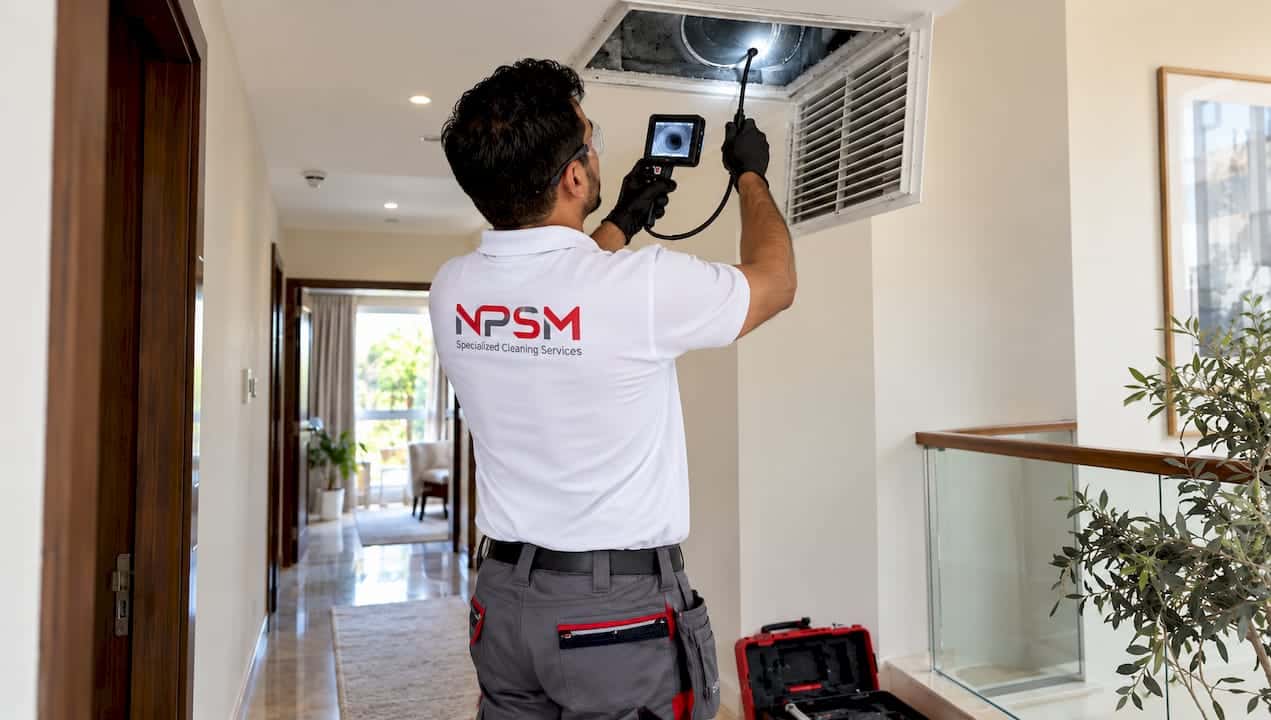
Most homes need professional duct cleaning every 1 to 2 Year under normal conditions, but that baseline shifts fast. Pets, smokers, allergy sufferers, mold events, and recent renovations can all push the right interval down to one or two years, or trigger an immediate inspection. Before locking in a schedule, we recommend an inspection to confirm what your ducts actually need rather than guessing.
TL;DR:
Households with pets, smokers, or allergy sufferers should inspect and clean ducts every one to two years rather than following the standard three to five-year schedule.
Visible signs such as dust buildup, mold, or persistent odors indicate an immediate need for professional duct assessment, regardless of last cleaning date.
Duct cleaning that skips coils, blowers, and other components can lead to rapid recontamination, highlighting the importance of comprehensive system scope.
Routine preventive maintenance, including filter replacement and coil cleaning, can often replace scheduled deep cleaning unless inspection finds contamination or buildup.
Choosing a contractor with NADCA membership, camera inspection, and clear scope documentation ensures effective cleaning and minimizes unnecessary work.
Specializedcleaning
specializedcleaning.ae
Check Your Ducts Before Cleaning
Specializedcleaning provides professional HVAC duct cleaning in Dubai, using specialized equipment to address complex cleaning challenges.
Once you know your baseline risk level, the schedule below helps you map it to an actual calendar.
For a typical home with decent filtration, low dust exposure, and no smokers or pets, the 1 to 2 year baseline holds up well. Outside that profile, intervals compress quickly:
Pets, renters, or high-dust homes: every 1 to 2 years
Allergy or asthma sensitivity among occupants: annually, or sooner if symptoms worsen
After mold discovery, water intrusion, or flooding: immediate assessment, cleaning likely
During or right after renovation or construction: cleaning before the system runs regularly again
High-occupancy or commercial buildings: inspection on a fixed schedule, cleaning as findings dictate
A short list of triggers tells you to move up your timeline regardless of when you last had the ducts done:
A household member develops new or worsening respiratory symptoms
Visible mold or standing water appears near the air handler or ducts
Construction dust has settled into the system
A new pet or smoker has joined the household
Dust returns heavily within weeks of a filter change
In dust-prone climates or buildings with frequent nearby construction, property managers often move from the 3 to 5 year baseline to annual inspections with cleaning every 1 to 2 years for high-occupancy units.
What factors push you toward more frequent cleaning?
Not every household faces the same risk, so it helps to weigh each factor against your own conditions before deciding to accelerate.
Pets and dander: Shedding animals add hair, dander, and debris to the system continuously; homes with multiple pets or heavy shedders often warrant a 1 to 2 year cadence instead of the default baseline.
Allergies or asthma: When symptoms track closely with time spent near running HVAC, it’s worth looping in a clinician and shortening the inspection interval rather than waiting out a fixed schedule.
Mold or moisture events: A leak, flood, or persistent humidity problem calls for inspection right away, since ducts can become a reservoir for microbial growth once moisture is present.
Post-construction dust: Drywall dust, sawdust, and debris from renovation work settle deep into ductwork and rarely clear out on their own.
High occupancy or commercial use: More people moving through a space means more airborne particulate load, which justifies more frequent inspection even if cleaning itself stays on a longer cycle.
Pro Tip:Keep a simple log of filter changes, symptoms, and any water or construction events near your HVAC system. It turns a guess into a documented decision.
What are the warning signs you need duct cleaning now?
Some signals don’t wait for a scheduled inspection. Watch for these:
Visible dust, debris, or dark buildup at supply and return registers
A persistent musty or stale odor that appears only when the HVAC system runs
Allergy or respiratory symptoms that intensify specifically when the system is active
Visible mold growth, water staining, or signs of pests inside accessible duct sections
Dust returning heavily within weeks of a fresh filter or recent cleaning
Any one of these is reason enough to request a professional assessment rather than waiting for the next calendar milestone.
What does professional duct cleaning actually cover?
A proper job treats the HVAC system as a whole, not just the visible duct runs. NADCA’s recommended scope includes:
Supply and return ductwork
Coils, drain pans, and the blower assembly
Registers, grilles, and diffusers
Continuous negative-pressure containment during the work
Technicians typically combine mechanical agitation with negative-pressure vacuuming, often verifying results with a camera inspection before and after. Cleaning only the visible ducts while skipping the coils and blower is a common shortcut that leads to fast recontamination, since those components recirculate whatever was missed. Ask for before-and-after photos, camera footage, and an invoice that itemizes exactly which components were serviced. Our guide to HVAC duct cleaning services walks through this scope in more detail if you want the full picture before booking anything.
Can preventive maintenance replace full duct cleaning?
In many cases, yes. A documented maintenance routine often does more for air quality than waiting for a calendar-based cleaning:
Replace filters on a fixed schedule and choose a MERV rating suited to your household’s sensitivity level
Keep coils and drain pans clean to prevent the microbial growth that eventually spreads into ductwork
Follow ASHRAE’s inspection-driven maintenance guidance, which recommends monthly walk-through checks and semiannual tasks timed to seasonal system start-up
Escalate to full cleaning only when an inspection finds contamination, not simply because a number of years has passed
A well-documented preventive maintenance plan that covers filters, coils, and moisture control frequently proves more cost-effective than routine duct cleaning on a fixed timer. The ASHRAE/ACCA Standard 180 framework backs this inspection-first approach rather than treating cleaning as automatic.
How do you choose a qualified duct-cleaning contractor?
Once an inspection confirms you need cleaning, the contractor you choose determines whether the work actually solves the problem.
Confirm NADCA membership or an equivalent credential, and ask whether camera inspection is included before and after the job
Request a written scope that names every component serviced: ducts, coils, blower, registers, and drain pans
Verify the method includes continuous negative-pressure collection, not just a shop-vac pass through the registers
Ask for proof of insurance, references, and sample before-and-after media from past jobs
Pro Tip:Treat a flat quote offered without any inspection as a red flag. So are guarantees of specific energy savings. Reputable contractors assess before they price.
Why Dubai conditions change the maintenance math
Dust storms and nearby construction can push households well past the standard 3 to 5 year baseline for duct cleaning. Frequent dust events and ongoing building work are common accelerators here. Keeping dated photos and invoices from every inspection makes future decisions faster and better documented.
Our take: stop scheduling by the calendar
The calendar is the wrong tool for this decision. A fixed 3 to 5 year rule works only when nothing in the household has changed, and most homes change constantly: a pet joins the family, a renovation kicks up dust, a child develops seasonal allergies. The conventional advice treats duct cleaning like an oil change, due on a timer, when it behaves more like a dental checkup: necessary when there’s evidence of a problem, wasteful when there isn’t.
What the evidence actually supports is inspection-led decision-making. The NIH/DOHS fact sheet is blunt about this: ducts can become contaminated, but proof that routine cleaning reliably improves health or air quality is mixed. That’s not an argument against cleaning. It’s an argument against cleaning on a fixed schedule instead of in response to actual findings.
If you take one thing from this, prioritize a visual or camera inspection over guessing from a wall calendar. It costs less, tells you more, and keeps you from paying for work your system doesn’t need yet.
— Qadir
Ready for an inspection-led duct cleaning?
If an inspection points to contamination, dust buildup, or recontamination risk around your coils and blower, a full scope cleaning is recommended rather than a partial job.
Whatever contractor you choose, insist on a camera inspection, a written scope covering the whole system, and proof of insurance. We provide all three as standard practice, and our technicians document before-and-after conditions so you have a record for future decisions. You can review our full HVAC duct cleaning service details and request a consultation whenever you’re ready to move from guesswork to an inspection-based plan.
FAQ
How do I know if my ducts need cleaning?
Look for visible dust or debris at the registers, a musty odor that appears only when the HVAC system runs, or allergy symptoms that worsen specifically during operation. Visible mold, water staining, or pest evidence inside accessible duct sections are also clear signals that an inspection is overdue.
What time of year should you get your ducts cleaned?
There’s no universal season requirement, since the right timing follows inspection findings rather than the calendar. Many property managers schedule inspections ahead of peak cooling or heating season so any cleaning happens before the system runs at full capacity.
What health problems can dirty air ducts cause?
Contaminated ducts can act as a reservoir for microbial growth, which may contribute to allergy or respiratory symptoms in sensitive occupants. The same source notes that evidence linking routine cleaning to consistent health improvements is mixed, so symptoms are better treated as a sign to inspect rather than proof of a specific illness.
Does cleaning air ducts really make a difference?
It can, when cleaning addresses a confirmed problem like mold, heavy dust, or post-construction debris, and when the job covers the whole system rather than just the visible ducts. A partial cleaning that skips the coils and blower tends to see dust and contaminants return quickly, which is why scope matters as much as the decision to clean at all.