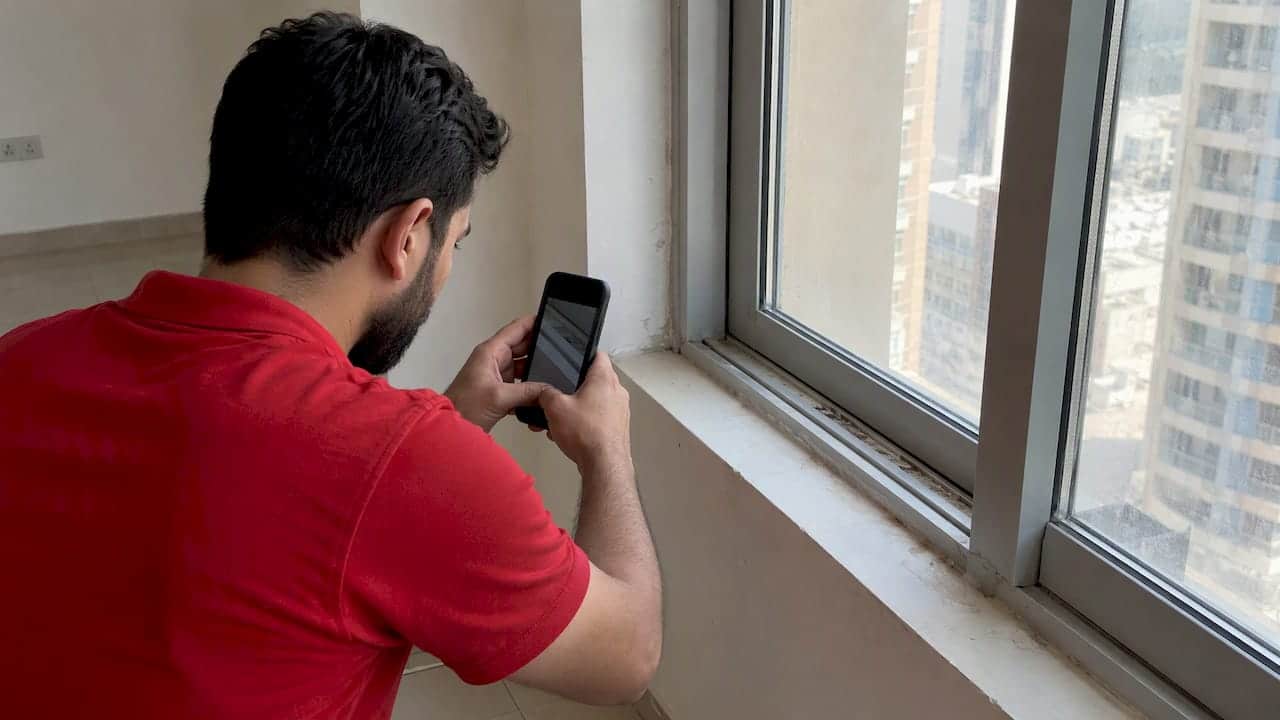
Tenants must hand the property back clean and in the same condition as received, apart from ordinary wear and tear, while landlords may deduct only for damage or dirt beyond that or what the lease requires. A practical approach is to document the property with dated photos and itemized receipts, and close DEWA and Ejari before the final inspection.
TL;DR:
A lease clause requiring professional cleaning or repainting is enforceable; otherwise, charges depend on condition beyond ordinary wear and tear and documented evidence.
Keep signed check in and check out reports, timestamped room photos, itemized invoices, meter readings, and a countersigned key return form to support claims.
Finish repairs first, paint next, and clean last; then complete a joint room by room inspection with signed records before returning keys.
Standard end of contract Ejari cancellation is free online and processed the same day, but unpaid DEWA bills or missing clearance can delay handover.
Specializedcleaning
specializedcleaning.ae
Leave Your Dubai Home Move-Out Ready
Specializedcleaning provides professional move-out cleaning in Dubai, helping homeowners prepare their property for handover.
What should a room-by-room move-out cleaning checklist include?
Agents and landlords may focus on areas such as kitchens, bathrooms and appliances. Work through the unit in this order to prepare for the inspection. Our own move-out cleaning checklist follows the same room-by-room logic if you want a printable version.
Kitchen
Degrease the oven and hobs, including racks, trays and the inside of the door.
Clean cabinets inside and out, and wipe and disinfect all countertops.
Descale the sink and taps, and clean the extractor and grease traps.
Bathrooms
Descale and disinfect showers, tubs, toilets and taps.
Scrub grout, wipe vents, and remove mold and limescale.
Living areas and bedrooms
Remove stains from floors and walls, and vacuum or shampoo carpets where needed.
Wipe skirting boards and door frames, and touch up minor scuffs.
Windows and balconies
Clean the glass and the tracks, and peel off stickers and adhesive residue.
AC vents and grilles
Dust and wipe every accessible grille. Cleaning inside the ductwork is a separate specialist job, so note it on your checklist if the unit needs it.
Appliances and fixtures
Test and clean every supplied appliance, and gather all keys, access fobs and remotes.
Final pass
Empty the unit, remove all rubbish, walk through every room once more and take dated photos.
The most common pitfall is treating move-out cleaning as a general tidy. A tidy removes visible clutter. An inspection-grade clean removes grease from the oven, limescale from the shower screen and dust from the AC grilles, which are exactly the items landlords cite when they hold back money.
Pro Tip:Do your final walkthrough in daylight with the AC off and the blinds open. Streaks, limescale and grease film show up far more clearly than under evening lights, and it is how an inspector will see them.
How do Dubai law and your tenancy contract divide cleaning and repair duties?
The legal benchmark is Law No. 26 of 2007%20of%202007.pdf), which governs the landlord and tenant relationship in Dubai. Under Article 21, the tenant must surrender possession in the same condition as received, except for ordinary wear and tear. The same law makes the landlord responsible for maintenance unless the damage was caused by the tenant, and it refers unresolved disputes to the Rental Disputes Centre (RDC), which can issue binding awards.
In practice, that splits responsibility like this:
Tenant: returns the unit clean, undamaged beyond normal use, and compliant with any cleaning or repainting clause written into the lease.
Landlord: handles structural maintenance and defects the tenant did not cause, and must justify any deduction from the security deposit.
Both: are expected to give each other written notice before expiry. The law sets a 90-day notice period unless the parties agreed otherwise.
Two points decide most disputes. First, a landlord may claim cleaning or repainting charges when the property’s condition exceeds normal wear and tear, or when the contract explicitly requires it on vacating. A faded wall after a tenancy may be ordinary wear and tear. A wall covered in marks, or painted a color the lease did not allow, may be treated differently, depending on the condition and the lease. Second, the landlord must justify the deduction, and the tenant can ask for receipts and photos supporting it.
So read your lease clause by clause before you start cleaning. If it says the property must be professionally cleaned or repainted at exit, that obligation is enforceable. If it is silent, the wear-and-tear standard applies.
The practical tip that settles most arguments: always compare the check-in report with the check-out report. If a mark appears on both, it was there before you. If it appears only on the second, the landlord has a case. Tenants who kept their original move-in report and signed handover documents hold the primary evidence the RDC relies on.
What do move-out cleaning and repainting typically cost, and what drives the price?
We cannot give you a fixed price that holds across every unit, and any provider who promises one before seeing the property is guessing. What we can tell you is what moves the number, so you can budget and negotiate sensibly. Because we publish no fixed rate card for handover cleans, the reliable route is to ask for a written, itemized quote after a quick look at the unit.
The main cost drivers are:
Property size: a small apartment and a large villa can differ substantially in labor hours.
Extent of grime: an unused guest bathroom is a different job from a kitchen with years of baked-on grease.
Stain remediation: wine, coffee, pet marks or cooking stains on carpets and tile.
Carpet shampooing and grout restoration: extra scope on top of a standard deep clean.
Number of rooms and floors: more surfaces, windows and wet areas.
Specialist services: duct cleaning, balcony pressure washing or floor polishing are priced separately.
Repainting follows its own logic. Full repainting is commonly requested when the tenant used an unauthorized color or caused heavy wall damage. Touch-ups usually suffice when the marks are light and the tenancy ran a normal length. If the lease says nothing about repainting, a landlord asking for a full repaint on a clean, lightly worn unit is worth questioning.
When disputes arise, timing matters too. Rental disputes typically resolve within 15–30 days once filed with the RDC, which is why having your invoice ready beforehand is far cheaper than arguing afterward.
Ask every provider, ours included, for an itemized quote that lists rooms, tasks and any extras. An itemized professional invoice does double duty: it fixes your budget, and it becomes evidence that the cleaning was done to a stated scope if the landlord later disputes the condition.
What evidence should you collect at move-in and move-out?
Deductions stand or fall on proof. A tenant who can show the condition on both ends of the tenancy rarely loses a cleaning dispute, and a landlord with dated records can justify a legitimate charge without argument. A formal check-out report with room-by-room photos, meter readings and signed condition entries is among the most useful evidence in RDC cases because it removes ambiguity.
Follow this routine:
Keep the original check-in report. It is the baseline document everything else is measured against. Store a scanned copy somewhere other than your phone.
Photograph every room on handover day. Capture floors, walls, ceilings, appliances, vents, windows, balcony tiles and any pre-existing damage. Use time-stamped photos and shoot each room from the doorway and then in close-up.
Collect every receipt and invoice. That includes professional cleaning, painting, repairs and appliance servicing, ideally itemized with dates.
Log the meter readings. Record electricity, water and chiller readings where applicable, with a photo of each meter display.
Return all keys, fobs and remotes against a signed handover form. Ask for a counter-signed copy, not a verbal confirmation.
Pro Tip:Email yourself the photos the same day. The sent timestamp gives you a second, independent record of when they were taken, which helps if a file’s metadata is ever questioned.
Landlords benefit from the same discipline. A deduction supported by a dated photo, a line on the check-out report and an invoice is far harder to contest than one that rests on a verbal complaint.
How do DEWA, Ejari and timelines affect your deposit release?
Administrative loose ends are a quiet reason deposits stall. Handle them in this order and in parallel with the cleaning, not after it.
Close DEWA. Submit your final meter readings, pay the final bill and download the DEWA clearance. Landlords and agents often want to see this clearance before releasing money, and the DEWA deposit refund follows only after the final bill is settled.
Cancel Ejari. Do it through the Dubai REST app. For standard end-of-contract cases, cancellation is free online and processed the same day. If you go through a Real Estate Trustee Centre instead, a service partner fee of AED 40 plus VAT applies. You will need your DEWA clearance, the Ejari certificate or number, and your Emirates ID. Per Ejari cancellation guidance, landlord e-signature is required only for early termination, not for a standard end-of-contract cancellation.
Why the order matters:
An active Ejari or missing DEWA clearance may complicate the handover. Check the cancellation requirements with the relevant service provider.
The most common causes of delay are unpaid final bills, mismatched meter readings, missing documents and a landlord who is slow to confirm the handover.
Plan for the opposite problem too. If the deposit still is not returned after a clean handover, the next step is a Writ of Payment through the Dubai Land Department. Fees start at a minimum of Dh500, or 3.5% of the claimed amount up to Dh15,000, and the RDC registers and reviews the case once you submit supporting documents.
What is the step-by-step inspection and handover workflow?
A good handover is sequenced. The order below prevents rework and gives both parties a clear record at each stage.
Start early. Give written notice within the contract period, 90 days where applicable, and ask the landlord or agent to schedule a pre-check so you know their expectations before you spend money.
Complete repairs first. Fix anything beyond wear and tear that you are responsible for: holes, damaged fittings, broken tiles.
Do any repainting next. Painting creates dust and marks, so it belongs before the final clean.
Clean last. Deep cleaning is the final task so nothing gets re-soiled. This is why professional cleaners prefer to be booked after trades have finished.
Run the joint inspection. Walk each room with the landlord or agent, complete a room-by-room check-out report together, take timestamped photos and collect signatures from both sides.
Settle the paperwork. DEWA clearance, Ejari cancellation, key return and a signed handover form.
Resolve any disagreement in writing. Ask for itemized deductions, reply by email, and send a formal notice before filing at the Rental Disputes Centre.
Disputes can trace back to one skipped step: no pre-inspection, cleaning done before painting, or a check-out report nobody signed. Following the sequence does not guarantee agreement, but it makes every claim either side raises provable or disprovable.
When should you hire a professional move-out clean?
Hire a professional when the unit is large, the tenancy was long, the kitchen or bathrooms need descaling, or you simply cannot afford a failed inspection. Professional move-out cleaning is distinct from routine cleaning. It is built around the inspection points landlords use to justify deductions:
Descaling of bathrooms, taps and shower screens.
Grease removal from hobs, ovens and extractor surfaces, including the inside of cabinets.
Wiping AC grilles and vents, and detailing window tracks.
Grout cleaning and restoration where staining is visible.
Insist on proof. Ask for an itemized invoice with a written scope and a dated before-and-after photo report. For heavier remediation such as carpet shampooing, grout restoration or HVAC duct cleaning, agree the scope in writing first and ask for photos of each area. Schedule the clean after repairs and painting.
A professional clean backed by documentation removes the most frequent excuse for withholding a deposit, which is that the unit “was not left clean.” It does not override a lease clause or cover damage, but it closes the cleaning question cleanly. If you are weighing a provider, our deep cleaning guide explains what a proper deep clean includes, and our contractor checklist lists what to verify before you sign.
Pro Tip:Ask the cleaner to photograph the oven interior, shower screen, AC grilles and window tracks specifically. These four are the items agents inspect first.
What do we recommend after handling move-out handovers in Dubai?
Our view is that handovers go better when tenants keep clear records. Most deposit disputes are not about whether the unit was cleaned. They are about whether anyone can prove what state it was in, and when.
Two habits make the biggest difference. First, sequence the work: repairs, then painting, then the professional clean last. Tenants who clean first and paint afterward pay twice, because dust and drips undo the first job. Second, make the paperwork a deliverable, not an afterthought. Ask your cleaning provider about documentation, and hand it to the landlord at the inspection rather than emailing it later. A landlord who is holding a photo report in their hand has far less room to argue.
The other thing worth saying plainly: the received wisdom that deposits are a lottery is mostly wrong. They look like a lottery when neither side kept records. With a signed check-in report, a signed check-out report and an invoice, the outcome is usually predictable.
— Qadir
How can we help you finalize the handover?
If you would rather hand the cleaning to a team than spend a weekend on your knees in the shower, our move in/out deep cleaning is built for inspection-day conditions. Contact us to ask about staff, scheduling and consultation options, so you can plan around your handover date.
What it covers for handovers:
Move in/out deep cleaning of kitchens, bathrooms, floors, windows and fixtures.
Carpet shampooing and grout cleaning where the unit needs them.
Cleaning documentation you can hand to the landlord or agent.
Ask us about scheduling and staff details.
On inspection day you walk in with a clean unit, a written scope and photographs of the result. To get started, request a free consultation on our website and tell us your handover date and the size of the unit.
FAQ
Who is responsible for end of tenancy cleaning in Dubai?
The tenant is normally responsible for returning the property clean and in the same condition as received, apart from ordinary wear and tear. A landlord can claim cleaning charges only when the condition goes beyond that or the lease explicitly requires cleaning on exit, as Law No. 26 of 2007 sets out.
Who handles maintenance in Dubai, the landlord or the tenant?
The landlord is responsible for structural maintenance and defects the tenant did not cause. The tenant covers damage resulting from their own use. The lease may add specific duties, so check it before assuming either way.
Do landlords need to professionally clean between tenants?
The guidance says landlords must hand over the property in good condition. Whether a professional clean is needed depends on the property’s condition and the tenancy arrangements. Many landlords arrange a clean anyway so the next move-in report starts from a clear baseline.
How long should a tenant be given notice to vacate?
The law sets at least 90 days’ written notice before lease expiry unless the parties agreed otherwise. Check your contract for any different period and keep proof that the notice was delivered.
How long does a deposit dispute take to resolve?
Rental disputes filed with the RDC typically resolve within 15–30 days. Deposit claims can also be started through a Writ of Payment application via the Dubai Land Department.