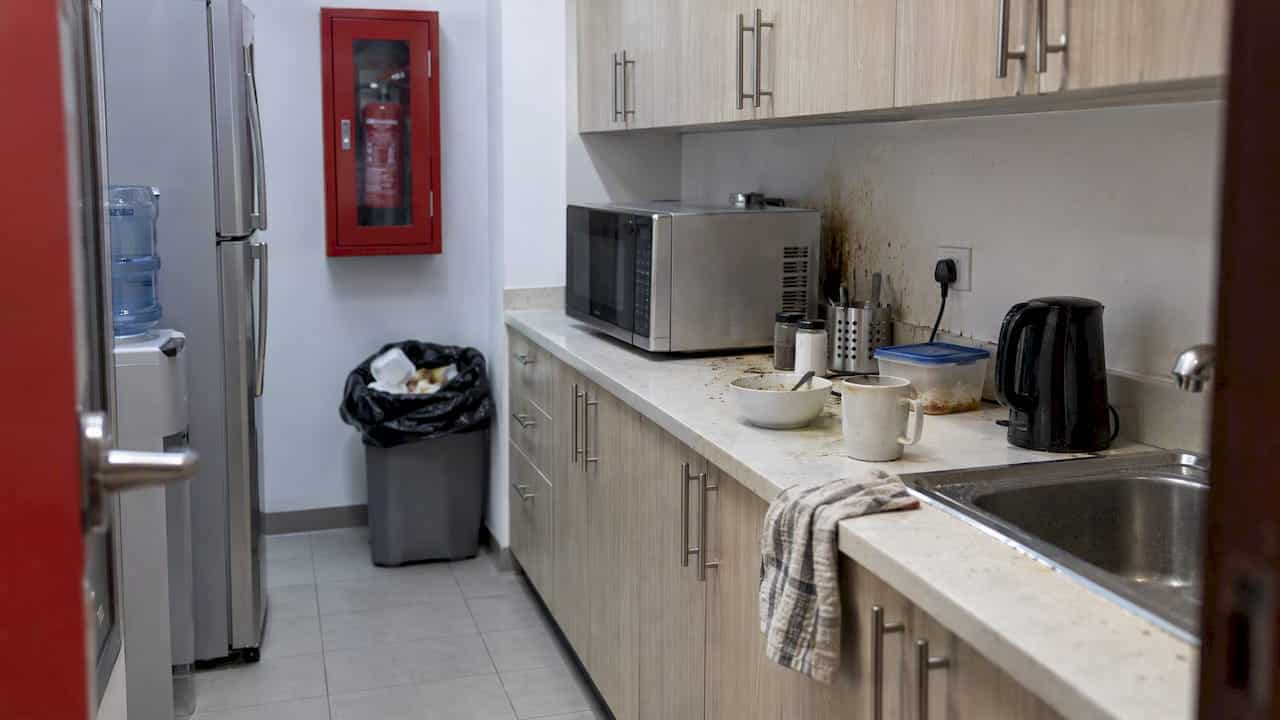
An office odor that returns after routine cleaning is almost never a surface problem. It usually comes from something hidden: a dry drain trap, damp material, a neglected air-conditioning system, carpet that holds moisture, or a building material that is still releasing chemicals. In Dubai, where air conditioning runs most of the year and humidity is high, these sources are common. The fix is to find the source first, then deep clean that source, not the room around it.
This guide sets out the most common causes, how to trace them, which deep cleaning methods work for each, and when to call a specialist.
Specializedcleaning
Target the Source of Office Odors
Specializedcleaning provides professional cleaning for Dubai offices, including HVAC duct cleaning to address odor sources beyond routine surface cleaning.
Odors that survive daily cleaning point to a hidden source: HVAC ducts and coils, drains, damp materials, carpets, or building materials that off-gas.
Trace the smell before you treat it. Note where it is strongest, when it appears, and whether it persists after cleaning and ventilation.
Deep cleaning works when it targets the source: duct and coil cleaning, drain treatment, hot-water carpet extraction, grease removal and moisture control.
Masking with fragrance or air fresheners delays the real fix and can make the office smell worse.
If the smell lingers or staff report symptoms, bring in a specialist for inspection and deep cleaning.
Routine janitorial work removes visible soil: empty bins, wiped desks, mopped floors. It does not reach what sits inside ducts, under carpet, in drain lines or behind panels. If the source stays, the odor returns within hours or days, however often the floor is mopped.
A useful rule: if a smell is still there after the space has been cleaned and ventilated, treat it as a source problem, not a cleaning-frequency problem. Health Canada’s guidance on office air quality frames the same logic. It lists odors from traffic pollution, body and food smells, mold, moisture, chemicals, sewer gases and pest infestation, and recommends checking ventilation, moisture and the places where the smell is strongest.
The U.S. Occupational Safety and Health Administration names a similar set of drivers for indoor air problems: inadequate ventilation, poor upkeep of HVAC systems, dampness or moisture damage, renovation activity and contaminated air. Notice how many of those are about building systems, not about how often the floor is cleaned.
Why Dubai offices are a special case
Dubai Municipality’s indoor air quality guidelines note that the city’s hot, humid summers, heavily built environment and energy-conservation requirements make acceptable indoor air quality hard to maintain. The same document says good air quality depends on controlling pollutant sources and designing ventilation properly.
Three local conditions follow from this:
Constant cooling. Coils and drip pans sweat all year. Standing moisture and dust build a smell that the fan then spreads to every room.
Sealed buildings. Fixed glazing and tight envelopes mean a smell has few ways out, so it concentrates.
Fit-outs and relocations. New carpets, adhesives, partitions and furniture arrive often. Fresh materials can release odors for weeks.
It is also worth knowing that the UAE’s national air quality agenda states there are no federal regulations on indoor air quality, while Dubai has its own technical guidelines. In practice, tenants and facility managers carry much of the responsibility for noticing and acting on a problem.
The most common causes, and what each smells like
Likely cause
Typical smell
Where to look
Deep cleaning response
Dirty or damp HVAC system
Stale, musty, “dirty socks” when the AC starts
Supply grilles, fan coil units, drip pans, ducts
Duct, coil and drip-pan cleaning, then sanitizing
Dry or fouled drain traps
Sewage, rotten egg, often intermittent
Pantry sinks, floor drains, restrooms
Refill traps, jet and disinfect drain lines
Damp carpet or padding
Musty, sour, worse after humid days
Carpet near pantries, entrances, windows
Hot-water extraction, fast drying
Mold behind surfaces
Earthy, damp
Walls near leaks, ceiling tiles, window frames
Fix moisture, clean affected surfaces, replace porous damaged material
Pantry grease and food residue
Rancid, stale food
Behind appliances, under counters, bins
Degreasing, bin and surface disinfection
Restroom migration
Urine or sewage drifting into offices
Restroom exhaust, doors, shared ducts
Deep clean restrooms, check exhaust and pressure
New materials off-gassing
Chemical, sweet, solvent-like
Newly carpeted or fitted areas
Ventilation, building flush, material review
Post-construction residue
Paint, adhesive, dust
Entire fit-out area
Post-construction deep cleaning
HVAC systems and ducts
When the air conditioner is the source, the smell appears when the system starts and fades slowly. Dust, moisture and microbial growth collect in coils, drain pans and ducts, and the fan carries it everywhere. OSHA lists poor upkeep of ventilation and HVAC systems among the main causes of indoor air problems and advises checking the systems and looking for water damage.
A dry P-trap lets sewer gas rise into the room. USC’s environmental health team notes that dry traps in sinks or floor drains often cause strong, intermittent odors. Their prevention tip is to run about half a gallon of water through infrequently used sinks and floor drains once a month to keep traps filled.
This is the cheapest fix in the article. Check the rarely used pantry on the quiet floor, the cleaner’s sink and the restroom floor drains before assuming something bigger is wrong. If traps are full and the smell remains, the drain line itself may be coated with grease and organic buildup. That is when jetting and disinfection make sense.
Carpets and upholstery
Carpet traps food spills, sweat, dust and humidity. If it stays damp, it sours. Health Canada advises scheduling carpet cleaning when few people are in the building and using maximum water extraction with extra ventilation so carpets dry within 24 hours. It also recommends HEPA-filtered vacuums to keep dust down.
Over-wetting is the usual mistake. A carpet that is shampooed and left wet can smell worse the next day. Ask any contractor how they extract water and how long drying takes.
Moisture and mold
Mold smells earthy and gets stronger in humid weather. It needs moisture: a leaking AC drain, a damp wall behind a pantry, a wet ceiling tile. Cleaning without fixing the moisture only gives temporary relief. Dubai Municipality’s mold guideline advises cleaning non-porous and semi-porous surfaces with a damp cloth or sponge and mild detergent, avoiding excessive water.
If a smell lingers after visible mold has been dealt with, hidden moisture is the likely reason. This write-up on a lingering mold smell after remediation explains how moisture can stay trapped in materials and keep the odor alive.
Chemical and building-material odors
Sometimes the cause is not dirt at all. A U.S. NIOSH investigation of a persistently smelly office, published as Evaluating a Persistent Nuisance Odor in an Office Building, found aliphatic oxy-compounds in carpeted areas and in the carpet adhesive, but not in non-carpeted areas or nearby businesses. Investigators considered incompletely cured adhesive the likely source, noted that moisture from the concrete slab can degrade adhesive or backing, and suggested poor ventilation had intensified and prolonged the odor. Their recommendations were better ventilation and, if the smell persisted, considering carpet replacement.
The lesson is that no amount of mopping removes a smell that comes out of the material itself.
A peer-reviewed study of a renovated office in Manchester points the same way. It recorded high total volatile organic compound (TVOC) readings in the first days of monitoring, peaking at 10,837 ppb, and found a relationship between high airborne mold counts, TVOC and staff perceptions of health effects. Freshly renovated spaces deserve extra attention.
Restroom and pantry odors drifting through the office
The NIOSH case also showed that bathroom and locker-room odors can move into the office when exhaust fans are off or when the office HVAC fan runs, because those rooms were not kept under negative pressure. So if the smell is strongest near a restroom door, check the exhaust fan before blaming the cleaning.
Pantries need a different approach. Grease collects behind microwaves and coffee machines, under counters and in bin liners, and it turns rancid. Daily wiping misses these areas. If your pantry has a cooking setup, the grease may also reach the exhaust, where our kitchen exhaust cleaning service applies.
How to trace the source before you spend money
A structured walk-through saves cost. Follow these steps:
Map the smell. Walk the floor at the same time each day and mark where it is strongest. A single hot spot suggests a local source. An even smell suggests the air system.
Note the timing. Does it appear when the AC starts, after rain or humid days, after the cleaners leave, or on Monday mornings after a weekend with the system off?
Check the drains. Pour water into every rarely used sink and floor drain. If the smell fades within a day, you have found it.
Look for moisture. Stained ceiling tiles, peeling paint, damp carpet edges and condensation near vents are all clues. Health Canada recommends assessing ventilation, signs of water intrusion and where the smell is most intense.
Test the cleaning-and-airing rule. Clean the suspected area thoroughly and ventilate it. If the odor is gone for a day or more, it was soiling. If it returns quickly, look deeper.
Check what changed. New carpet, repainting, a fit-out next door, a new pantry or a change in cleaning products can all start a smell.
A note on cleaning products: a strong fragrance is not proof that a surface is clean. If the office smells of cleaning chemicals all day, ask your cleaning provider about product dilution, rinsing and compatibility with your floor type.
Deep cleaning solutions that actually remove odors
Deep cleaning differs from routine cleaning in two ways. It reaches parts of the building that daily work skips, and it uses equipment that removes contamination instead of moving it around.
Match the method to the source
Air system: Cleaning ducts, coils, drip pans and grilles with rotating brushes and negative-pressure vacuum equipment, followed by sanitizing. This ends the “smell when the AC starts” problem when the system is the cause.
Carpet and upholstery: Pre-treatment, hot-water extraction, then fast drying with airflow. Heavily soured areas may need deodorizing treatments or replacement.
Hard floors and grout: Grout holds moisture and organic residue, particularly in pantries and restrooms. Scrubbing and machine cleaning lift what mopping leaves behind, and restoration polishing helps worn surfaces stay clean.
Drains: High-pressure jetting clears grease and sludge from lines, followed by disinfection.
Pantries and restrooms: Moving appliances, degreasing hidden surfaces, cleaning behind and under fixtures, and disinfecting bins and touch points.
Mold-affected surfaces: Fix the water source first, then clean affected surfaces as the Dubai Municipality guidance describes, and replace porous material that stays damaged.
Post-fit-out spaces: Fine dust and adhesive or paint residue need a full deep clean and ventilation period before staff return.
What not to do
Do not mask. Fragrance sprays and scented products cover a smell for a few hours and sometimes add a second one.
Do not over-wet carpets or porous surfaces. Moisture is what you are trying to remove.
Do not clean ducts and ignore the cause of the moisture, such as a blocked condensate line.
Do not schedule deep cleaning during working hours if the process involves strong products or heavy water use. Evenings and weekends are the norm for office work.
How long the fix should last
A properly identified and treated source should stay fixed. If the odor returns in days, the real source was missed. Preventive routines help: monthly water in rarely used drains, scheduled air-system cleaning, prompt repair of leaks and regular deep cleaning of pantries and carpet. Health Canada’s guidance puts it simply: preventing air quality problems and fixing them as soon as they are noticed is the best strategy.
When to call a specialist
Call in professionals when any of these apply:
The odor persists after you have cleaned and ventilated the area.
Staff report symptoms such as headaches, irritation or breathing discomfort, and those symptoms ease when they leave the building.
You suspect chemical emissions from carpet adhesive, paint or new furniture.
You find visible mold or recurring water damage.
The smell is office-wide and worst at the vents.
Health Canada’s guidance says specialist investigation is warranted when odors continue despite cleaning or come with physical symptoms. In a case with unexplained chemical smells or health complaints, an indoor air quality assessment against Dubai Municipality’s technical guidelines is the right step before cleaning, so you know what you are treating. Employees with medical symptoms should see a doctor.
For most facility managers, a cleaning contractor who can inspect, explain and then treat is the practical first call. Look for one who asks questions before quoting, inspects the air system and drains, carries licensing and insurance, and tells you plainly when the cause is a building defect that cleaning cannot cure.
Our perspective
In our experience across Dubai offices, the most frequent mistake is treating an odor as a frequency problem. Managers ask for more cleaning visits when the answer is a different kind of cleaning. A pantry that is wiped daily but never degreased, a carpet that is shampooed but never fully extracted, an AC system that has run for years without a coil clean: none of these improve with another mop pass.
We start with inspection. We look at the air system, the drains, the floor finishes and moisture signs, then recommend only what the source calls for. That is why we offer free consultations and same-day scheduling: an odor affects staff and visitors every day it continues, and a quick look often narrows the cause quickly. Our staff are licensed and insured, and our work covers the full chain of sources described above, from ducts and drains to carpets, floors and post-construction residue.
If the cause is outside what cleaning can fix, such as a material still off-gassing or a building leak, we say so. The right answer for your office is the one that stops the smell, not the one that books the most hours.
— Qadir
How we can help
NPSM Specialized Cleaning Services has more than 15 years of experience in Dubai with the services odor problems call for: deep cleaning for offices and homes, HVAC duct cleaning, carpet shampooing, floor restoration, drain line jetting, water tank cleaning and disinfection, and post-construction cleaning.
For ongoing prevention, an office janitorial contract can build the hidden-area work into a monthly schedule. To start with an inspection, book a free consultation through our main site.
Choosing the right approach
Use this quick guide to decide your next move.
Choose a drain and trap check if the smell is intermittent, smells like sewage and is strongest near sinks or floor drains.
Choose HVAC cleaning if the smell is office-wide, appears when the AC starts and is strongest at the vents. See our guide to HVAC duct cleaning in Dubai for what the process includes.
Choose carpet extraction or replacement if the smell is musty, localized to carpeted areas and worse in humid weather. If the carpet is new and the smell is chemical, ventilate first and consider the material itself.
Choose a deep clean of pantry and restrooms if the smell is stale or rancid and strongest around those rooms.
Choose a post-construction clean if the smell began after a fit-out, with paint, adhesive or dust in the air.
Choose a specialist assessment if staff are unwell, mold is visible or the cause stays unclear after the steps above.
FAQ
Why does my office still smell after cleaning?
The source is probably hidden: a dry drain trap, damp carpet, a dirty air-conditioning system or a material that is still releasing chemicals. Routine cleaning treats visible surfaces and does not reach these. Trace where the smell is strongest and when it appears, then target that source.
How do I get rid of a persistent odor in an office?
Find the source, remove it and fix the moisture or ventilation behind it. Common fixes are refilling drain traps, cleaning ducts and coils, extracting carpets thoroughly and degreasing pantries. Avoid air fresheners, which only cover the smell for a short time.
Can the air conditioning cause office odors in Dubai?
Yes. Cooling coils and drain pans stay wet for much of the year, and dust and microbial growth can build up there. The fan then spreads the smell through the ducts. Dubai Municipality’s guidelines highlight ventilation and pollutant control as central to good indoor air quality.
Why do I keep smelling cleaning products at work?
A strong scent does not prove a surface is clean. Products may be over-dosed, not rinsed properly or poorly suited to the floor, and the smell lingers. Ask your cleaning contractor about dilution and rinsing, and report headaches or irritation to a doctor and your building management.
When should I call a professional?
Call when the odor persists after cleaning and airing, when staff report symptoms, when you see mold or water damage, or when you suspect chemical emissions from new carpet or fit-out materials. A professional can inspect, identify the source and carry out the deep cleaning it needs.