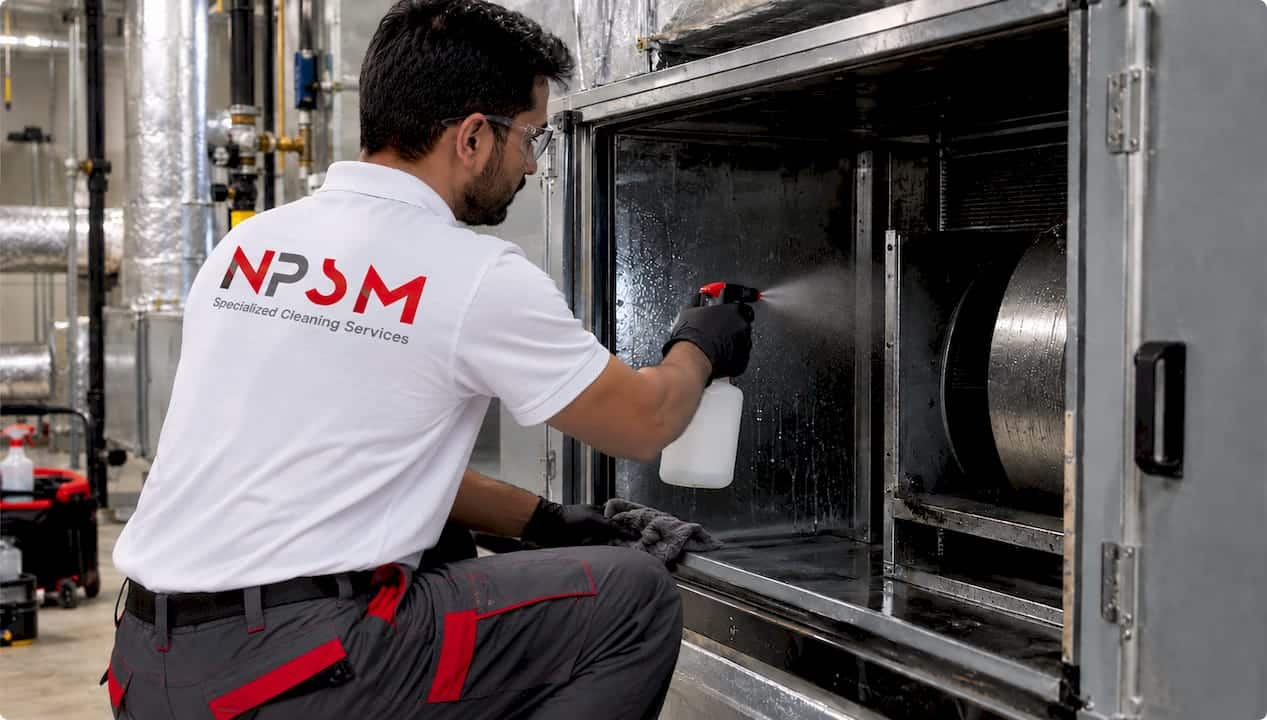
Sanitization lowers germ counts to a level public health standards consider safe for everyday contact, while disinfection uses chemical agents to kill a broader range of bacteria and viruses on a surface. Disinfection is the stronger process and the one you reach for in higher-risk situations. Either way, the surface needs a real cleaning first, because dirt and grime block both processes from working.
TL;DR:
Sanitation lowers germ levels to safe standards, while disinfection uses chemicals to eliminate a broader range of pathogens on surfaces.
Proper cleaning with soap or detergent is essential before applying any sanitizing or disinfecting product, as dirt blocks chemical effectiveness.
Disinfectants like bleach, alcohol, and quats vary in strength, surface compatibility, and contact time requirements, influencing their appropriate use cases.
Higher-risk situations such as illnesses, bodily spills, or clinical environments require disinfecting rather than sanitizing for effective pathogen removal.
Always follow label instructions precisely, including contact time and safety precautions, to ensure disinfectants work effectively and safely.
Specializedcleaning
Keep Your Space Hygienic
Specializedcleaning provides professional cleaning solutions for residential and commercial spaces, including complex hygiene challenges in Dubai.
Cleaning, Sanitizing, Disinfecting, and Sterilizing: What Sets Them Apart
These four words get used almost interchangeably in everyday conversation, but each one describes a distinct level of germ control.
Cleaning removes dirt, dust, and organic matter with soap or detergent and water. It physically lifts debris away but does not necessarily kill pathogens.
Sanitizing reduces bacteria to a level public health standards consider safe, often through cleaning alone or with a mild chemical sanitizer.
Disinfecting uses chemical agents that are tested and registered to kill a wider range of viruses and bacteria, according to the EPA’s distinctions between product categories.
Sterilizing eliminates all forms of microbial life, including spores, and is typically reserved for medical and lab settings.
A kitchen counter usually needs cleaning and occasional sanitizing. A restaurant dish rack needs sanitizing after every wash cycle. A surgical instrument needs full sterilization before it touches a patient. Matching the right level to the right setting is the whole game, and it starts with knowing which word actually applies to the job in front of you.
When Should You Sanitize Instead of Disinfect?
Choosing between the two comes down to risk level, not personal preference.
Routine, low-risk situations call for cleaning or sanitizing: kitchen counters, children’s toys, general floors, and other everyday surfaces where the goal is keeping germ counts low, not eliminating every pathogen.
Higher-risk situations call for disinfecting: when someone in the space is sick, after a bodily fluid spill, in clinical or healthcare-adjacent settings, or around equipment where contamination carries real consequences.
High-touch surfaces need extra attention: door handles, light switches, shared keyboards, and faucet handles pick up germs faster than most surfaces and benefit from more frequent attention regardless of which process you choose.
A good rule of thumb: sanitize for maintenance, disinfect for incidents. If you are reaching for a product because something specific happened (illness, a spill, a known exposure), that is your signal to disinfect rather than simply sanitize.
A Step-by-Step Routine for Cleaning, Then Sanitizing or Disinfecting
Getting this right is less about which product you buy and more about following the sequence correctly.
Begin by eliminating all visible dirt. Use detergent and water to clean away grease, grime, and debris, following the guidelines provided by the Dubai Municipality on cleaning and disinfection. This crucial first step ensures disinfectants can work effectively, as organic material can prevent chemicals from reaching microorganisms.
Select a disinfectant specifically formulated for the pathogens you need to target. Carefully check the product label to verify that the disinfectant is suitable for the germs or viruses present in your environment.
Prepare the disinfectant solution precisely according to the instructions. For routine disinfection outside healthcare environments, the Dubai Municipality advises using a freshly made 0.1% sodium hypochlorite solution (equivalent to one part 5% bleach to 49 parts water).
Ensure the surface remains visibly wet for the entire recommended contact time. Many users prematurely wipe or allow surfaces to dry, which reduces disinfectant effectiveness; reapplication may be needed if the surface dries too soon.
After use, ventilate the area thoroughly and store all chemicals securely. Keep containers tightly closed, away from heat and sunlight, and maintain good airflow by opening windows or using fans.
Pro Tip:Set a timer for the contact time listed on the label instead of guessing. Most people underestimate how long a surface needs to stay wet.
Bleach, Alcohol, and Quats: Strengths and Tradeoffs
Bleach (sodium hypochlorite) offers broad-spectrum killing power at a low cost but can corrode metal, bleach fabric, and discolor finishes, so it works best on hard, non-porous surfaces that can tolerate it.
Alcohol (around 70%) acts quickly on small, non-porous areas like doorknobs or phone screens, but it evaporates fast, which can cut the contact time short before the product finishes working.
Quaternary ammonium compounds (quats) are more stable and less corrosive than bleach, making them common in offices and upholstered spaces, though they have a narrower range of activity and can be inactivated by residue from certain soaps or hard water.
Even the strongest disinfectant only works within its tested conditions, which is why the EPA’s registered product guidance ties every disinfectant claim to specific label directions rather than general assumptions. Checking the label against your surface and target organism matters more than brand loyalty.
Reading the Label: Safety Rules That Actually Matter
Misusing disinfectants creates real hazards, from chemical burns to toxic fumes, so a few habits make a measurable difference.
Never mix chemicals, especially bleach and ammonia-based cleaners, which produce dangerous gas when combined.
Ventilate the space by opening windows or running exhaust fans while using any chemical disinfectant.
Wear gloves and eye protection when the label recommends it, particularly with concentrated solutions.
Follow the label’s contact time, target organisms, and surface compatibility notes rather than assuming one product works everywhere.
Avoid large-scale spraying or fogging in public spaces, a practice WHO specifically advises against, and never spray disinfectant directly on people.
How Professionals Handle the Harder Jobs
The clean-then-disinfect sequence gets more demanding once the surfaces are complex systems rather than countertops. HVAC ductwork, data center equipment, and water tanks each carry their own material-compatibility and airflow considerations that make guesswork risky. Our teams handle HVAC duct cleaning and data center cleaning with dilution protocols and contact-time controls matched to sensitive equipment, and we apply the same discipline to water tank cleaning and disinfection. With over 15 years in the field and licensed staff, we know when a job has moved past what a bottle of spray and a paper towel can safely handle, and post-construction sites fall into that category too, which is why deep cleaning services exist as a separate category of work.
Our Take on Chasing a Germ-Free Space
Nobody’s home or office is ever truly sterile, and chasing that standard in daily life wastes time and money. The realistic goal is risk reduction: clean consistently, sanitize the everyday surfaces, and reserve disinfection for the moments that actually call for it. Professional help earns its cost once the system gets complex or the stakes get high. Commit to cleaning first and reading the label every time, and you are already ahead of most routines we see.
— Qadir
FAQ
What is the difference between sterilization, disinfection, and sanitization?
Sterilization eliminates all microbial life including spores, disinfection kills a broad range of bacteria and viruses on surfaces, and sanitization lowers germ counts to a level considered safe by public health standards. Sterilization is reserved for medical and lab equipment, while the other two apply to everyday surfaces.
What is the difference between disinfection and sterilization?
Disinfection kills most harmful bacteria and viruses but does not necessarily destroy every microorganism, including resistant spores. Sterilization is a more intense process that eliminates all microbial life, which is why it is required for surgical instruments rather than countertops.
Do you disinfect or sanitize first?
Neither comes first: cleaning always comes before either one, because dirt and organic residue block chemicals from reaching germs effectively. Once a surface is visibly clean, you choose sanitizing for routine upkeep or disinfecting for higher-risk situations, never the chemical step before the clean.
What is the difference between sanitizing and sterilizing?
Sanitizing reduces germ counts to a safe level for everyday settings like kitchens and dish racks, while sterilizing removes all microbial life entirely, including spores. Sterilizing is a far more rigorous process, typically requiring heat or specialized equipment found in medical and lab environments.