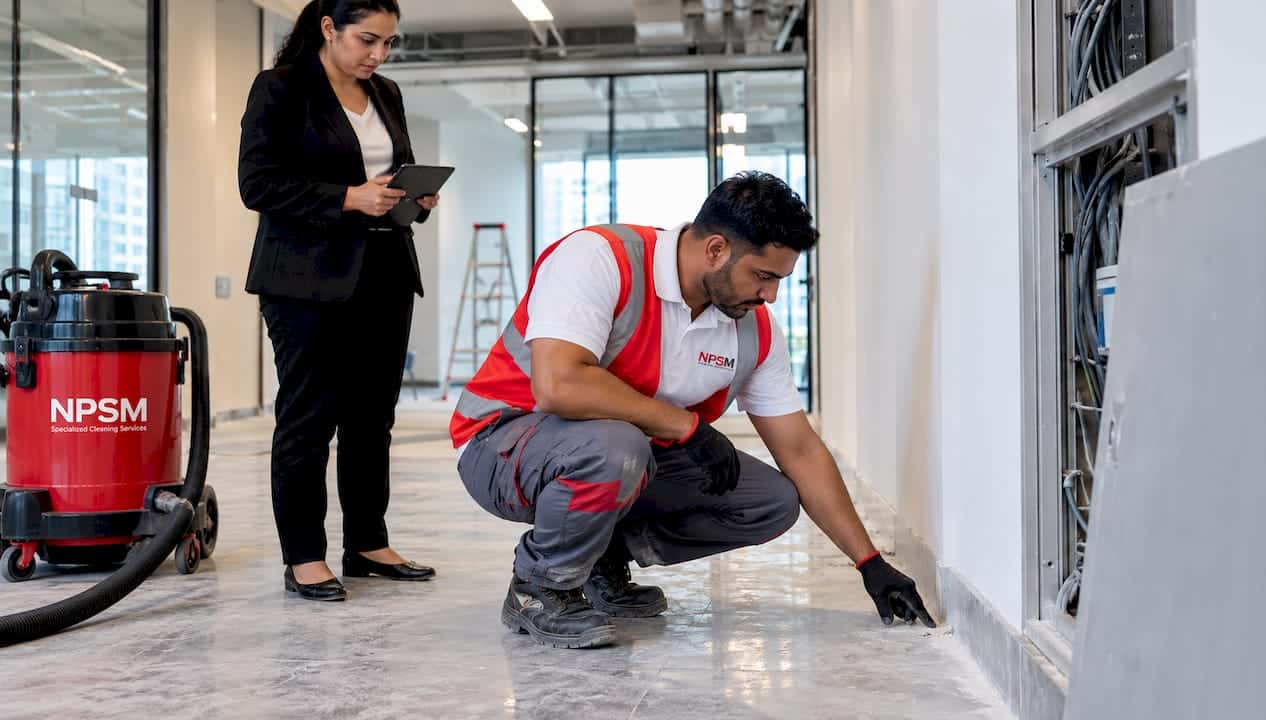
A professional deep-cleaning checklist is the contractor’s scope of work: it spells out the exact tasks, equipment, disinfectants, and acceptance criteria a provider agrees to deliver. The strongest checklists cover high-touch disinfection, floor and carpet deep work, grout and stone care, kitchen exhaust and HVAC options, and supporting documents like insurance and safety data sheets. Before signing anything, ask for that scope in writing, along with proof of licensing.
TL;DR:
Deep-cleaning scope should include high-touch disinfection with proper dwell times, surface-specific floor protocols, and dedicated tools for each zone, with documentation like SDS and insurance.
The checklist must be detailed room-by-room, covering entry points, offices, kitchens, restrooms, floors, and mechanical areas, with photo proof recommended for larger sites.
Specialty services such as floor polishing, grout restoration, facade cleaning, and ductwork are typically quoted separately due to equipment, time, and permit requirements.
Contractors must provide proof of licensing, insurance, and approved disinfectants before work, with clear acceptance criteria and regular review schedules.
On the day of cleaning, staff follow a predictable sequence, maintain safety protocols, and conduct a final walkthrough to ensure scope completion, with proper drying and ventilation.
Specializedcleaning
Get Your Deep Cleaning Scope Right
Specializedcleaning provides professional deep cleaning in Dubai for residential and commercial spaces, supported by experienced staff and specialized equipment.
1. What a professional deep-cleaning checklist should include
A deep clean is not a longer version of routine cleaning. It is a defined set of tasks with its own products, timing, and sign-off criteria, and a contractor’s written scope should show all of it. The Green Seal Cleaning Services Guidebook recommends separating routine, periodic, interim, and restorative work in the schedule itself, so a client can see exactly what “deep clean” covers versus what gets billed separately.
A complete contractor checklist generally includes:
High-touch disinfection of door handles, switches, railings, and shared equipment, applied with the correct dwell time for each product.
Floor protocols matched to surface type: vacuuming and extraction for carpet, wet mopping or steam for hard floors, with polishing treated as a separate restorative service.
Restroom and kitchen deep cleaning done in sequence, using dedicated tools for each zone rather than shared mops and cloths.
Carpet and upholstery cleaning with a stated drying window, since trapped moisture undermines the whole job.
Supporting paperwork: safety data sheets (SDS) for every disinfectant, an equipment list, proof of insurance, and staff identification.
The Green Seal guide also recommends uploading an SDS for every registered disinfectant used on an account, which gives building managers a paper trail if anyone raises an allergy or compliance question later. We treat that documentation requirement as a baseline, not an upsell, when we put together a deep cleaning services scope for a home or office.
2. A room-by-room checklist you can hand to any contractor
A written scope is only useful if it tells you what happens in each part of the property. Walking through the space area by area, before work starts, gives both sides a shared reference point and something concrete to check against at handover.
Entrance and reception: mats shaken or extracted, glass doors and partitions cleaned streak-free, touchpoints disinfected, and floors treated according to their material.
Offices and meeting rooms: dusting done high to low (ceiling vents and light fixtures before desks and skirting), with electronics wiped using equipment-safe products rather than general-purpose sprays.
Kitchens and pantries: hoods and exhaust surfaces degreased, countertops and backsplashes sanitized, and appliances pulled out or opened to clean behind and underneath them.
Restrooms: high-touch surfaces disinfected, drain traps cleared, moisture controlled to limit mold growth, and tools kept exclusive to that zone to avoid cross-contamination.
Floors and carpets: method matched to surface (extraction, steam, dry buffing) with a stated drying time before the area returns to normal use.
Mechanical and service areas: duct access points identified for HVAC work, and water tank cleaning scheduled with the correct safety steps and permits, since this touches the building’s water supply.
A partner resource on move-in cleaning checklists echoes this room-by-room structure and adds a useful habit: photo documentation of each area before and after, which gives both parties proof of what was actually done. For larger or mixed-use sites, a building cleaning checklist for high-rises shows how the same logic scales to multiple floors and shared common areas.
3. Specialty services and exclusions you should expect to see quoted separately
Not every item in a cleaning conversation belongs inside a standard deep-clean quote. Some tasks require different equipment, more time, or specific permits, which is why reputable contractors price them on their own line rather than folding them into a flat deep-clean rate.
Items usually quoted separately include:
Floor polishing and restoration, including marble, vinyl, and wood, which need curing time and specialized machines.
Grout and tile restoration, since discoloration often requires mechanical abrasion rather than standard cleaning.
Facade and high-rise exterior cleaning, which involves access equipment and safety permits.
Data center cleaning, where static-safe tools and strict airflow controls are non-negotiable.
HVAC duct deep work, covered in our guide to HVAC duct cleaning, which requires duct access and containment to avoid spreading debris.
Most contracts also exclude stain guarantees on pre-existing damage and the handling of hazardous materials outside a technician’s training. If a quote looks unusually low, check what it has left out before assuming it is unusually good value.
Pro Tip:Ask for floor restoration and duct cleaning to be itemized on separate lines, even if you plan to book them together, so you know exactly what each service costs and covers.
If your project follows construction work, the line between a standard deep clean and post-construction cleaning matters even more, since dust and debris loads are far heavier.
4. How contractors tailor scope, and what to confirm before you sign
A good scope is never generic. It should reflect your specific building, its traffic patterns, and any special-use areas like server rooms or commercial kitchens. The BSCAI Cleaning & Disinfecting SOW Guide stresses planning for vulnerable occupants and documenting the schedule and procedures clearly, rather than relying on a verbal agreement.
Before you sign a contract, confirm:
A building-specific scope that separates routine, periodic, and restorative tasks, with a stated frequency for each.
Proof of Dubai Municipality (DM) external approval and a valid trade license, plus public liability insurance.
Staffing details including language, training, PPE provisions, and equipment maintenance schedules.
Clear acceptance criteria: a sign-off checklist, photo proof of completed work, a rework policy, and payment milestones tied to delivery.
Both Green Seal and BSCAI recommend reviewing cleaning schedules at least twice a year to account for seasonal changes, occupancy shifts, or special events, according to the Green Seal guidebook. A contractor who builds that review into the contract from the start is telling you something useful about how they operate.
KPM Global also flags the warning signs worth watching for: no DM approval on file, unapproved chemicals in use, or no public liability insurance. Any one of these should pause the conversation until the contractor clears it up.
5. What to expect on the day of the deep clean
Knowing the sequence in advance keeps the day predictable for everyone, from staff check-in to the final walkthrough.
Arrival and setup: staff check in with ID, insurance documents are available on request, and equipment is staged by zone before work begins.
Work sequence: homes typically run top-to-bottom and back-to-front in a single pass, while offices and warehouses often work zone by zone to keep part of the space usable.
Safety during disinfection: cordons go up around wet or treated areas, occupants are asked to stay clear while dwell times run, and staff wear the PPE appropriate to the chemicals in use.
Aftercare and sign-off: floors and carpets get a stated drying window, spaces are ventilated before reoccupation, and a final checklist walkthrough confirms the work against the agreed scope, with a short rework window if something was missed.
6. What experience teaches about getting the checklist right
After years of running deep cleans across homes, offices, and specialized facilities, we have learned that the checklist matters less than how consistently it gets followed. Indoor air quality, equipment integrity, and the correct chemical for the surface in front of us take priority over speed, especially on complex jobs like HVAC ducts or data center floors, where a wrong product can damage equipment rather than protect it.
We bring extensive experience to that balance, pairing trained staff with equipment built specifically for HVAC and data center environments. Same-day scheduling exists because buildings do not wait for ideal timing, and documented sign-offs on every job give clients proof that the scope we agreed on is the scope we delivered.
— Qadir
Get a written scope and book your deep clean
We put every deep-cleaning job in writing before we start: the tasks, the products, the timeline, and the sign-off criteria, so there are no surprises at handover. If you want a scope built around your specific property rather than a generic package, we offer consultations and scheduling options.
When you request a quote, ask for:
A site visit before pricing, not a flat quote based on square footage alone.
An itemized task list covering every area you expect to be touched.
A clear wet-to-dry sequence so floors and surfaces have proper drying time.
Proof of insurance and licensing included with the proposal.
Browse our deep cleaning services page to see current packages, or reach out directly to request a tailored scope for your home or business.
FAQ
What should be included in a professional deep-cleaning checklist?
A professional checklist covers high-touch disinfection, floor and carpet care matched to surface type, kitchen and restroom deep cleaning with dedicated tools, and documentation like SDS sheets and insurance proof. Restorative work such as floor polishing or duct cleaning is typically listed and priced separately.
How is deep cleaning different from a standard clean?
Standard cleaning maintains a space day to day, while deep cleaning reaches areas routine service skips, like behind appliances, inside vents, and grout lines. The Green Seal guidebook frames this as the difference between routine and periodic or restorative cleaning tiers.
What documents should a cleaning contractor provide before starting work?
A reliable contractor should provide a trade license, proof of Dubai Municipality external approval, public liability insurance, and SDS sheets for any disinfectants used, as outlined in guidance on Dubai cleaning company licenses. Staff identification should also be available on request.
Are HVAC duct cleaning and data center cleaning part of a standard deep clean?
No, these are specialist services quoted separately because they require specific equipment, containment procedures, and sometimes permits. Our HVAC duct cleaning guide explains why this work is handled as its own scope item rather than folded into a general deep clean.
What red flags suggest a cleaning contractor isn’t properly licensed?
Warning signs include no Dubai Municipality approval on file, use of unlabeled or unapproved chemicals, and no public liability insurance, according to KPM Global’s licensing guidance. Any contractor unwilling to share these documents before the job starts is worth questioning further.