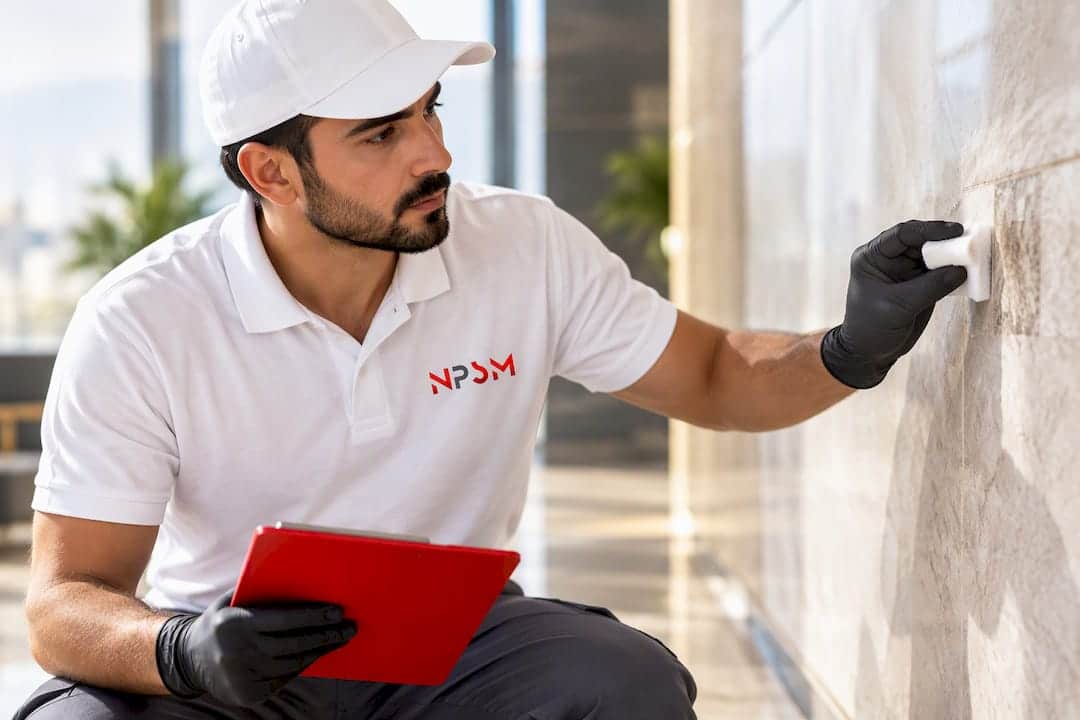
Professionals remove paint, cement, and adhesive residue by first assessing the substrate, running a test patch, and then applying the least aggressive method (mechanical, chemical, or heat) that will do the job, followed by neutralization and finishing. Call a professional for delicate finishes like natural stone or polished marble, large-scale post-construction sites, or any job involving hazardous materials such as lead-based paint or epoxy. The sections below walk through technique by residue type.
TL;DR:
Proper assessment and testing are crucial to choose the least aggressive method for removing residues, as different substrates and residues react uniquely to chemical, mechanical, or heat treatments.
Using a test patch under matching lighting is essential to confirm residue removal before scaling the process, especially on fragile or high-value surfaces like marble or natural stone.
Chemical removal techniques require careful neutralization and rinsing to prevent damage, with safety PPE and containment always necessary for chemical handling and disposal.
Incorrect or rushed methods, such as skipping testing or choosing stronger products upfront, can cause long-term damage and increase repair costs later.
A professional site visit involves documenting surface conditions, selecting appropriate methods, and planning safety measures to ensure residue removal is effective without harming underlying surfaces.
Specializedcleaning
Get Post-Construction Residue Removed Safely
Specializedcleaning combines experienced professionals and specialized equipment for complex cleaning challenges in Dubai residential and commercial spaces.
What builders cleaning covers and why residues need special care
Post-construction cleaning, sometimes called builders cleaning, is the process of clearing a site of everything a renovation or build leaves behind. It typically runs in stages: a rough clear to remove debris and packaging, a detailed clean that targets embedded residues, and a final sparkle pass before handover.
Paint, cement, and adhesive residue are not ordinary household stains. Cured paint bonds chemically to the surface it sits on. Cement laitance forms a hard mineral crust that reacts differently depending on the acid or alkaline product used against it. Adhesives range from water-soluble PVA to cured epoxy that behaves almost like a plastic. Each demands a different removal strategy, and using the wrong one can etch tile, discolor marble, or strip a factory finish off a wood floor.
A properly finished post-construction clean delivers:
Surfaces free of visible residue without etching, discoloration, or scratch marks.
Documentation of which methods were used on which surfaces, useful for warranty or handover records.
Safe collection and disposal of chemical waste and debris generated during the clean.
How pros inspect and test surfaces before choosing a method
Before touching a stain, a cleaning technician identifies what they are working with and how the surface will react. This assessment step is what separates a clean handover from a damaged one.
The checklist typically covers:
Surface type: sealed versus unsealed concrete, porcelain, natural stone, painted drywall, hardwood, or laminate.
Residue condition: fresh paint splatter versus fully cured paint, cement laitance versus deep mortar smear, and adhesive type, including MS polymer and epoxy.
Test patch results: a small, inconspicuous area is treated first, documented with photos, and evaluated for discoloration, dulling, or texture change before the full job proceeds.
Client sign-off: on higher-risk surfaces like marble or wood, the technician confirms the client accepts the tested method before scaling up.
This inspection stage directly affects the quote. A job with mixed surfaces and heavy cured residue takes longer and may require multiple product types, as reflected in the time and cost drivers explained on the pricing page.
Pro Tip:Always photograph the test patch under the same lighting you’ll use for the final inspection: residue that looks gone under a work light can reappear once natural light hits the surface.
Pro techniques for removing paint splatters and drips by surface
Paint removal is a matter of matching force to substrate. Professionals move through a sequence of options, starting gentle and escalating only when needed.
Mechanical scraping: plastic scrapers lift fresh paint from tile and glass without scratching; metal blades are reserved for masonry and metal where scoring is not a concern.
Low-speed orbital sanding: used on wood and some laminate, with technicians stopping frequently to check that they haven’t cut through a factory finish or veneer.
Chemical strippers: solvent-based strippers work fast on oil paints, caustic strippers handle heavier latex buildup, and eco-formulated strippers are used where ventilation is limited or the client requests lower-odor products. Dwell time matters: too short and the paint won’t lift, too long and it can damage the substrate underneath.
Heat application: a heat gun softens paint for scraping but is avoided near PVC trim, sealants, and laminated surfaces that can warp or release fumes.
Micro-abrasion or poultices: used on stone and polished surfaces that can’t tolerate sanding or aggressive stripping, drawing the pigment out gradually rather than forcing it off.
Every chemical method ends with a neutralization and rinse step to remove residual pH imbalance, followed by a final wipe. On some jobs, particularly where paint has bonded into a porous substrate, refinishing or touch-up paint becomes part of the finishing work rather than an afterthought.
Starting with the gentlest method that’s likely to work, then escalating only if a test patch shows it’s necessary, is the standard approach recommended for concrete and masonry cleaning. This sequencing avoids unnecessary damage on surfaces that would have responded to a milder treatment in the first place.
How pros remove cement, grout haze, and mortar residue
Cement residue behaves differently from paint. It is mineral, not organic, and the products that dissolve it can just as easily damage the tile or stone it’s sitting on if chosen carelessly.
Common approaches include:
Mechanical removal: plastic or metal scrapers for loose material, rotary floor machines for larger areas, and diamond pads for grout haze that has bonded to tile.
Acid-based cleaners: mild acids break down cement bonds effectively but must be diluted correctly and neutralized afterward; they are avoided entirely on marble and limestone, which etch on contact with acid.
Alkaline cleaners: used where the residue includes grease or organic buildup alongside the cement, since acids alone won’t touch oil-based grime.
Pressure washing: effective for exterior concrete, with pressure settings adjusted down for softer pavers and up for cured slab; too much pressure can pit soft stone or strip mortar joints. Readers dealing with painted concrete or paver surfaces outdoors may also find the useful for understanding how paint and stain removal interacts with exterior masonry.
A mild detergent scrub with a stiff-bristled brush, followed by thorough rinsing, handles many light-to-moderate concrete stains without needing acid or power washing at all, according to Lowe’s cleaning guidance. That guidance recommends warm water with a small amount of dish soap, a 10 to 15 minute dwell time on stubborn spots, and a full rinse before deciding whether anything stronger is needed.
Pro Tip:Test an acid-based cleaner on a hidden tile joint first: even a “safe for tile” product can strip grout color if left too long.
Aftercare matters as much as the removal itself. Rinsing fully, neutralizing any acid residue, and resealing where the surface calls for it prevents new staining from setting in within weeks of the job.
Practical methods for dissolving or lifting adhesive residue
Adhesives cover a wide range, and matching the removal method to the specific type is what keeps a floor or wall intact.
Classify the adhesive first. Water-based PVA glue softens with warm water or mild solvent and lifts fairly easily. Cured epoxy or construction adhesive is far tougher and often needs mechanical grinding or, in stubborn cases, resurfacing rather than chemical removal alone.
Match solvent to adhesive. Citrus-based or specialized adhesive removers work on many contact adhesives; stronger solvents are reserved for tile mastic or heavy-duty construction bonds, always following a test patch and with proper ventilation running.
Add mechanical or thermal assists. Steam units, heat guns, and oscillating tools soften stubborn adhesive so it lifts with less solvent, reducing the risk of the chemical migrating into the substrate.
Escalate only when needed. MS polymer and epoxy adhesives that resist solvents typically require grinding or, for badly bonded flooring, a full resurfacing pass.
Finish clean. The surface gets a final wipe to confirm no solvent film remains, since leftover residue can interfere with new adhesive, paint, or sealant applied afterward.
Getting this sequence right the first time avoids a second visit, which is one reason adhesive removal is often priced and scheduled as part of a broader deep cleaning service rather than a standalone task.
Tools, chemicals, and safety practices pros rely on
The equipment list on a professional job site tells you a lot about how the work gets done safely and without shortcuts.
HEPA vacuums capture fine dust from sanding and grinding, keeping paint or mortar particulates out of the air.
Floor grinders and diamond pads handle bonded cement and epoxy that scrapers can’t touch.
Steam units and heat guns soften adhesive and paint without the fumes of some solvents.
Pressure washers clear exterior concrete, with pressure adjusted to the substrate.
Solvents, mild acids, and alkaline detergents are chosen by residue type: solvents for adhesive, acids for cement haze, alkaline cleaners for grease and organic buildup.
PPE on a legitimate job includes gloves rated for the chemical in use, eye protection, and respiratory protection when solvents, acids, or fine dust are involved, with ventilation maintained throughout. Surfaces near the work zone are covered and containment barriers go up before any chemical is opened, keeping overspray and dust off finished areas nearby.
Disposal is not an afterthought. Chemical residue gets neutralized before it goes down a drain, and where local environmental rules require it, waste is handed to a certified handler rather than discarded on site.
Pro Tip:If a product’s label calls for respiratory protection, treat that as a minimum, not a suggestion, especially in an enclosed room with limited airflow.
The step-by-step workflow a pro follows on site
A predictable process is what separates a professional job from a rushed one. The typical sequence looks like this:
Arrival and setup: containment barriers go up, surfaces are documented with photos, and adjacent areas get protective covering.
Test patch and method selection: a small area is treated, evaluated, and signed off by the client before the full job proceeds.
Full-scale removal: the chosen method, mechanical, chemical, or heat, is applied across the area, often with more than one technique combined depending on residue type.
Neutralization and rinse: any chemical residue is neutralized and rinsed away before the surface is considered finished.
Quality checks and walk-through: visual inspection, sometimes a pH check, and a final walk-through with the client confirm the job meets expectations.
A small bathroom with light paint splatter might take a few hours, while a full villa post-construction clean with cement haze and adhesive residue across multiple rooms can run into multiple days. Cost and time both scale with the number of surface types involved and how much cured, rather than fresh, residue needs to be removed. The deep cleaning service guide breaks down what typically drives those timelines further.
Proof points from experienced Dubai-based cleaning teams
Specialized cleaning companies with extensive experience handle post-construction cleaning, marble stain removal, and floor restoration work, giving their teams repeated exposure to the surface and residue combinations covered above. That experience shapes how a site visit runs in practice.
What a homeowner or property manager can expect when booking:
A site visit and a consultation before any work begins.
A documented test patch on the specific surfaces involved, not a generic assumption.
Staff following a safety plan, including containment and PPE appropriate to the chemicals in use.
Flexible scheduling available for time-sensitive handovers.
This groundwork is what keeps a post-construction clean from turning into a repair bill later.
Why shortcuts on residue removal cost more later
The biggest mistake homeowners make is reaching for the strongest product first instead of testing a mild one. Skipping neutralization after an acid or caustic treatment, or blasting a surface with too much pressure, causes damage that shows up weeks later, not immediately. A test patch and a contained work area cost a few extra minutes and save a floor.
— Qadir
Getting the removal done right the first time
Handling paint, cement, and adhesive residue without damaging what’s underneath takes the right method for each surface, and that’s exactly where a specialized team earns its keep. Specialized cleaning services bring this expertise to post-construction cleaning, floor restoration and polishing, marble restoration, and adhesive removal jobs across various properties.
Booking a site visit gets you:
A documented test patch on your specific surfaces before any full-scale treatment starts.
A clear method plan, including which chemicals or mechanical tools will be used and why.
A safety plan covering containment, ventilation, and PPE appropriate to the job.
If your renovation or handover involves stubborn paint, cement, or adhesive residue, book a site visit and get a quote for deep cleaning services before you attempt a DIY fix that might cost more to undo than to do right.
FAQ
What removes adhesive without damaging paint?
A mild solvent or adhesive remover matched to the specific adhesive type, tested first on a hidden spot, generally lifts residue without harming paint underneath. Professionals often pair a gentle solvent with a heat gun or steam to soften the adhesive, reducing how much chemical contact the paint surface needs.
Does white vinegar dissolve cement?
Vinegar is a mild acid and can help with light cement haze, but it works best on smaller, lighter residues rather than cured mortar or thick laitance. For many light-to-moderate concrete stains, Lowe’s recommends starting with a mild detergent scrub before moving to stronger acid-based treatments.
Does Coca-Cola remove concrete stains?
There is no reliable evidence that Coca-Cola dissolves cured cement or concrete stains, and professionals do not use it as a removal method. A mild detergent and stiff brush, per Lowe’s step-by-step guidance, remains the recommended first-line approach for most concrete staining.
What chemical can remove cement from tiles?
Diluted acid-based cleaners are commonly used on tile to break down cement bonds, but they must be neutralized afterward and are never used on marble or limestone, which etch on contact. A test patch on an inconspicuous tile or grout line confirms the product is safe before treating the full surface.