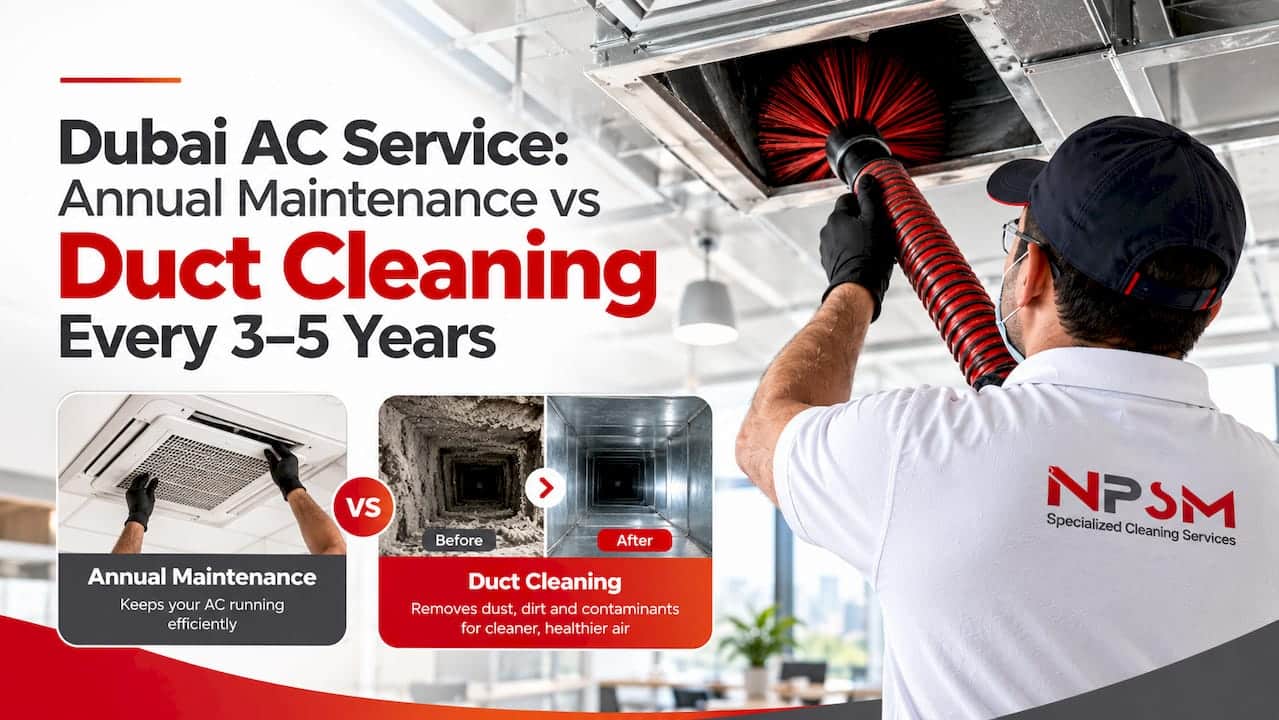
AC maintenance keeps the equipment reliable and efficient; duct cleaning removes contaminants from the air pathways. One protects the machine, the other protects the air you breathe. Book maintenance every year before peak cooling season, book duct cleaning when you see dust, odors, or after renovation work, and schedule both together if you’ve never had either done or you’ve just moved into a new space.
TL;DR:
Duct cleaning addresses contaminants and buildup in air pathways but cannot fix mechanical system faults, which maintenance can resolve.
Maintenance includes inspecting filters, coils, refrigerant levels, and electrical components, requiring annual professional servicing to protect warranties.
Duct cleaning typically occurs every three to five years or sooner if visible dust, odors, or contamination from events like construction are present.
Combining both services into a single coordinated effort ensures better indoor air quality and system performance, especially after renovation or heavy occupancy.
Always verify licensed, insured providers following industry standards since the two services demand different expertise and equipment.
Specializedcleaning
Improve Your Indoor Air Quality
Specializedcleaning provides professional HVAC duct cleaning in Dubai using specialized equipment and licensed staff for residential and commercial spaces.
AC Duct Cleaning vs AC Maintenance: A Side-by-Side Look
The two services share a system but not a purpose. AC maintenance focuses on the mechanical unit, the part that cools and moves air. Duct cleaning focuses on the network of metal or fiberglass pathways that carry that air through the building.
Scope: Maintenance covers the condenser, compressor, coils, filters, and electrical components. Duct cleaning covers the interior surfaces of supply and return ducts, plus registers and grilles.
Primary goal: Maintenance targets efficiency, energy use, and equipment lifespan. Duct cleaning targets indoor air quality by physically removing dust, allergens, and debris.
Who performs it: Licensed HVAC technicians handle maintenance, often certified through manufacturer training programs. Duct cleaning crews use specialized vacuum and agitation equipment and, ideally, follow guidance modeled on NADCA industry standards.
Frequency pattern: Maintenance is routine and calendar-based, usually once or twice a year. Duct cleaning is largely condition-based, triggered by visible contamination, odor, or a specific event like construction.
Both jobs touch the same system, but a technician who services your compressor isn’t necessarily equipped to clean 40 feet of ductwork, and a duct cleaning crew won’t touch your refrigerant charge. That’s the practical reason most buildings need separate line items for each.
What Does AC Maintenance Actually Include?
AC maintenance is preventive work on the mechanical components that produce cool air. Skipping it doesn’t just risk a breakdown. It quietly drains efficiency month after month until a repair bill forces the issue.
Filter inspection and replacement. A dirty filter restricts airflow and forces the system to work harder, and most residential filters need checking every 30 to 90 days depending on usage and pets.
Coil cleaning. Dust buildup on evaporator and condenser coils reduces heat transfer, which is one of the main tasks ENERGY STAR’s seasonal checklist calls out for pre-season checks.
Condensate drain clearing. A clogged drain line backs up moisture, which can trigger shutdowns or water damage around the unit.
Refrigerant level checks. Low refrigerant means the system cools less effectively while still consuming full power, and this check requires a licensed technician.
Electrical component inspection. Loose wiring, worn contactors, and capacitor wear are common failure points caught during a proper tune-up.
Motor lubrication and thermostat calibration. Small adjustments that keep the system running smoothly and reading temperature accurately.
Manufacturers generally recommend annual professional maintenance, and skipping it can affect warranty compliance on newer units. Some tasks are safe for homeowners to handle between professional visits: swapping filters, clearing leaves and debris from the outdoor unit, and keeping the area around the system clear. Refrigerant and electrical work should stay with a licensed technician every time.
Pro Tip:Check your warranty paperwork before doing any DIY maintenance beyond filter changes. Some manufacturers void coverage if a non-licensed person opens the unit’s electrical panel.
What Happens During Professional Duct Cleaning?
Duct cleaning is a physical, hands-on service aimed at the air pathways themselves, not the machine that pushes air through them. A crew connects a negative-pressure vacuum system to the ductwork, creating suction that pulls loosened debris out through a single collection point rather than blowing it back into the room.
Rotary brushes and agitation tools dislodge dust, dander, and debris stuck to duct walls, especially in bends and joints where buildup collects.
Access-port cleaning lets technicians reach segments of ductwork that aren’t visible from a register, which matters most in long commercial runs.
Sanitization treatments, when requested, address odor-causing residue and biological growth after the physical debris is removed.
Register and grille cleaning finishes the job at the points where air actually enters the room.
Duct cleaning addresses contaminants: household dust, pet dander, construction debris, and in some cases mold or evidence of pest activity inside the ductwork. What it cannot do is fix a mechanical problem. A cleaned duct won’t repair a failing blower motor, correct a refrigerant leak, or fix a thermostat that’s reading wrong. Duct cleaning is a specialized service using negative-air vacuums and rotary agitation, and it’s distinct from anything a maintenance tune-up covers. When hiring a provider, ask about their process documentation and whether they follow recognized industry standards for duct access and sealing afterward. A detailed guide to duct cleaning services can help you understand what a full-scope job should include before you sign off on one.
Pro Tip:Ask any duct cleaning provider to show you before-and-after photos of the access points, not just the collection canister. That’s where the real evidence of a thorough job shows up.
Signs You Need Maintenance vs Duct Cleaning
Reading the symptoms correctly saves you from booking the wrong service and waiting out an unresolved problem.
Call for maintenance when you notice:
Reduced cooling output or the system running longer to hit the same temperature
Energy bills climbing without a change in usage
Grinding, clicking, or rattling noises from the outdoor unit
The system cycling on and off more frequently than usual
Call for duct cleaning when you notice:
Visible dust blowing from vents or settling quickly after you’ve already cleaned
A musty or stale smell when the AC kicks on
Allergy or respiratory symptoms that ease when you leave the building
Dust that returns fast even with regular vacuuming and mopping
Some situations call for both, no debate needed. Post-construction dust, water damage, or smoke exposure from a nearby fire all contaminate the ducts while potentially stressing the equipment too. If you’re not sure which symptom points where, a diagnostic inspection from a qualified provider is worth the short wait before committing to either service.
How Often Should You Schedule Each Service?
Maintenance runs on a calendar. Duct cleaning runs on conditions. Confusing the two schedules is the most common reason buildings either over-clean their ducts or under-maintain their equipment.
AC maintenance: once a year at minimum, ideally before peak cooling season starts. Some manufacturers and service plans recommend biannual checks, one before summer and one in fall.
Duct cleaning: no fixed calendar. Industry guidance points to roughly every three to five years as a common baseline, shorter if you have pets, recent renovations, or heavy occupancy.
Local conditions push that baseline down. Frequent dust storms, high-traffic commercial spaces, and buildings running cooling systems nearly year-round all accelerate the buildup that triggers a cleaning need sooner than the standard interval. Cost and time depend on a few consistent factors: system complexity, how accessible the ductwork is, how severe the contamination is, and whether the job is residential or a larger commercial layout with more linear feet of duct to service. A straightforward residential maintenance visit typically wraps up in under two hours; duct cleaning on a full home or small office usually takes half a day depending on the number of vents and access points.
Pro Tip:Schedule duct cleaning right after any post-construction cleanup, not before. Construction dust settles into ducts over days, so cleaning too early just means doing it again.
Why Maintenance and Duct Cleaning Work Better Together
Maintenance alone can leave an air-quality problem completely unresolved. A perfectly tuned compressor still pushes dust, allergens, and odor through ducts that haven’t been touched in years. Duct cleaning alone has the opposite blind spot. Clean ducts don’t stop a failing capacitor or a slow refrigerant leak from taking the system down mid-summer.
A trusted framing in the industry is simple: maintenance keeps the machine running, duct cleaning addresses what’s moving through it. The two aren’t competing services, they’re sequential ones. For most homes and offices, the practical order is a maintenance check first to confirm the equipment is sound, followed by duct cleaning if symptoms or a review of the ductwork justify it. Buildings that have gone through renovation, water intrusion, or smoke exposure often benefit from booking both close together as one combined assessment rather than spacing them months apart.
What to Look for in a Provider
Fifteen-plus years of servicing Dubai’s residential towers and commercial buildings has shown one consistent pattern: buildings that skip verification end up rebooking the same job twice. Specializedcleaning has worked across that timeline with licensed staff and equipment built specifically for HVAC and duct-level work, and the checklist below reflects what that experience has made non-negotiable.
Ask for proof of licensing and insurance before any technician touches your system.
Request a written scope of work that states exactly what’s included and, just as importantly, what’s excluded.
Check whether the provider references manufacturer maintenance guidance or NADCA-style duct cleaning standards in their process.
Ask about same-day scheduling and whether a free consultation is available before you commit to a job.
Dust storms and high occupancy in Dubai buildings shorten the interval between needed duct cleanings compared with calmer climates, even though the underlying maintenance calendar stays the same.
What I’ve Learned Watching These Two Get Confused
The most common mix-up on the job isn’t ignorance, it’s assumption. Homeowners assume a maintenance visit already covered the ducts, and building managers assume a duct cleaning fixed a cooling complaint that was actually a mechanical fault. The fix is simple: match the symptom to the system, not the service you already know.
— Qadir
Book the Right Service Without the Guesswork
A single provider running both sides of this comparison as one coordinated operation helps avoid chasing separate contractors for the equipment and the ductwork. For Dubai homeowners and building managers, that means one point of contact who can confirm whether your system needs a tune-up, a duct clean, or both, backed by local experience and technicians who bring the specialized equipment this kind of work requires.
A consultation can start with a straightforward walkthrough of your system and ductwork, and same-day scheduling may be available for most jobs. If your building has recently gone through construction, renovation, or you simply can’t remember the last time either service was done, request a quote through the HVAC duct cleaning service page and get a clear scope before anyone shows up with equipment. Building managers coordinating larger facilities can also review office janitorial cleaning contracts to bundle ongoing maintenance oversight into one agreement.
Where to Verify These Guidelines
For maintenance task lists, check the ENERGY STAR seasonal checklist and manufacturer pages like Carrier’s maintenance guidance. For a broader look at maintenance planning, the HVAC maintenance plan overview from TX Comfort Crew walks through what a typical plan covers. For duct cleaning specifics, Specializedcleaning’s guide to HVAC duct cleaning benefits outlines outcomes homeowners can expect.
Duct cleaning doesn’t repair mechanical faults, but removing blockage and buildup from the ductwork can improve airflow to and from the unit. If your system is straining because ducts are clogged with debris, cleaning them can ease that load, though it won’t fix a failing part.
What Does AC Maintenance Mean?
AC maintenance means the routine inspection and servicing of the cooling equipment itself, including filters, coils, refrigerant levels, and electrical components. Manufacturers like Carrier recommend it annually to preserve efficiency and avoid unexpected breakdowns.
Is AC Maintenance Necessary?
Yes. Skipping maintenance raises the risk of breakdowns, increases energy consumption, and can void manufacturer warranty coverage that requires proof of regular servicing. ENERGY STAR recommends a pre-season check at minimum once a year.
What Is Done During AC Maintenance?
A standard visit includes filter checks, coil cleaning, condensate drain clearing, refrigerant level verification, electrical inspection, and thermostat calibration. Licensed technicians handle the refrigerant and electrical work, while homeowners can manage filter changes between visits.
How Often Should Ducts Be Cleaned Compared to Maintenance Visits?
Maintenance should happen at least once a year, while duct cleaning generally follows a three to five year baseline unless visible dust, odor, or a specific contaminating event calls for it sooner. Buildings in dustier environments or with heavy occupancy often need duct cleaning on the shorter end of that range.